Cost to Paint Wood Cabinets vs Laminate: Compare the Price
That makes the cost to paint wood cabinets vs. laminate less about material alone and more about whether the cabinets can be refreshed or need replacing. Their surface finish and condition matter, too.
Laminate is often cheaper upfront, but wood can be repaired and refinished, while damaged laminate usually offers fewer repair options. This comparison looks at how material, preparation, replacement, and moisture resistance affect the decision. It also explains how to choose an option that suits your cabinets and the look you want.
Key Takeaways
- Compare the cost of refreshing existing cabinets with replacing them, and factor in the condition of the boxes and doors before choosing.
- Factory finishes and painted surfaces wear differently; consider repairability and future touch-ups alongside appearance.
- Laminate resists moisture at the surface, while wood can swell or warp when exposed to it, so protect vulnerable areas from water.
- Painting wood is generally more straightforward than painting laminate or melamine, which need careful scuffing and bonding primer for adhesion.
Is it cheaper to paint or replace kitchen cabinets?
Painting sound cabinets usually costs less upfront than replacing them. The cost to paint wood cabinets vs. laminate depends on surface condition, preparation, door detail, and labor. Across the United States, regional labor rates, material availability, and transport costs affect painting costs; humidity can also influence preparation and drying conditions.
Professional and DIY Painting Costs
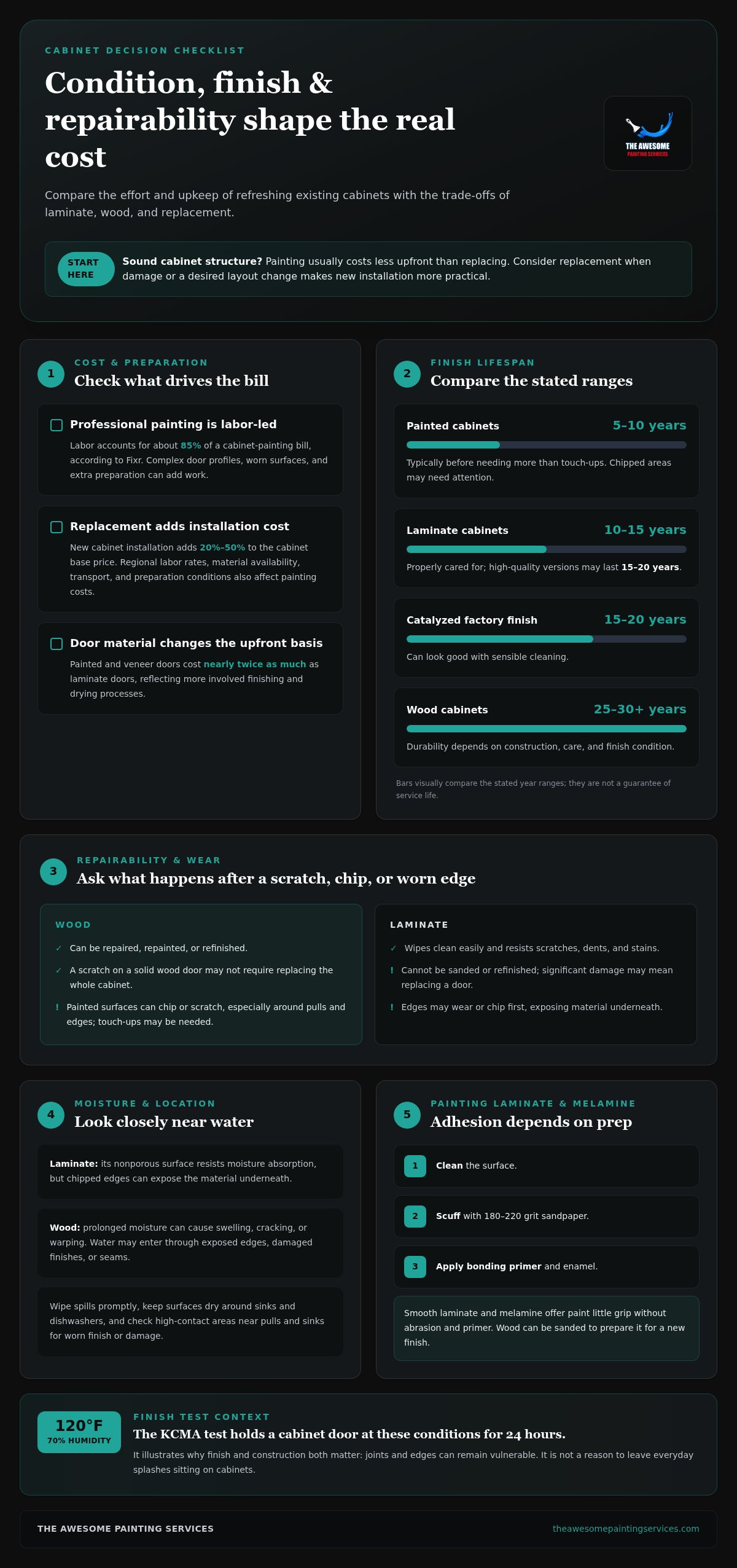
Professional work adds labor, which Fixr estimates accounts for about 85% of a cabinet-painting bill. Complex door profiles, worn surfaces, and extra preparation can increase the work involved; a simple, sound surface is generally less demanding to prepare.
Upfront Materials and Installation
New cabinet installation adds 20% to 50% to the cabinet base price. Painted and veneer doors cost nearly twice as much as laminate doors, reflecting their more involved finishing and drying processes.
Maintenance, Repairs, and Long-Term Finish Costs
Laminate wipes clean easily, but it can’t be sanded or refinished, so significant damage may mean replacing a door. Painted wood can be repaired or refinished, although chipped areas may need touch-ups. Over time, weigh those repair options against finish wear: painted cabinets typically last 5-10 years before needing more than touch-ups, while laminate’s lower upfront cost may suit a shorter-term kitchen plan.
| Option | Upfront cost basis | Repair or finish consideration |
|---|---|---|
| DIY wood painting | Time and preparation are yours | |
| Professional wood painting | Labor-led cost | Wood can be refinished |
| Painting laminate | Preparation and primer | Edges may wear first |
| Laminate replacement | Damaged surfaces are hard to repair | |
| Wood replacement | Species and finish affect cost | |
| Veneer doors | Nearly twice laminate door cost | Requires additional finishing |
Choose painting when the cabinet structure is sound. Consider replacement when damage or a desired layout change makes a new installation more practical.
Laminate Cabinets vs Wood Cabinets: Which Is Better?
The better choice depends on the finish you prefer, how you use the kitchen, and whether repairability matters. Compare factory-finished laminate with painted or solid wood cabinets for lifespan, wear, and repair options.
Painted Finishes and Factory Finishes
A catalyzed factory cabinet finish can look good for 15-20 years with sensible cleaning. Painted kitchen cabinets typically last 5-10 years before needing more than touch-ups. That difference matters if you want a consistent, ready-made finish, or prefer custom colors on wood. A painted surface can refresh the room’s look, but high-use doors may need attention sooner than a factory finish.
Laminate and Painted Cabinet Durability
Laminate resists scratches, dents, and stains, making it a practical choice for busy kitchens. Properly cared-for laminate cabinets usually last 10-15 years; high-quality versions may last 15-20 years. Painted surfaces can chip or scratch over time, especially around pulls and edges. Wood cabinets usually last 25-30+ years, but their durability depends on construction, care, and the condition of the finish.
Durability and Repairability
Damage affects each material differently. Wood can be repaired, repainted, or refinished, so a scratch on a solid wood door may not mean replacing the whole cabinet. Laminate cannot be sanded or refinished, and significant damage usually means replacement. Painting can also give sound cabinets a new color without replacing the boxes, though damaged paint may need touch-ups before a full refresh.
Consider the lifespan alongside repair options, not just the initial look. Affordable laminate offers consistent patterns and simple cleaning; wood offers natural grain, including cherry, and can be refinished as tastes change. If your wood doors are sound but their finish needs renewal, explore professional cabinet refinishing as a way to refresh their appearance.
Moisture resistance
Laminate’s nonporous surface resists moisture absorption, which can be useful around a kitchen sink. Wood responds differently: prolonged moisture exposure can cause it to swell, crack, or warp. Consider more than appearance. Think about where splashes and steam reach cabinet doors and edges.
Water can reach wood through exposed edges, damaged finishes, or seams. Wipe up spills promptly and keep surfaces dry around sinks and dishwashers. A protective finish helps shield wood, but standing water can still cause damage. Laminate resists moisture at the surface, but chipped edges can expose the material underneath.
The KCMA finish test includes holding a cabinet door at 120°F and 70% humidity for 24 hours. This controlled exposure illustrates why finish and construction both matter: surface protection faces heat and humidity, while joints and edges remain potential weak points. A test result is not a reason to leave everyday splashes sitting on cabinets.
Scratch resistance also affects how well a surface holds up. Laminate resists scratches and dents but can chip, exposing edges that are less moisture-resistant. Wood can scratch or dent, but refinishing can restore its surface. Check high-contact spots, such as around pulls and near the sink, for worn finish or damage.
For a timeless wood look, prevent moisture from lingering and address worn finishes before water reaches the material underneath. Laminate’s moisture-resistant surface is easy to clean, but damaged areas have limited repair options. Neither material is immune to careless water exposure. Choose based on location, current condition, and how easily you want to restore the cabinets after wear.
Painting wood cabinets versus laminate and melamine
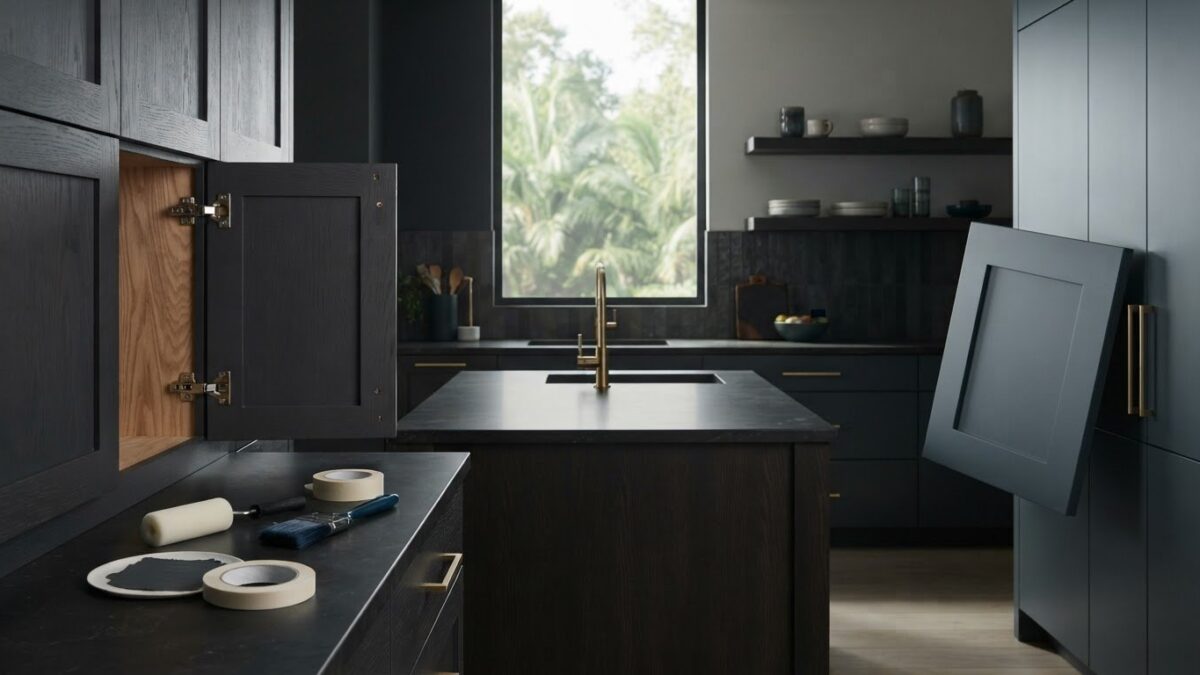
Laminate cabinets can be painted, but preparation decides whether the new finish adheres. Clean the surface, scuff it with 180-220 grit sandpaper, then apply bonding primer and enamel. This preparation is essential for laminate and melamine, whose smooth surfaces give paint little grip without abrasion and primer.
Wood can be sanded to prepare its surface for a new finish. You can preserve visible grain with a suitable clear finish or choose paint for a fresh look. Repair dents and loose finish before coating: paint will not fix damage underneath. The cost to paint wood cabinets versus laminate reflects this difference in preparation, especially when laminate edges need extra attention.
Painting laminate and melamine calls for careful preparation, especially in high-touch areas. Edges and spots around pulls tend to wear first, so inspect them before choosing between painting and replacement. If laminate is peeling or badly chipped, a new coating cannot restore the damaged construction. Sound cabinet doors are better candidates for a careful paint refresh.
Use this practical sequence for laminate or melamine:
- Remove doors and hardware, then clean away kitchen grease and stains.
- Scuff the surface evenly with 180-220 grit without cutting through the laminate.
- Apply bonding primer, followed by enamel, and allow each coat to dry as directed.
- Pay close attention to edges and pull areas, where everyday contact causes earlier wear.
Wood, laminate, and melamine each offer a different way to refresh a kitchen. Painting solid wood can preserve usable cabinet construction, while laminate’s factory pattern stays consistent unless covered. Weigh the time and care needed for preparation against the cost and disruption of installation or replacement. A premium paint finish can change the color, but it cannot make a failing surface sound.
For a polished result, get help planning your cabinet finish around the existing material and its condition.
The Awesome Painting Services: Interior Painting
The Awesome Painting Services provides Kitchen Cabinet Refinishing for homeowners looking to refresh sound cabinets rather than replace them. When comparing wood and laminate, consider the material, surface condition, and appearance you want. A new finish can update the kitchen, but peeling laminate or damaged cabinet construction may call for a different solution than painting.
Interior Painting can extend a cohesive refresh beyond the cabinets, while Custom Wood Geometric Accent Walls add a distinct design feature. Consider refinishing if the cabinet structure is usable and you want to change its color or finish. Share your goals and cabinet concerns with The Awesome Painting Services to discuss your next step.
Choose the Finish That Fits Your Next Chapter
Your kitchen should suit the way you live now, not just reflect the material it was built with. Let the cabinet condition guide your decision: a sound surface may be worth refreshing, while extensive damage can change the calculation. The cost to paint wood cabinets versus laminate is only one part of the decision, alongside the finish you want and how you use the space.
The Awesome Painting Services offers Kitchen Cabinet Refinishing, Interior Painting, and Exterior Painting. For a cabinet refresh, the project’s scope and surface condition determine the work and price. Request a free, transparent estimate with no hidden fees.
Contact The Awesome Painting Services to discuss your kitchen cabinet goals. A thoughtful finish can make the room feel renewed and more like your own.
Frequently Asked Questions
What is the average cost to paint wood kitchen cabinets in the U.S.?
For wood cabinets, cost depends on the number of doors and drawer fronts, their condition, and the repair and preparation required. Intricate profiles need more detailed work than flat doors, while damaged finishes may require extra surface preparation. To compare estimates, count doors and drawer fronts separately and note visible peeling, dents, or worn areas.
What is the average cost to paint laminate kitchen cabinets?
The cost of painting laminate depends on surface condition and the preparation needed for paint adhesion. Smooth, intact doors differ from chipped or peeling surfaces that need repair first. The cost to paint wood cabinets vs. laminate also reflects the additional preparation laminate may require. Note damage around door edges and handles, as these areas affect the work involved.
How much do professional cabinet painters charge per cabinet, linear foot, or project?
Professional painters may estimate by door, linear foot, or the full project, so compare what each estimate includes. Door count, drawer fronts, finish condition, surface preparation, and cabinet detail affect the scope. For kitchens in Orlando or Winter Park, record those details before requesting an estimate. Project pricing depends on the specific work and is provided after a quote request.
What supplies and labor are needed to paint wood cabinets?
Typical supplies include cleaning materials, sandpaper, primer, enamel, masking materials, and tools for removing and reinstalling doors. Labor covers cleaning, surface preparation, priming, painting, and careful handling of doors and hardware.
Can laminate cabinets be painted successfully, and how long does the finish last?
Yes, laminate can be painted when the surface is prepared for adhesion and coated with bonding primer and enamel. Painted kitchen cabinets typically last 5-10 years before needing more than touch-ups, though that figure isn’t specific to laminate. Keep the surface clean with a soft cloth and mild detergent, and watch for early wear near handles and edges.
How does the durability of painted wood compare with painted laminate cabinets?
Wood has an advantage when damage reaches the cabinet material because it can be repaired or refinished. With painted laminate, a chip may expose the original surface, limiting repair options. Inspect a cabinet door’s edge as well as its face: damage through the coating into the substrate needs a different repair approach from a mark in the paint alone.