Auto Service Bay Floor Coating in Orlando: Preparation and Installation
A service-bay floor is only as dependable as the concrete beneath its coating. For auto service bay floor coating in Orlando, the process starts with preparing the slab and choosing a system suited to chemical, abrasion, and impact demands, considerations identified by the U.S. Environmental Protection Agency. The Internal Revenue Service notes that epoxy floor paint or sealant applied directly to concrete creates a sealed surface resistant to water and oil and easy to clean.
That sealed finish matters in a working bay, but the result depends on more than the coating itself. Plan for concrete preparation, installation, abrasion resistance, and slip resistance based on how the space is used.
This article explains what professional preparation and installation involve, how quartz relates to abrasion resistance, and how slip requirements shape the finished floor. You’ll get a clearer picture of the choices that support a durable, practical service bay.
Key Takeaways
- Concrete condition and preparation affect how well a coating bonds, so the installation plan should account for the slab before application begins.
- Match the coating system to the bay’s work demands, including chemical exposure, abrasion, impact, and traction needs.
- Quartz can contribute to abrasion resistance, while the floor’s texture also matters for slip considerations.
- Plan vehicle access around the coating system’s cure requirements; the return-to-traffic timing depends on the product and installation conditions.
Professional concrete floor coating preparation and installation process
A lasting finish starts with the concrete, not the color. Preparation, repairs, coating selection, and cure planning all shape the result.
Preparation and Installation Sequence
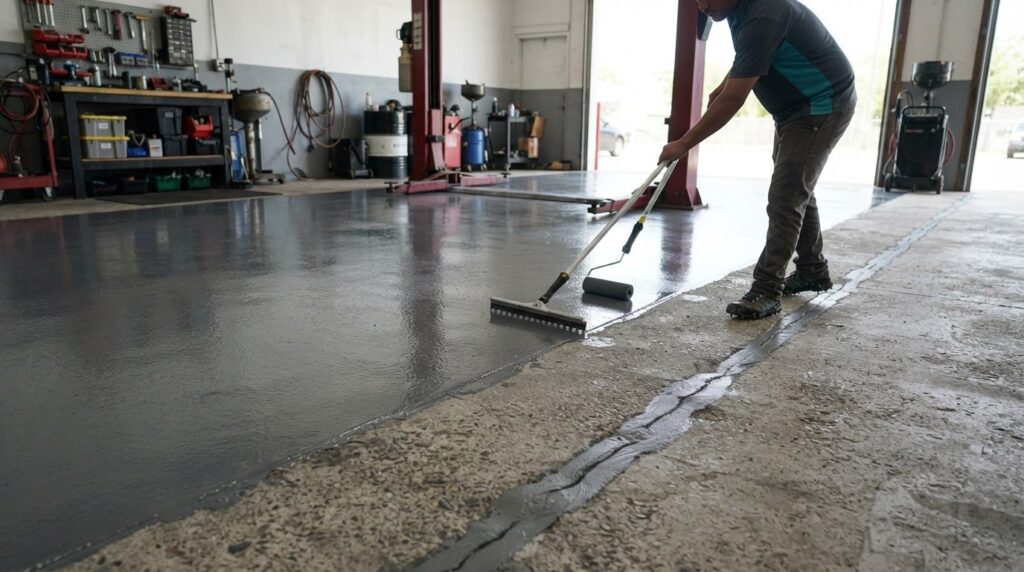
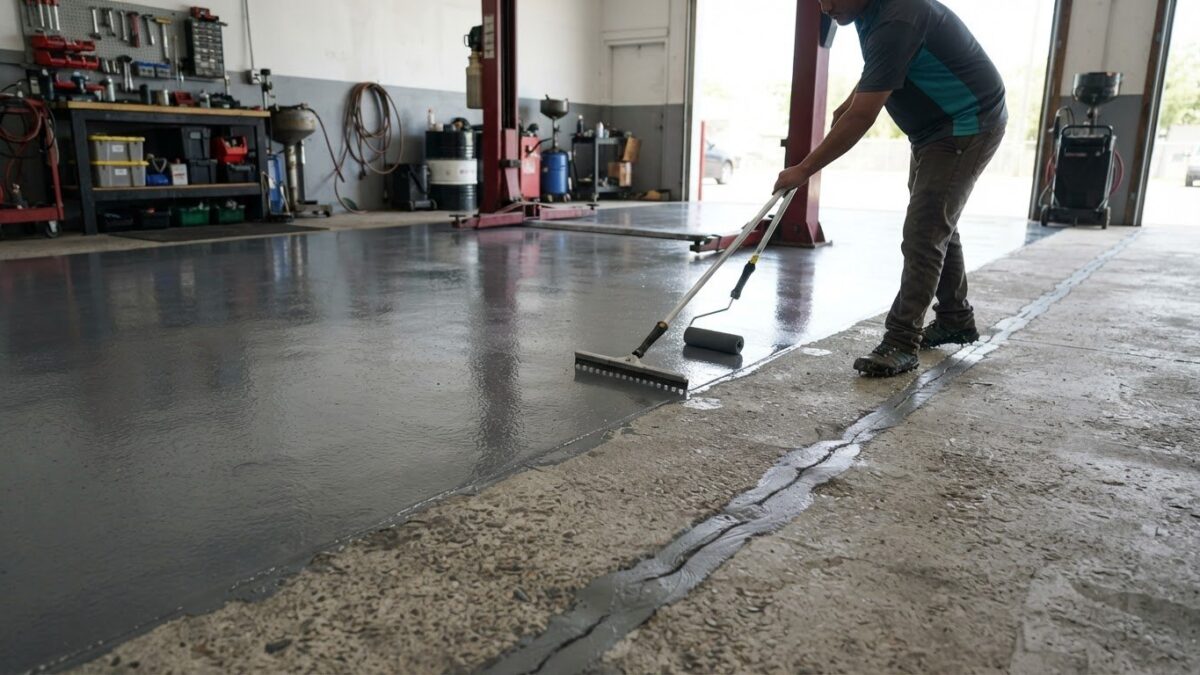
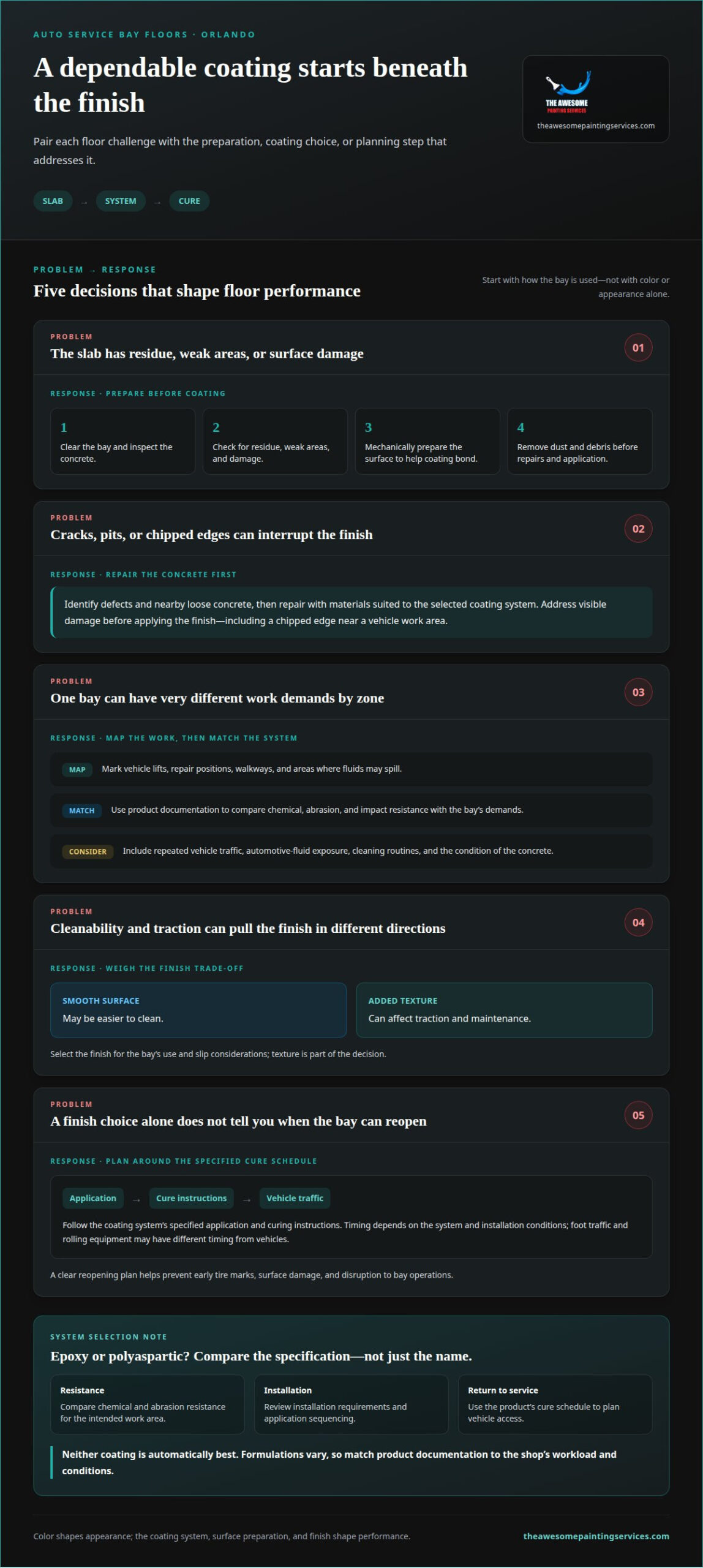
The installer first clears the bay and checks the concrete for residue, weak areas, and surface damage. Mechanical preparation then creates a profile that helps the coating bond. Dust and debris are removed before repairs and coating application begin. Each layer must follow its specified application and curing instructions. This sequence supports consistent coverage across service lanes, work areas, and garage floors.
Crack and Imperfection Repairs
Cracks, pits, and uneven patches can interrupt a smooth coating and affect how it sits on the slab. During preparation, the installer identifies these defects and repairs them with materials suited to the coating system. The repair plan should address visible damage and nearby loose concrete. For example, a chipped edge near a vehicle work area needs attention before the finish is applied.
Solid-Color Concrete Coatings
A solid-color coating creates a uniform finish across concrete, which can make oil marks and other shop stains easier to spot. Color shapes the bay’s appearance, while the coating system determines its protective properties. Discuss how the selected finish handles routine cleaning and exposure to shop substances. Consistent application matters, especially where the floor spans adjoining work zones.
Curing Before Vehicle Traffic
Vehicle access should wait until the coating reaches the cure stage required for traffic. The timing depends on the coating system and installation conditions, so the product’s specified schedule guides when the bay can reopen. Foot traffic and rolling equipment may have different timing from vehicles. A clear reopening plan helps prevent early tire marks, surface damage, and disruption to bay operations.
Commercial Protection and Finish Considerations
Commercial concrete coatings suit spaces such as repair bays and service garages, where floors face repeated use and spills. Select a system with stain resistance and protection appropriate for the materials handled in the shop. UV resistance also matters where sunlight reaches the slab through doors or windows. The coating specification should account for that exposure instead of relying on color alone.
Auto shop floor coating services in Orlando
For auto service bay floor coating in Orlando, choose a system based on the bay’s work, exposure, and finish needs. A coating alone doesn’t establish regulatory compliance; requirements depend on operations and how chemicals, wash water, and coating waste are handled.
Auto Service Bay Coating Options
Options include epoxy systems and other resin-based coatings, each designed for its intended use. Start by mapping the floor: vehicle lifts, repair positions, walkways, and areas where fluids may spill. The U.S. The U.S. Environmental Protection Agency advises considering a coating’s resistance to chemicals, abrasion, and impact. Match those demands to product documentation instead of choosing by color or appearance alone.
Also consider the finish. A smooth surface may be easier to clean, while added texture can affect traction and maintenance. A bay exposed to oil and frequent vehicle movement, for example, needs a system selected for those conditions, not simply the finish used in a lightly used garage. Concrete condition and preparation remain important to coating performance.
Epoxy and Polyaspartic Comparisons
Are epoxy or polyaspartic coatings better for automotive service bays? Neither is automatically best. Compare each system’s chemical and abrasion resistance, installation requirements, and cure schedule with the shop’s workload. Formulations vary, so the material name alone doesn’t show how a finish will perform in a particular bay.
Consider how each system suits the shop’s planned use, including repeated vehicle traffic or exposure to automotive fluids. The product specification should relate directly to the work area. A useful comparison also explains application sequencing and when the floor can return to service, helping the shop plan operations without relying on a generic cure estimate.
Orlando shops should account for activities performed onsite, including fluid handling, washing, and waste management. The coating choice itself doesn’t determine which Florida or Orlando regulations apply. Requirements depend on the operation and how materials or wastewater are managed, so don’t treat a particular resin or finish as proof of compliance.
An auto service bay floor coating project in Orlando should begin with defined service zones and performance priorities, then match those needs to the chosen system. For a bay project centered on epoxy, explore commercial epoxy floor coating as a practical next step.
What floor coatings are best for auto service bays?
A suitable coating matches the bay’s actual work, not just its appearance. Consider vehicle movement, fluid exposure, cleaning routines, and the concrete’s condition. A repair shop handling oil, coolant, and metal parts needs a different performance focus from a lightly used storage garage. The coating system, surface preparation, and finish all contribute to floor performance.
The U.S. Environmental Protection Agency identifies chemical, abrasion, and impact resistance as factors for auto service bay coatings. Apply those criteria to separate zones: a lift area sees vehicle and tool activity, while a service counter may need only straightforward cleaning. This assessment helps narrow the system before you choose color or texture.
- Epoxy: Epoxy floor paint or sealant applied to concrete can create a sealed, water- and oil-resistant, easy-to-clean surface, according to the Internal Revenue Service.
- Quartz-enhanced systems: Broadcast quartz provides a textured aggregate layer within a coating system. Consider it where abrasion resistance and surface texture matter.
- Solid-color finishes: A continuous color can create a clean, consistent appearance across service lanes. Choose a shade and finish with routine shop cleaning in mind.
- Other resin systems: Compare each system’s technical information and installation requirements against the bay’s use, rather than relying on its category name alone.
Quartz is worth considering when a floor faces repeated contact from equipment, tires, or dragged objects. Its aggregate can also change the surface texture, affecting both cleaning and traction. Account for both when planning the finish rather than treating abrasion resistance as the only goal. A service lane and a frequently washed area may need different texture choices.
Slip requirements should reflect how people use each part of the bay. Consider entry paths, work zones, and places where fluids or wash water may reach the floor. Texture, cleaning routines, and exposure conditions all work together. In Orlando, define these needs before selecting the system, then compare the proposed finish with the shop’s day-to-day tasks.
How long must a coated shop floor cure before vehicle traffic?
There isn’t one reliable vehicle-traffic wait time for every coated shop floor. The coating system’s technical instructions set the required cure schedule, and installation conditions can affect it. A surface that feels dry may still need more time before tires, lifts, or rolling equipment can use it. Plan reopening around the product’s vehicle-traffic milestone, not appearance alone.
During project planning, identify the exact coating system and map its return-to-use stages. These may distinguish foot traffic from heavier use, such as vehicle tires or equipment. That difference matters in an automotive bay: a staff walkway may be ready before a service lane. Follow the specified schedule for each stage instead of treating all access as equivalent.
Conditions during application also matter. Ambient temperature, humidity, airflow, and concrete temperature can influence how a coating cures. The product’s instructions explain the conditions that apply to that system. A professional installation plan accounts for the work area and expected conditions, then communicates when each bay can reopen. Don’t apply a generic timeline from another product or project.
For a busy Orlando shop, coordinate the coating schedule with bay availability before work begins. Moving vehicles into a coated area too early can leave tire marks or damage the finish. Keep traffic, cleaning, and equipment off the floor until the appropriate cure stage. If the project covers multiple bays, phased reopening may help operations continue elsewhere while coated areas remain closed.
Use this sequence to plan the return to service:
- Identify the coating system and its written cure instructions.
- Set separate access milestones for people, equipment, and vehicles.
- Schedule bay reopening only after the vehicle-traffic stage is reached.
Before installation, align the work schedule with the coating’s cure requirements and the shop’s operating needs. Plan your epoxy floor coating project with the vehicle-return timeline in mind.
The Awesome Painting Services: Epoxy Floor Coatings
The Awesome Painting Services offers epoxy floor coatings for commercial spaces, including auto service bays. Turn to this service when your shop needs a coated concrete floor and a planned installation that considers surface preparation, repairs, finish selection, and vehicle return to service.
Share how each bay is used, including areas exposed to automotive fluids, vehicle movement, or frequent cleaning. These details help shape the coating plan around the space’s practical demands. Color and texture influence appearance and daily upkeep, while the system’s cure instructions guide reopening plans.
A clear scope connects the concrete condition, coating choice, and shop schedule before work begins. For an Orlando service bay, consider the floor part of the working environment, not just a surface to refresh. If you’re planning an epoxy floor coating project, contact The Awesome Painting Services to discuss your space.
Set your service bay up for its next chapter
A floor project is also a chance to tailor the work area to your shop’s priorities. Before scheduling, decide how the bay should look, how it supports daily operations, and how installation will fit around vehicle access. Those choices give your auto service bay floor coating in Orlando a clear purpose from the start.
The Awesome Painting Services also offers interior and exterior painting, plus kitchen cabinet refinishing. For a commercial floor project, focus the conversation on the service bay, the concrete, and the finish you want. A clear scope turns your plans into a practical next step.
Ready to discuss your shop floor? Contact The Awesome Painting Services to start planning a refreshed, hardworking bay.
Frequently Asked Questions
Which Orlando contractors install automotive service bay floor coatings?
The Awesome Painting Services installs epoxy floor coatings for commercial spaces in Orlando. For an automotive bay, describe vehicle traffic, fluid exposure, and cleaning needs. Those details help define the coating scope and scheduling considerations. Match the system to the concrete and the shop’s operating priorities instead of choosing by appearance alone.
How long does auto service bay floor coating installation take?
Installation timing depends on the coating system, the concrete’s condition, and the preparation required. Repairs or additional surface preparation add steps, while cure requirements determine when vehicles can return. A shop coating several bays, for example, may plan access separately for each area. Build the schedule around both application and the product’s vehicle-traffic cure stage.
What floor preparation is required before coating a concrete service bay?
Preparation starts with assessing the slab for old coatings, oil residue, loose concrete, cracks, and pits. Contaminants and weak material can interfere with adhesion, so address them before coating. A previously painted service lane, for example, may need different preparation from bare concrete. Complete repairs and surface profiling before applying the coating system.
How resistant are service bay coatings to oil, fuel, brake fluid, and hot tires?
Resistance to fuel, brake fluid, and hot tires varies by coating system. A description of a finish as oil-resistant alone doesn’t establish performance against every exposure. The Internal Revenue Service describes epoxy floor paint or sealant applied directly to concrete as creating a surface resistant to water and oil. For a bay handling specific fluids, compare the product’s written chemical-resistance information with those substances.
What warranties and maintenance are typical for commercial garage floor coatings?
Warranty coverage and maintenance instructions depend on the coating system and written project terms, not on the phrase “commercial floor coating” alone. Review what the warranty covers and any care conditions for the installed finish. For routine upkeep, follow the coating manufacturer’s cleaning directions, remove debris, and address spills promptly using methods approved for the surface.
What slip-resistant finishes are available for auto shop floors?
Quartz-broadcast coatings add texture that can affect traction. Choose the finish based on each area’s use, fluid exposure, and cleaning needs.