Hotel Painting Services in Central Florida for Guest Comfort
Hotel painting services in Central Florida need to account for more than fresh color. Guest rooms, public areas, and exterior spaces each call for a plan that fits hotel operations. Phased work and careful scheduling help limit disruption as the property is refreshed.
Protecting the guest experience is central to a hotel refresh. Hotel painting differs from other commercial work because crews must coordinate around occupied spaces, guest movement, and the needs of each area. This guide covers the scope of the work, ways to schedule it with fewer interruptions, and factors that shape a project.
You’ll also learn why commercial painting schedules vary with a space’s size and use, and how to plan a refresh that supports the property’s appearance and day-to-day operations in Central Florida.
Key Takeaways
- Plan interior and exterior painting around each area’s condition, use, and role in the guest experience.
- Break the project into zones so work can progress while hotel operations continue.
- Use occupancy patterns to prioritize spaces and coordinate work periods with lower guest activity.
- Set repainting plans by considering traffic, exposure, and the demands of each commercial space.
Why Choose Us For Hospitality & Hotel Painting?
Hotel painting can cover guest rooms, shared spaces, and exposed exterior surfaces. Interior and exterior plans should reflect each area’s role in guest comfort and hotel operations.
Low-VOC and Durable Paint Options
When selecting paint, compare the product label’s emissions information and intended use. For guest rooms, choose an interior product suited to the wall surface and expected cleaning. Florida’s sun, rain, and humidity also matter outdoors: match the coating to the exterior surface and exposure, and follow the product’s application instructions. This helps narrow the options without assuming one finish suits every hotel.
Contractor Licenses and Insurance
Licensing requirements vary by project scope and jurisdiction, so one credential may not address every hotel’s needs. Define the work first, distinguishing interior repainting from tasks that change the project scope, then identify the rules that apply. Insurance documents should also correspond to the planned project and site. For example, compare the written scope with the contractor’s documented coverage before arranging access. Keep these records with the project details and operations plan.
Safety and Environmental Requirements
Plan for guest routes, work areas, product handling, and the hotel’s fire-safety procedures. Keep exits and access routes clear during painting, and follow product labels for handling and ventilation. Environmental requirements depend on the materials and work involved, so follow applicable storage and disposal rules. For example, separate the work zone from guest traffic and coordinate access with hotel staff. Clarify responsibilities in the site plan before work begins.
Hotel painting can include interior and exterior surfaces, as well as lobbies, corridors, meeting rooms, and guest rooms. Exterior work can refresh visible building surfaces, while interior painting can renew high-use spaces. Start by listing each area, its surface, and its role in hotel operations. This creates a clear scope for hotel painting services in Central Florida.
How do hospitality painters ensure minimal guest disruption during painting?
Hotels can limit disruption by dividing work into defined zones and coordinating each phase with daily operations. A practical schedule identifies access, guest routes, room status, and the person overseeing each work area.
Project Timelines and Scheduling
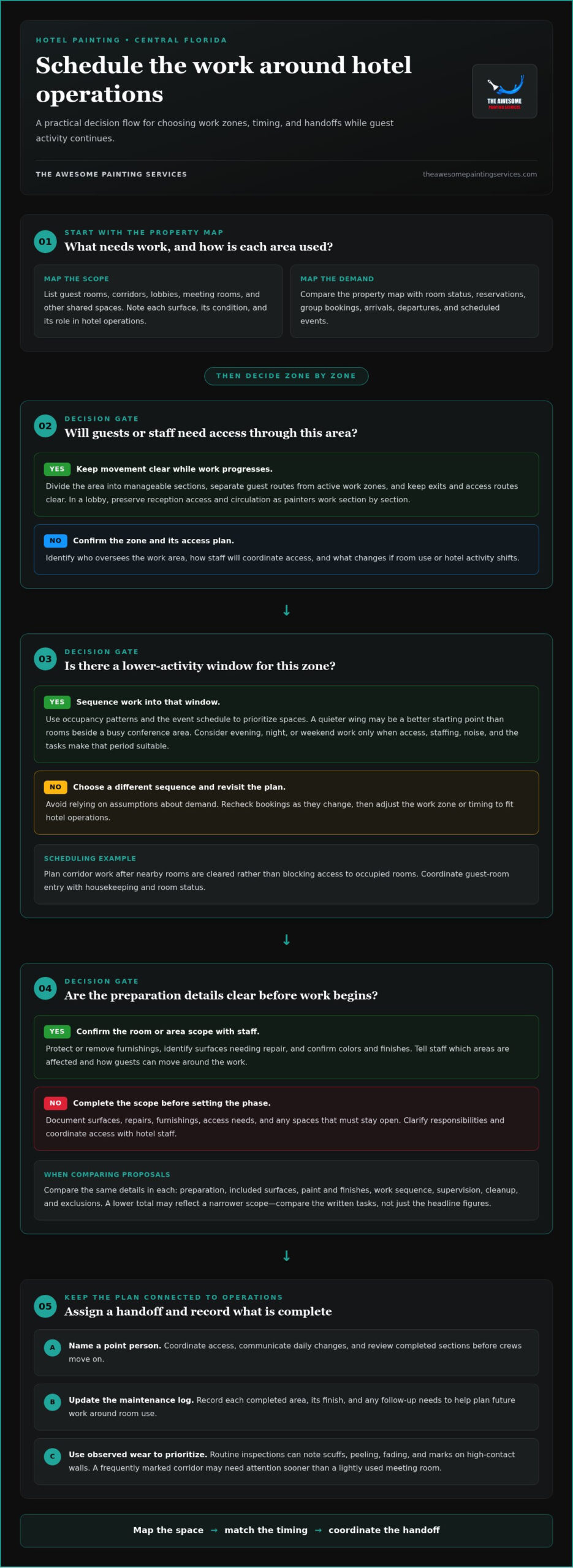
Map the project against occupancy, arrivals, departures, and scheduled events. Then sequence the work to keep guest routes separate from active work zones. For example, schedule a corridor after nearby rooms are cleared rather than blocking access to occupied rooms. A written plan should assign each area and work phase, with a hotel operations contact for handoffs. Staff can use it to track progress and adjust room use.
Lobby and Guest-Room Projects
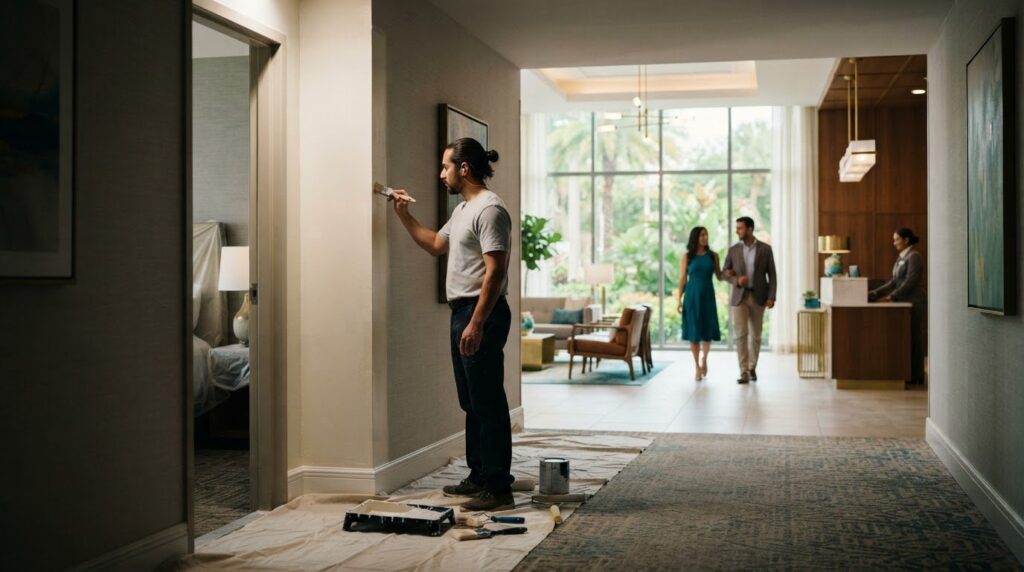
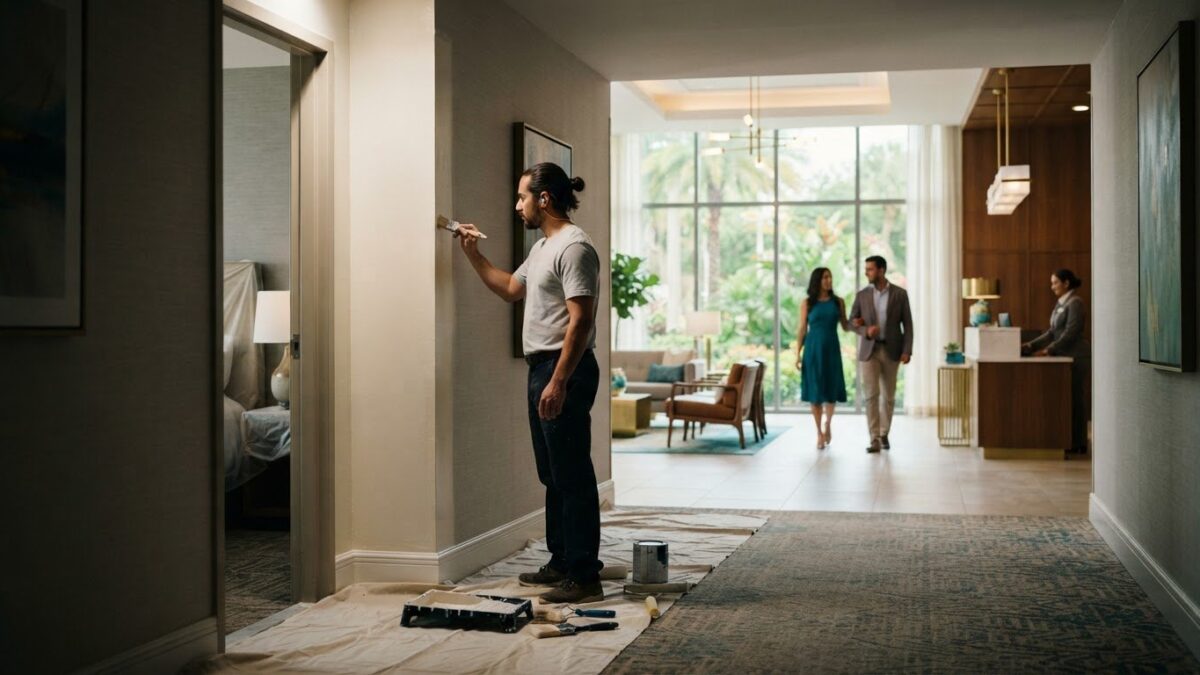
Because guests pass through the lobby throughout their stay, divide the space into manageable sections. Keep reception access and clear circulation open as painters work through one section at a time. Coordinate guest-room entry with housekeeping and room status. Before work begins, protect or remove furnishings, identify surfaces needing repair, and confirm colors and finishes. This helps avoid repeat room entries and keeps each room’s scope clear.
Project Preparation and Proposals
Before painting rooms or public areas, document the surfaces, repairs, furnishings, access needs, and spaces that must stay open. Tell staff which areas will be affected and how to guide guests around the work. When comparing proposals, review the same details in each: preparation, included surfaces, paint and finishes, work sequence, supervision, cleanup, and exclusions. A lower total may reflect a narrower scope, so compare the written tasks, not just the headline figures. Resolve differences before choosing a proposal.
On-site supervision connects the schedule to the hotel’s day-to-day operations. Assign a point person to coordinate access, communicate daily changes, and review completed sections before crews move on. For example, staff can flag a meeting-room booking that changes access requirements.
Project types may include guest-room refreshes, lobby walls, meeting rooms, and corridor repainting. A clear commercial painting project plan helps organize those spaces around hotel use.
Occupancy-aware scheduling and off-hours work
Occupancy patterns help hotels decide what to paint and when. Use the room calendar, event schedule, and seasonal booking patterns to plan each phase.
Scheduling Around Occupancy
Start with a property map marking rooms, corridors, and shared spaces by expected use. Compare it with reservations, group bookings, and scheduled events before setting work zones. For example, a quiet wing with fewer arrivals may be a better starting point than rooms beside a busy conference area. Revisit the plan as bookings change so hospitality painting supports operations and guest satisfaction.
Schedule work around the hotel’s own demand patterns rather than assumptions about every Florida property. Consider evening, night, or weekend work only when access, staffing, noise, and the tasks make those periods suitable. A night shift may suit a low-traffic corridor, while detailed work near reception could need a different sequence. Confirm room access and staff coordination for each shift.
Scheduled Maintenance Painting
Add painting to the property’s maintenance calendar instead of waiting until every surface looks worn. During routine inspections, note scuffs, peeling, fading, and marks on high-contact walls. Group similar surfaces into a defined scope, such as guest-room doors on one floor or meeting-room walls during a planned closure. These observations help prioritize work and choose suitable coatings.
Record each completed area, its finish, and any follow-up needs in the hotel’s maintenance log. These records help staff compare wear across spaces and plan future work around room use. For example, a frequently marked corridor may need attention sooner than a lightly used meeting room. A consistent review and scheduling process supports durable finishes without treating every area the same.
Before work starts, appoint an operations contact to update room status and communicate schedule changes. This person can coordinate housekeeping, front-desk staff, and painters when a late checkout or event affects access. A clear handoff keeps the active work zone aligned with occupancy and helps the team adjust the sequence without disrupting guest routes.
Commercial painting services in Central Florida
Commercial painting plans should fit each property’s surfaces, daily traffic, and maintenance needs. In Orlando and across Central Florida, hotels can assess interiors, exteriors, and floors separately before defining project scope.
For interior commercial spaces, repainting typically falls every 7-10 years, depending on traffic and use. That interval is a planning reference, not a substitute for inspecting the actual surfaces. A busy lobby may show scuffs before a lightly used meeting room. Record wear by area, then prioritize surfaces based on appearance, use, and operational importance.
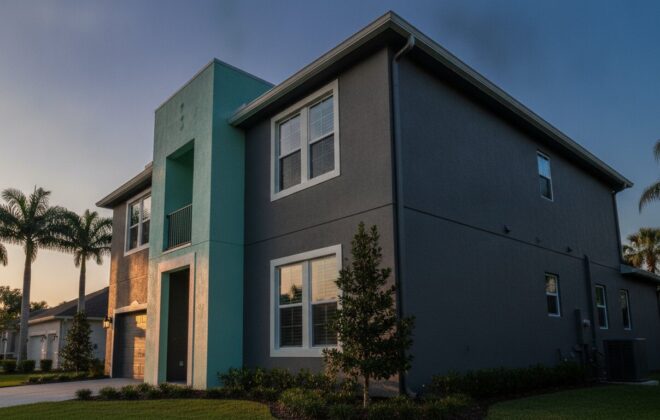
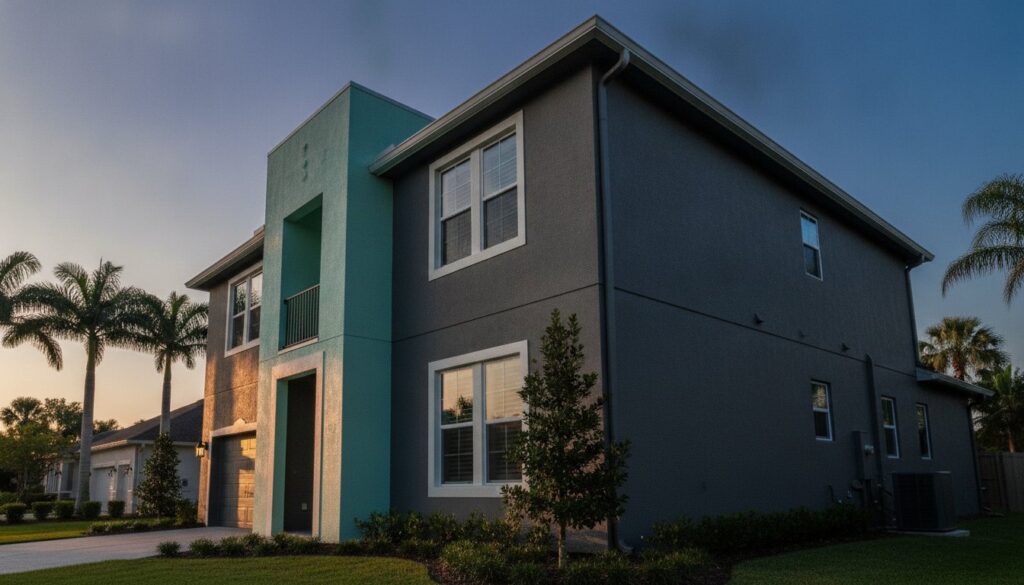
Florida commercial exteriors typically need repainting every 4-7 years. Sun, rain, humidity, and the building’s exposure all affect coating performance. Review exterior walls for fading, peeling, or damaged areas, then match preparation and coatings to the surface. This is also where durability matters: the right painting solutions depend on the building’s condition and exposure, not simply its age.
Project size affects how teams plan access and sequencing. Commercial painting of small offices typically takes 3-5 days, while large facilities such as schools or municipal buildings typically take 2-4 weeks. Hotels vary by scope, occupied areas, surfaces, and work phases, so those examples shouldn’t be treated as hotel timelines. Floors add another planning consideration: coordinate access around the area’s use and required work sequence.
Hotel painting companies serving Central Florida work within a regional market that includes Orlando. The specific cities and counties depend on the service area arranged for a project, so define the property location and scope together. A practical first step is to list each building area, its condition, and its daily traffic. Then group similar surfaces and identify access constraints before setting the schedule.
For a property refresh, discuss your commercial painting project and the surfaces that need attention.
The Awesome Painting Services: Interior Painting
The Awesome Painting Services provides Interior Painting and Commercial Painting for properties planning an interior refresh. If hotel rooms, corridors, or shared spaces need fresh color, these services can help shape the work around the surfaces and areas involved.
Identify which spaces need attention and the look you want for the finished interiors. Clear priorities help define a focused scope, whether you’re refreshing guest-facing rooms or updating shared areas. Where they suit the space, Kitchen Cabinet Refinishing and Custom Wood Geometric Accent Walls can add complementary visual details.
For hotel exterior surfaces, Exterior Painting may suit the project. Contact The Awesome Painting Services to discuss your property’s painting needs.
Plan Your Property’s Next Refresh
A hotel refresh starts with a clear picture of what guests notice first. Walk the property with operations staff and identify the spaces that shape daily impressions, from arrival areas to guest-room interiors. Set priorities based on the property’s needs, desired appearance, and practical work sequence. A focused scope gives your team a useful starting point for planning hotel painting services in Central Florida.
The next step is to discuss your property and the surfaces you want to renew. The Awesome Painting Services can help you choose an approach suited to your project and create a polished, welcoming setting. Share the areas you’re considering and what you want the refreshed space to achieve.
Contact The Awesome Painting Services to discuss your hotel painting project and take the next step toward a refreshed guest experience.
Frequently Asked Questions
How does hotel painting differ from painting other commercial spaces?
Hotel painting must consider the guest experience as well as the surfaces being refreshed. A hotel may need separate scopes for guest rooms, reception areas, dining spaces, and back-of-house rooms, each with different access needs. For example, a lobby finish shapes a guest’s first impression, while a service corridor may call for a practical, easy-to-maintain finish. Plan the work around each area’s role.
Can you handle hotel painting services for PIP (Property Improvement Plan) compliance?
Painting can address visual updates listed in a Property Improvement Plan, but painting alone doesn’t establish full PIP compliance. Translate each painting-related item into a clear scope, such as named rooms, walls, trim, or other surfaces. Then compare the completed work with those written items. This keeps the painting portion distinct from other improvements outside its scope.
Do your hotel painting services include warranty and troubleshooting support?
Warranty coverage depends on the written project terms and shouldn’t be assumed from the painting service alone. If a finish concern arises, document the affected area, what it looks like, and when the issue appeared. Compare those details with the agreed scope and project records. This can help distinguish a potential application concern from later wear or damage, while keeping any remedy tied to the actual terms.
How do hotel painting services address high-traffic areas like hallways and stairwells?
For hallways and stairwells, define frequently touched or marked surfaces, such as wall corners, handrail areas, and door surrounds. Note these locations during a walk-through, then prioritize them by condition and visibility. Clear access plans help staff guide guests around active work. When selecting a finish, consider the surface and how it will be used.
Which painting contractors specialize in hotels in Central Florida?
The Awesome Painting Services provides commercial painting in Orlando and Central Florida, including Winter Park, Altamonte Springs, and surrounding areas. Services include interior and exterior hotel painting services Central Florida. For a hotel project, first define the property areas and requested work, such as guest-room interiors or exterior surfaces. A clear scope helps establish how the commercial painting service fits the property’s needs.
How long does a hotel painting project typically take, and what affects the timeline?
There is no single timeline for every hotel project. Duration depends on the number and condition of surfaces, preparation required, room access, and how the work is phased around hotel operations. Refreshing guest rooms differs from painting a property’s public areas and exterior surfaces. A defined scope, room-access plan, and work sequence give the property team a clearer basis for scheduling.