Church painting services Clermont: past projects and painting experience
A church’s paintwork does more than refresh a room: it shapes how the building’s architecture and details are seen. When planning church painting services in Clermont, consider the church’s character, the surfaces involved, and whether the work is a straightforward repaint or part of a broader refresh.
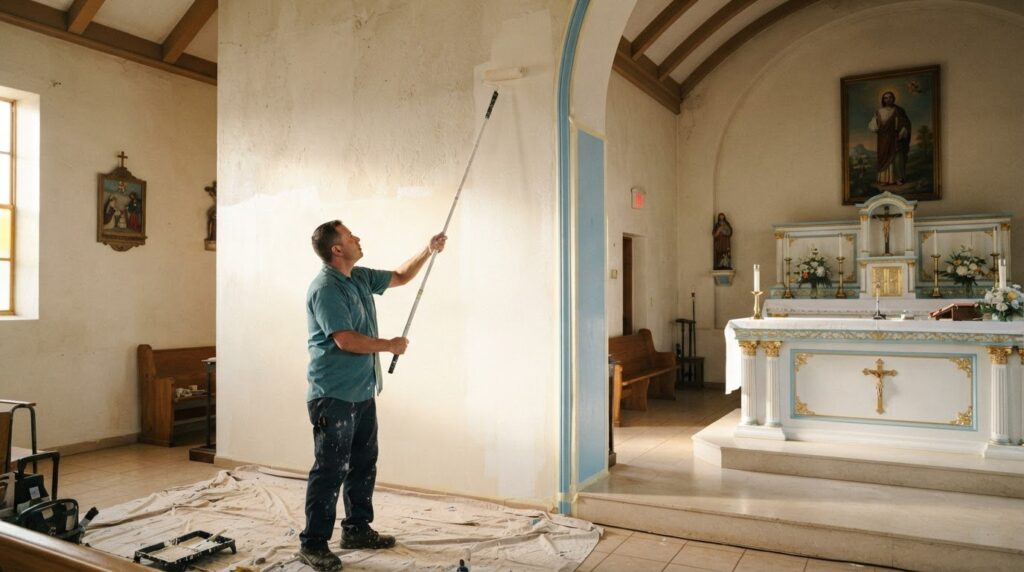
It’s natural to want a finish that feels clean and renewed without losing the qualities that make a church distinctive. Past church interiors and conservation projects show why the approach matters: painted walls, decorative details, and historic artwork can each call for different care. The Clermont Catholic Church, for example, had white walls and a white altar with light blue and gilt trim.
This article looks at church painting and restoration examples, then explains what to consider for interior and exterior painting. You’ll learn how a building’s surfaces and features shape the work and how to plan a thoughtful refresh for a church in Clermont.
Key Takeaways
- See how past church projects reveal the care needed to preserve distinctive interiors and historic details.
- Learn how interior and exterior painting differ, and why the surface and setting shape the approach.
- Understand which project details influence an estimate, from the areas to be painted to their condition and complexity.
- Discover what to look for when comparing contractors, including how their painting experience fits your church’s needs.
Past church painting and restoration projects
The Clermont Catholic Church had white walls and a white altar with light blue and gilt trim. Completed and consecrated in October 1895, it later closed in 1925 or 1926. It was first called Saint Sabinas Catholic Church, then Saint Celistus Catholic Church. Those specific color and naming details help illustrate why a church’s existing character matters when planning paintwork or restoration.
St. Luke’s Church offers another local example. Gothic Revival architect Richard Upjohn had drawn its plans by June 1859, and it was consecrated on St. Luke’s Day that year. Judge William H. Wilson gave the land for the church and its cemetery. These details connect the building’s appearance with its architectural style, setting, and history.
The timeline around St. Luke’s also shows the parish’s longstanding presence in Clermont. Services that led to its founding took place at the nearby Academy and other locations during the first half of the 19th century. Its first subscription list was drawn up on October 18, 1858. Resident rectors served from 1856 to approximately 1895.
Clermont’s church history also includes Clarkson Chapel, identified as an area church dated 1860. For a painting or restoration plan, these local examples offer context, not a template. A project’s approach should reflect the specific building, its surfaces, and any distinctive details that are meant to remain visible.
For a Florida church project, review insurance documentation, applicable licensing details, and written warranty terms separately. A warranty describes agreed work terms; it does not replace insurance or licensing documentation.
Project duration depends on the areas involved, surface condition, access, and preparation needs. Work can be organized by area and coordinated with services and other scheduled activities to reduce disruption.
At St. Nicholas Croatian Catholic Church, Maxo Vanka transformed the sanctuary in 1937 and 1941. The Society to Preserve the Millvale Murals of Maxo Vanka has led a section-by-section conservation effort there since 2009.
More than a dozen workers took part in the conservation work, and a conservation team worked from a 32-foot scaffold inside the church. Work carried out from the scaffold lasted over four months.
Interior and exterior church painting experience
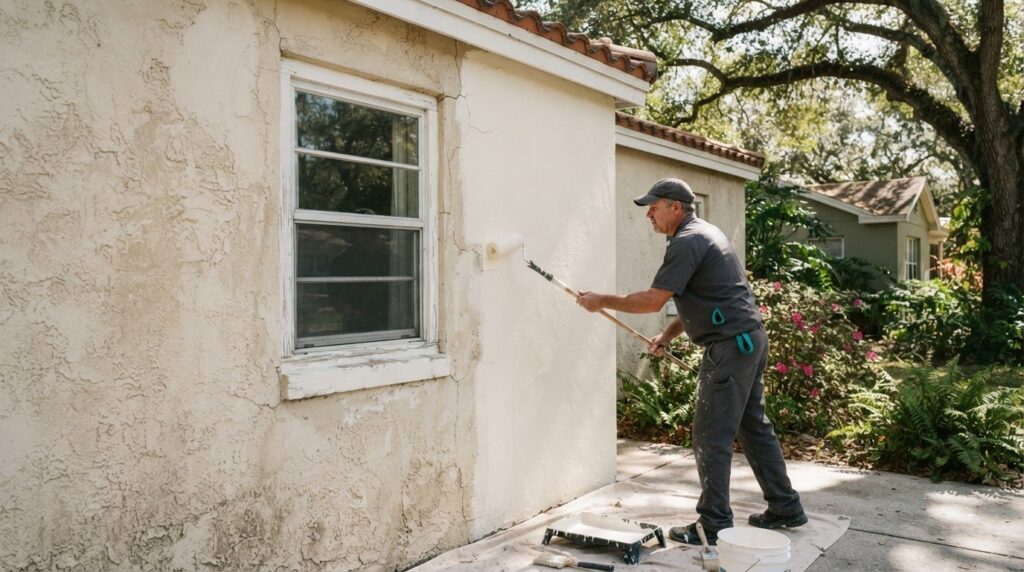
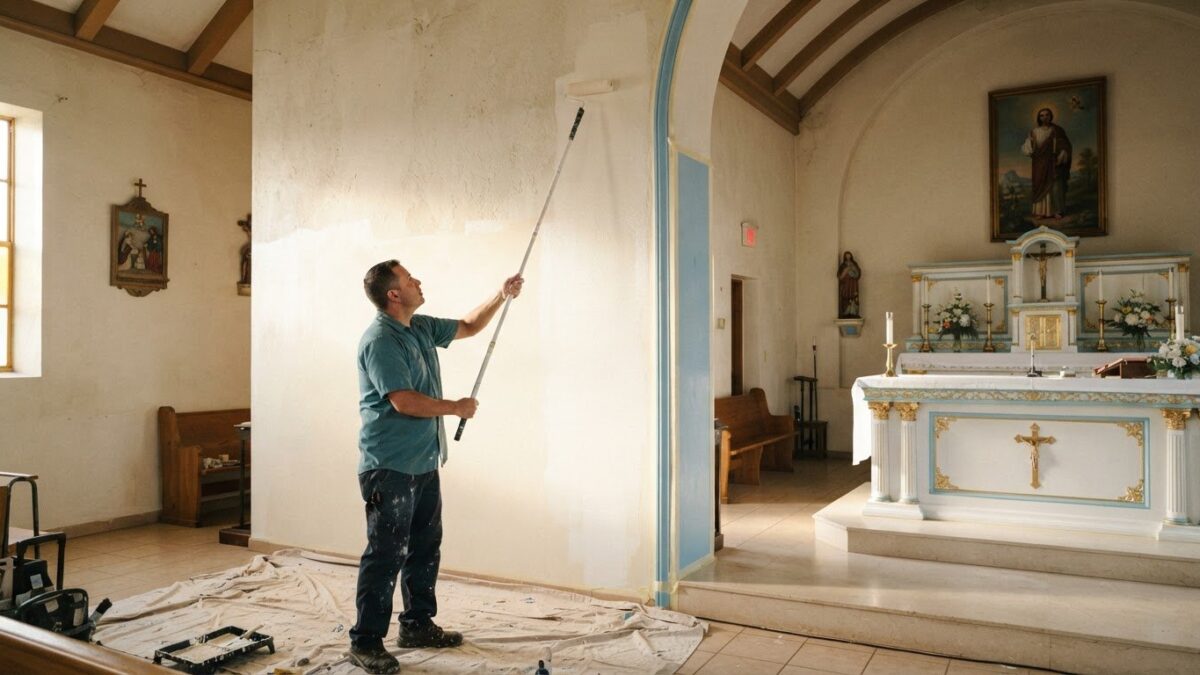
Interior and exterior work call for different considerations. In a sanctuary, the team considers wall condition, ceiling height, trim, artwork, and how parishioners use the space. Outside, it assesses the surfaces, existing coating, weather exposure, and access. These factors guide preparation and product selection. For church painting services in Clermont, plan around each distinct area rather than applying one approach throughout.
No single paint type or finish suits every Florida church. For interior walls, the choice depends on the surface, existing coating, desired appearance, and cleaning needs. Exterior products should suit the substrate and its exposure. A decorative altar, busy entry, and broad exterior wall may each call for a different finish. Follow product directions and check surface compatibility.
Preparation shapes the result. The painting team identifies areas to protect and notes damage, peeling, or uneven surfaces. It protects nearby fixtures and furnishings, cleans surfaces as needed, and completes suitable repairs. Primer may be needed depending on the surface and coating. Painting a poorly prepared wall can leave visible flaws, so preparation is an essential part of the work.
For a sanctuary with a high ceiling, access and careful protection affect the work plan. The team organizes work by area, keeps work zones clear, and coordinates timing with the parish’s schedule. For exterior surfaces, it considers access and weather before planning the application. Paint is applied according to product directions, followed by a review of coverage, edges, and trim.
A clear scope connects the church’s priorities with the painting plan. Decide which rooms or elevations need attention first, note existing colors and details to retain, and identify times when spaces must remain available. Planning church painting services in Clermont around those priorities helps tailor preparation and finish choices to each area. The team can organize interior and exterior painting to match the project’s needs.
What factors affect church painting estimates and pricing?
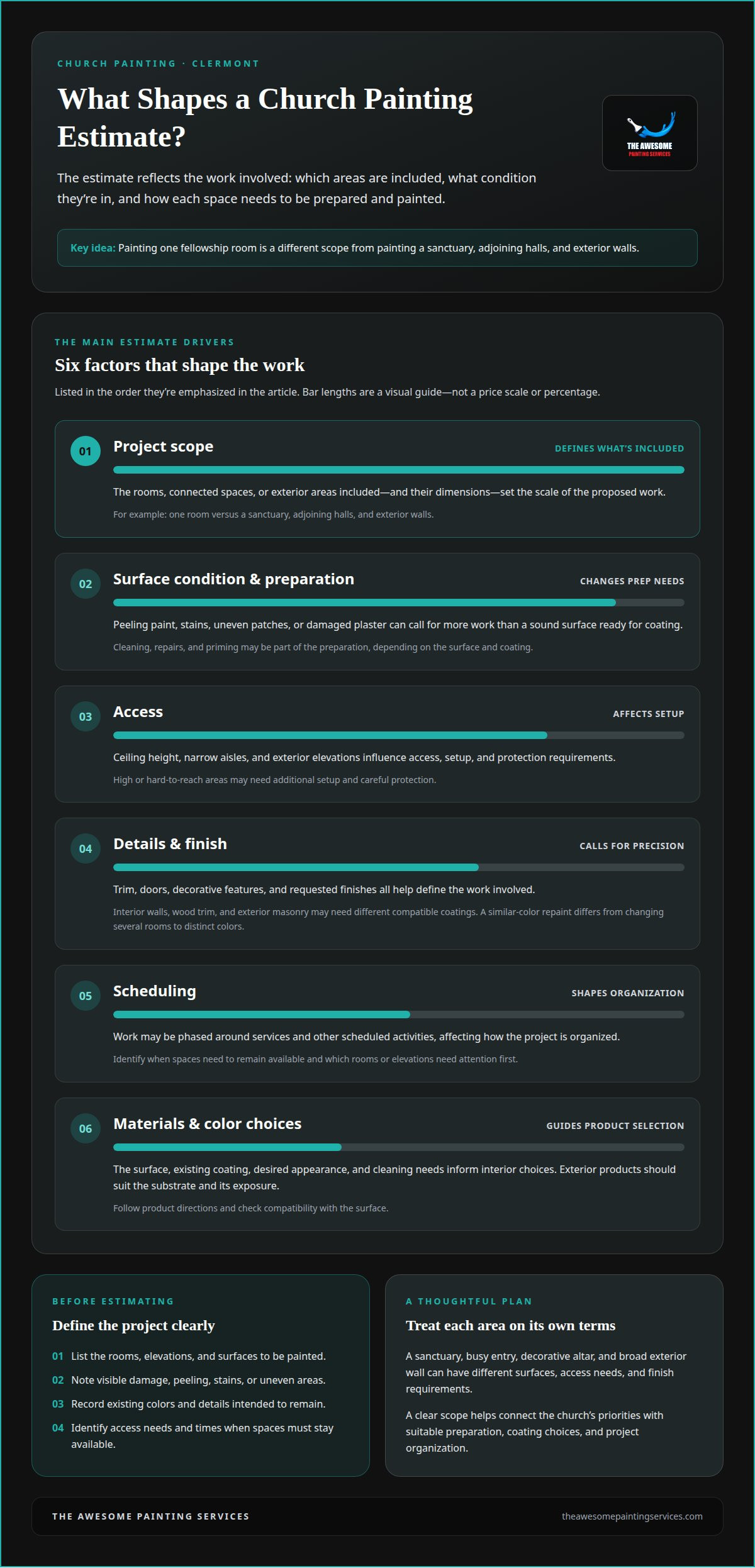
A church painting estimate reflects the project’s scope, not simply the building’s name or purpose. Painting one fellowship room in Clermont differs from painting a sanctuary, adjoining halls, and exterior walls. The estimate considers the areas included, their dimensions, surface condition, and requested finish. A clearly defined scope helps the parish understand the proposed work.
Preparation is another key factor. A wall with peeling paint, stains, or uneven patches needs more attention than a sound surface ready for coating. Repairing damaged plaster before painting, for example, involves more work than applying finish paint alone. Ceiling height and access matter too, since hard-to-reach areas may need additional setup and protection.
- Scope: A single room differs from several connected spaces or a full exterior.
- Surface condition: Repairs, cleaning, and priming affect preparation needs.
- Access: High ceilings, narrow aisles, and exterior elevations shape setup.
- Details: Trim, doors, and decorative features require added precision.
- Scheduling: Phased work around services can affect how the project is organized.
Material choices also shape the estimate. Interior walls, wood trim, and exterior masonry may require different compatible coatings. The requested color and finish help define the scope as well. A simple repaint in a similar color differs from changing several rooms to distinct colors, which can require extra planning and careful transitions.
Church activities affect the work plan. If the parish needs its sanctuary available for services, painting may need to be divided into sections. That organization can change setup, protection, and sequencing. An estimate should make clear which areas are included and what preparation, materials, and finish work each requires.
The price depends on the project and is provided after a quote request. For a useful estimate, define the rooms or exterior surfaces, note visible damage, and identify details to preserve. These specifics help the scope reflect the church’s needs rather than a broad assumption.
How to choose and compare church painting contractors in Clermont
Define the church’s actual scope instead of using a broad description like “paint the building.” A Clermont sanctuary may need its walls and trim painted, while its fellowship hall needs a separate color plan. A clear scope makes proposals easier to compare because each can address the same rooms, surfaces, and priorities.
Review whether the proposed work explains preparation and finish details. A useful proposal identifies included areas, surface repairs, protection measures, and the intended coating. For example, note whether a peeling entry wall needs preparation before painting. Naming these tasks gives the parish a clearer picture of the work than a total alone.
- Scope: Identify rooms, ceilings, trim, doors, and exterior surfaces.
- Preparation: Look for cleaning, repairs, protection, and priming where needed.
- Materials: Check that the proposed coatings suit each surface and intended finish.
- Schedule: Compare how work areas and service times are organized.
- Closeout: Confirm that the proposal includes a review of completed surfaces.
Look for experience that fits the building’s details. Painting a simple classroom differs from working around a sanctuary’s decorative trim or high ceiling. In Clermont, ask how the project plan accounts for access, protected furnishings, and the church calendar. A clear explanation shows whether the practical demands of that space have been considered.
Compare proposals side by side using the same project outline. If one includes wall repairs and another excludes them, the totals do not represent the same scope. Clarify differences in preparation, coating, included surfaces, and scheduling before deciding. This keeps the comparison focused on the work, not just the total.
For a church with defined painting priorities, request a painting estimate based on its rooms, surfaces, and desired finish.
The Awesome Painting Services
The Awesome Painting Services provides interior and exterior painting for church refresh projects, with the scope shaped around the building’s spaces, surfaces, and desired finish. Start by outlining which areas need attention and which details are central to the church’s character. That gives the team a practical basis for planning the work.
The Awesome Painting Services also offers kitchen cabinet refinishing and custom wood geometric accent walls. These options can suit separate areas that need a distinct update, without becoming the focus of a church-wide painting plan. Clear priorities help keep the project aligned with the building and its use.
Planning a church painting project in Clermont? Contact The Awesome Painting Services to discuss your goals and request a free estimate.
Plan a thoughtful next step for your church
A fresh church environment starts with a clear vision for how the building should feel and function. Before work begins, decide which spaces matter most, which existing details need care, and how painting can fit around parish activities. These priorities turn a broad idea into a focused project plan.
For church painting services in Clermont, start with a conversation about your building’s needs. Share the areas you’re considering and the finish you hope to achieve. This gives the project a practical starting point and helps shape an approach around the church rather than a generic template.
Contact The Awesome Painting Services to discuss your church painting plans. A considered refresh can support the character of your space and help it feel welcoming for the people who gather there.
Frequently Asked Questions
Which church painting contractors serve Clermont, Florida?
The Awesome Painting Services serves Clermont with interior and exterior painting for residential and commercial properties. Churches planning a refresh can discuss spaces such as a gathering room, office, or sanctuary. A focused description of the project helps establish its scope and priorities, so the team can shape the painting work around the building and congregation’s goals.
Are church interior painting services available in Clermont, Florida?
Yes. The Awesome Painting Services provides interior painting in Clermont, including church interiors. A project may refresh rooms used for worship, meetings, or community activities. The areas selected and their intended use help guide the scope. For example, a church might prioritize a frequently used entrance or meeting room before other interior spaces.
Are church exterior painting services available in Clermont, Florida?
Yes. The Awesome Painting Services offers exterior painting in Clermont to renew paintable surfaces. The project scope depends on which parts of the building need attention and the desired finish. A congregation might focus on a visible entrance or exterior walls as part of a broader property refresh, with clear priorities guiding the work.