Warehouse Ceiling Painting in Winter Springs: A Practical Guide
A warehouse ceiling project is won or lost before the first coat goes on. For facility managers researching warehouse ceiling painting Winter Springs, the practical challenge is getting a refreshed finish while keeping the scope, preparation, and day-to-day operations clear.
That takes planning. Warehouse ceilings can include different surfaces, overhead equipment, and access needs, so a plan that suits one building may not suit another. A commercial painting team should assess the property, explain the preparation included in the project, and communicate clearly about coordinating the work.
This guide explains what affects the scope and estimate, what to consider before painting begins, and how to plan around warehouse activity. You’ll also find practical ways to prepare for the project, from documenting ceiling conditions to setting expectations with the painting team. With a clear plan, you can make informed decisions about the work ahead.
Key Takeaways
- For warehouse ceiling painting Winter Springs, define the areas to be painted and your facility priorities before discussing the project.
- Record the ceiling’s visible surface types, existing finish, and wear so the preparation discussion reflects the actual conditions.
- Compare appearance goals, ceiling condition, access, and operational needs when deciding on project scope and sequence.
- Prepare for a clear process by documenting the requested work, explaining how the facility is used, and reviewing the estimate and project details.
- The Awesome Painting Services has painted 457 businesses and has 43 Google reviews verified by Trustindex, with a review score above 4.5.
Warehouse Ceiling Painting in Winter Springs: What the Project Needs to Solve
A warehouse ceiling project has three practical goals: improve the space’s appearance, define exactly what the work includes, and coordinate painting with facility operations. A refreshed finish can make the overhead area look more orderly, but a useful plan starts with identifying which surfaces need attention and how the crew can access them.
That’s why warehouse ceiling painting Winter Springs calls for more planning than repainting an ordinary room. A warehouse may have broad overhead surfaces, tall storage racks, lighting, conveyors, and other features that affect access and work sequencing. The location helps frame the search, but the right project scope depends on the specific building, its condition, and the result you want.
What makes a warehouse ceiling project different?
In a typical room, the ceiling is a single, easily understood plane. A warehouse ceiling may include exposed beams, roof decking, and other visible overhead surfaces. Decide which of these should be painted rather than assuming that “the ceiling” means every surface above the floor. Clear limits help everyone understand what the project includes.
Condition matters, too. Existing paint, bare or previously coated materials, discoloration, and visible wear can affect preparation needs. A walkthrough helps assess the actual surfaces instead of relying on assumptions based on the building’s age or what can be seen from the floor.
Set the visual goal in context. A customer-facing distribution area may call for a consistently clean, finished look, while a working storage zone may need a practical refresh suited to its use. Industrial painting covers a range of settings and applications; the Industrial Painting Overview offers general background. For your project, the warehouse’s surfaces and priorities should guide the discussion.
Set the project priorities before requesting an estimate
Before discussing an estimate, list what you want painted and what should remain outside the scope. Separate ceiling surfaces from walls, floors, equipment, or other work. Naming the areas helps prevent a ceiling request from being interpreted too broadly.
Then note details that can affect access and coordination. You don’t need to resolve every logistical question in advance. Sharing what you know gives the painting team a clearer starting point.
- Areas: Identify the building zones and overhead surfaces you want included.
- Facility use: Note how each area is used and whether inventory, equipment, or active work may affect access.
- Constraints: Describe access considerations and operational limits that may influence the work sequence.
- Timing: Share your preferred timing and any important scheduling considerations.
- Goals: Describe the finish you’re aiming for, such as a more uniform, refreshed appearance.
This brief can be simple. A marked-up floor plan, a short written description, or both can focus the estimate conversation. Clear priorities make it easier to discuss the requested scope, identify questions about the ceiling’s condition, and plan commercial painting around the property rather than treating the job like an empty room.
How Ceiling Surface and Condition Shape Warehouse Painting
A ceiling’s material and current condition help determine the work needed before painting begins. Two warehouse areas that look similar from the floor may have different finishes, repairs, or wear when viewed up close. For warehouse ceiling painting Winter Springs, assessing the surfaces helps establish a realistic scope instead of relying on a one-size-fits-all preparation plan.
Assess the ceiling material and existing finish
Start by recording what’s visible in each area. The ceiling might include metal decking, exposed structural elements, or other surfaces, and materials or finishes may change between sections. Note where existing paint appears intact, uneven, worn, or different in sheen or texture. These details give the project discussion a useful starting point.
Also document peeling or flaking areas, stains, patches, and visible repairs. Treat them as observations, not diagnoses. A stain alone doesn’t establish its cause, and a repaired section may have a different finish from the surrounding ceiling. Photos from accessible locations can show where conditions vary, while a closer assessment can help determine the work those areas call for.
Record each condition’s location as well as the issue. For example, note whether discoloration appears above a loading area, along a particular aisle, or around a repaired section. That gives the painting team useful context without assuming what caused the condition.
Match preparation and paint selection to the project
Preparation should reflect what the surface actually needs. A sound, previously painted area may call for a different approach from peeling paint or a patched section. Depending on the observed condition, preparation may involve cleaning, addressing loose material, or treating repairs before painting. The project scope should be based on the ceiling itself, not a blanket assumption that every area needs identical work.
Paint selection also depends on the substrate, existing finish, desired appearance, and facility requirements. Discuss how the space is used and what matters most, such as a consistent look across different ceiling areas. Check product suitability and technical directions against the manufacturer’s guidance, including instructions for compatible surfaces, preparation, application conditions, and drying or curing. Don’t assume a product is appropriate simply because it was used elsewhere.
Keep adjacent warehouse work distinct. Ceiling painting doesn’t automatically include floors, safety markings, equipment, or structural repairs. OSHA’s material-handling standard addresses safe storage and handling practices, as outlined in OSHA Guidelines for Warehouse Safety. That provides general context for facility planning, but it doesn’t specify ceiling paint or replace an assessment of the surfaces.
- Record: Surface types, finish changes, and areas of visible wear.
- Describe: Peeling, stains, patches, or repairs without guessing at their causes.
- Clarify: Which surfaces are included and what appearance or facility needs should guide the work.
These observations make it easier to discuss preparation and product requirements. For a project-specific conversation about commercial painting scope, bring your notes and photos so the requested work can be considered in context.
Warehouse Ceiling Painting Choices: Balance Appearance, Operations, and Scope
There isn’t one ceiling-painting approach that fits every warehouse. A broad cosmetic refresh, work on selected zones, and painting that involves more preparation can require different scopes and sequences. The right choice depends on what the facility needs, the ceiling’s condition, and how the work can be coordinated with daily activity.
Compare project priorities before choosing a scope
Use this comparison to clarify what matters most before reviewing the estimate. It’s a starting point, not a substitute for assessing the actual space.
| Priority | Questions to consider | How it may shape the project |
|---|---|---|
| Appearance | Is the goal a consistent look throughout the warehouse or a refresh in selected areas? | Broad coverage may include more ceiling sections; targeted work keeps the scope focused on named zones. |
| Existing condition | Does the ceiling appear mostly sound, or are there areas with peeling, repairs, or uneven finishes? | Visible wear may require more preparation discussion before painting, affecting the scope and sequence. |
| Access | Are racks, machinery, or stored materials beneath the areas to be painted? | Access considerations can influence how work areas are approached and coordinated. |
| Operations | Which zones are busiest, and what activity needs to continue nearby? | Project planning can account for facility use when organizing areas and work sequence. |
A cosmetic refresh may suit a ceiling that’s generally in sound condition and needs a more uniform appearance. If sections show more substantial wear, discuss whether additional surface preparation belongs in the scope rather than treating the entire ceiling as a simple repaint. Choosing broad coverage instead of selected areas also changes what’s included. A clear estimate should reflect the requested surfaces and the actual facility, not an assumed standard package.
For warehouse ceiling painting Winter Springs, avoid choosing a scope based only on what another building did. Use the comparison to explain your priorities, then discuss the ceiling’s condition, access, and the areas you want included. General guidance such as Best Practices for Industrial Painting can provide background on preparation and application considerations, but product instructions and the warehouse’s specific requirements still matter.
Plan around warehouse activity without assuming a fixed schedule
Coordination starts with sharing useful operating details, not assuming the work will happen without disruption. Gather information that can help the facility and painting team discuss a practical sequence:
- Operating hours: Note regular shifts and periods of heavier activity.
- Inventory locations: Identify stored goods beneath requested ceiling areas and any changes expected during the project.
- Access needs: Describe equipment, aisles, or work zones that may affect access.
- Timing preferences: Share preferred timing and any important operational constraints.
Clear communication helps align the requested areas, sequencing, and coordination needs before work begins. Keep the estimate tied to the agreed scope and facility conditions as details are reviewed. That gives you a straightforward basis for planning without assuming a fixed completion time or uninterrupted operations.
Plan a Warehouse Ceiling Painting Project: From Walkthrough to Workday
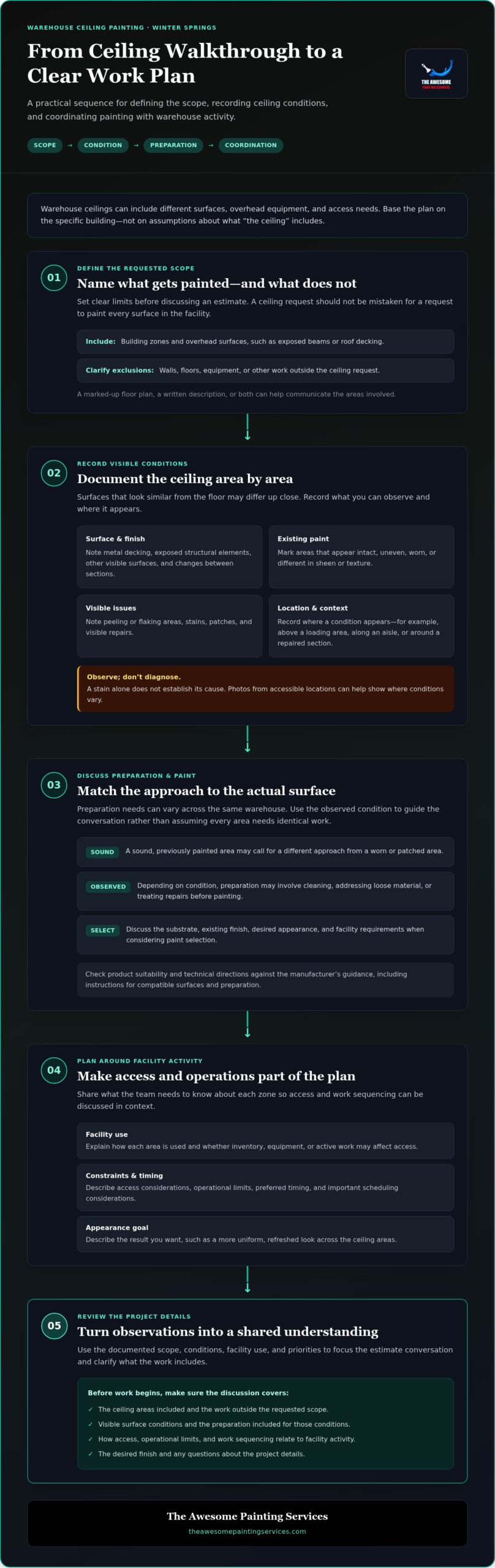
A smooth project starts with a clear picture of the facility, the ceiling areas you want painted, and the way the warehouse operates. That information helps turn an initial walkthrough into a defined scope, an honest estimate, and a coordinated plan for the workday. For warehouse ceiling painting Winter Springs, preparation is most useful when it reflects the actual building rather than a generic checklist.
Prepare useful details for the estimate
You don’t need technical drawings to start the conversation. Gather practical details that help the painting team understand what you want to accomplish. Surface condition and project requirements can affect the scope, so share what you’ve observed without trying to diagnose the cause of any visible issue.
- Mark the requested areas. Identify the warehouse zones and overhead surfaces you want included. If the request covers selected sections, label them clearly on a floor plan or describe their locations.
- Note the visible condition. Record approximate area sizes if available, along with peeling, stains, repairs, or changes in finish. Photos can show where conditions vary.
- Describe the desired result. Explain whether you’re seeking a more uniform appearance throughout the space or a refresh in specific areas.
- Share facility details. Describe how the space is used, where inventory or equipment may affect access, and any operating considerations that could shape coordination.
- Review the estimate and scope. Discuss the surfaces, preparation, coordination needs, and project expectations reflected in the estimate so the requested work is clear.
A clear estimate starts with understanding the work being requested. The surfaces included, their observed condition, and the facility’s requirements all help define the project. If your notes change after the walkthrough, raise those updates during the scope discussion before work is planned.
Coordinate communication and project expectations
Once the scope is taking shape, agree on practical communication points. Identify who will coordinate facility access, how questions will be shared, and how updates will reach the right people. Discuss project deadlines during planning so expectations are clear, without assuming a particular completion time before the work is assessed.
Talk through how the work area and ongoing operations will be coordinated. Relevant details may include active aisles, stored inventory, equipment, and areas that need access at particular times. Clear communication helps the facility and painting team plan the sequence together. Raise constraints early and discuss how they may affect the plan.
Include preparation, painting, and cleanup in the conversation as parts of the full painting service, along with how the work area will be handled as the project progresses. A shared understanding of scope, communication, deadlines, and cleanup makes the handoff from planning to workday more straightforward.
With your project details ready, Request a free, transparent estimate to start a clear discussion about the warehouse ceiling work.
Commercial Warehouse Ceiling Painting with The Awesome Painting Services
A warehouse ceiling refresh should reflect the needs of the facility, not a one-size-fits-all plan. The Awesome Painting Services provides high-quality residential and commercial painting in Central Florida, including commercial warehouse ceiling painting. The team brings craftsmanship and clear communication to projects shaped around the property and requested scope. The company is fully licensed and insured, and has painted 457 businesses.
For readers researching warehouse ceiling painting Winter Springs, the next step is to turn the desired result into a well-defined project conversation. A cleaner, more consistent overhead appearance may be the goal, but the work should also account for the facility and the surfaces included. A clear scope gives the property owner and painting team a shared reference point as project details are discussed.
A clear, customer-focused approach to commercial painting
The Awesome Painting Services offers free, honest, transparent estimates with no hidden fees. The estimate discussion connects the requested work to the property and its needs. Explain what you want the ceiling project to accomplish and share relevant site details, rather than relying on a vague request for a general repaint.
Communication matters from the planning conversation through the project. The team emphasizes clear updates and specific project deadlines, helping customers understand expectations as the work is coordinated. Timing depends on the project, so deadlines and requirements are discussed clearly rather than promising a schedule before the scope is understood.
Good craftsmanship connects the work to your intended outcome. Whether the priority is a refreshed overall appearance or a defined ceiling area, the project discussion can keep attention on what’s included and how the property’s needs shape the plan. The company’s experience across 457 business projects offers a relevant trust signal, alongside 43 Google reviews verified by Trustindex with a score above 4.5.
Request an estimate for your warehouse ceiling project
To begin, share the areas you want painted, the result you’re aiming for, and details that explain how the facility is used. Notes about access, inventory, active work zones, and visible ceiling concerns can make the estimate discussion more focused. The estimate is tailored to the property and requested scope, giving you a basis for understanding the work and communicating project expectations.
If you’re exploring commercial painting planning in the region, the guide to commercial painting in Orlando offers additional perspective on professional transformation for businesses. For your warehouse, start with the result you want and the site details that matter. Request your free estimate.
Set Your Warehouse Project in Motion
A refreshed ceiling can be a practical step toward a space that feels more cared for and professional. Start by choosing one clear priority, such as improving the appearance of a high-visibility area or planning a broader update. That focus can guide the conversation and keep the work aligned with what matters to your facility.
If you’re considering warehouse ceiling painting Winter Springs, bring your goals and relevant site details into the estimate discussion. A thoughtful plan can turn a large overhead project into manageable decisions, with the requested scope and facility needs at the center.
The Awesome Painting Services provides commercial painting with a focus on craftsmanship, communication, and transparent estimates. Take the next step toward a ceiling refresh that fits your property: request your free, honest estimate with no hidden fees.
With a clear starting point and a coordinated plan, you can move ahead with confidence and a renewed vision for your warehouse.
Frequently Asked Questions
What should I include when requesting a warehouse ceiling painting estimate?
Include a simple floor plan or marked-up sketch showing the ceiling zones, plus photos that identify where each zone is located. Note whether the request covers exposed overhead surfaces, finished ceiling areas, or both. Share known access restrictions and the result you want. If you’re unsure how to describe a surface, label it by location and include a photo rather than guessing at its material or condition.
How does the condition of a warehouse ceiling affect the painting plan?
Different conditions across the same ceiling can call for different planning. For example, if one bay looks uniform but another has a patch or visibly uneven finish, record them as separate observations instead of describing the entire ceiling as “worn.” That distinction helps focus the project discussion on areas that may need closer assessment. Photos taken from consistent viewpoints can also make it easier to compare sections.
Can warehouse ceiling painting be coordinated around business operations?
Yes. Planning can take operating patterns into account, though it can’t guarantee that work will have no effect on activity. Share shift changes, delivery or receiving periods, restricted aisles, and times when certain areas need access. Naming a facility contact for coordination also helps questions reach the right person. These details give the painting team and site staff a practical basis for discussing work areas and sequence.
What affects the scope of warehouse ceiling painting in Winter Springs?
The scope depends on the requested ceiling areas, the surfaces present, their visible condition, access, and the facility’s operating needs. For warehouse ceiling painting Winter Springs, the search location alone doesn’t determine the work. A property assessment and a clear description of included areas help shape the estimate. Businesses in Winter Springs and the greater Orlando area can distinguish ceiling work from separate requests such as walls, floors, or equipment.
How should paint be selected for a warehouse ceiling?
Paint selection should suit the ceiling surface, existing finish, desired appearance, and conditions in the facility. Avoid choosing a product based only on its use in another warehouse. The manufacturer’s guidance can help establish whether a product is intended for the surface and what preparation and application conditions it requires. If the building has different overhead materials, selection may need to account for those differences in the project plan.
Does a warehouse ceiling painting estimate include preparation and cleanup?
The Awesome Painting Services’ full painting service includes preparation, painting, and cleanup. For a warehouse ceiling estimate, review how those parts apply to the requested areas and observed surface condition. For example, the estimate can distinguish preparation of visibly worn sections from work on areas in sound condition. This makes it easier to understand what the project covers without assuming every ceiling requires identical preparation.
How can I plan warehouse ceiling painting with minimal disruption?
Start by identifying areas where access is most sensitive, such as aisles used for regular picking or zones near scheduled deliveries. Decide whether inventory can be moved or whether certain areas need to remain available, then share those priorities during planning. A written list of essential operations and flexible areas can help guide a practical sequence. Keep a point person available to communicate changes if facility needs shift.