4 Areas to Protect During Interior Painting
You can often stay home while interior painting is underway if you stay clear of active work areas and maintain good air circulation. Protecting your home during interior painting starts with covering outlets and switches, moving or shielding electronics and furniture, and protecting floors from drips and splashes.
It’s understandable to worry about paint reaching the things you use every day or disrupting your routine. A room-by-room plan can limit interruptions. Keep children and pets out of freshly painted rooms until the paint is dry and fumes have cleared. This guide covers preparing outlets and switches, protecting electronics and furniture, choosing floor coverings, and making it easier to stay home during the work. With a little planning, you can protect your belongings and make room for a refreshed interior.
Key Takeaways
- Shield outlets, switches, fixtures, and vents before painting to keep splashes and dust away from these details.
- Unplug electronics and clear smaller belongings from the room; group and cover larger furniture to protect it.
- Choose floor coverings that stay secure and help limit both paint spills and slipping hazards.
- You can often remain at home by keeping clear of active work areas, ventilating rooms, and keeping children and pets away until paint is dry and fumes have cleared.
1. Should outlet and switch covers be removed before painting?
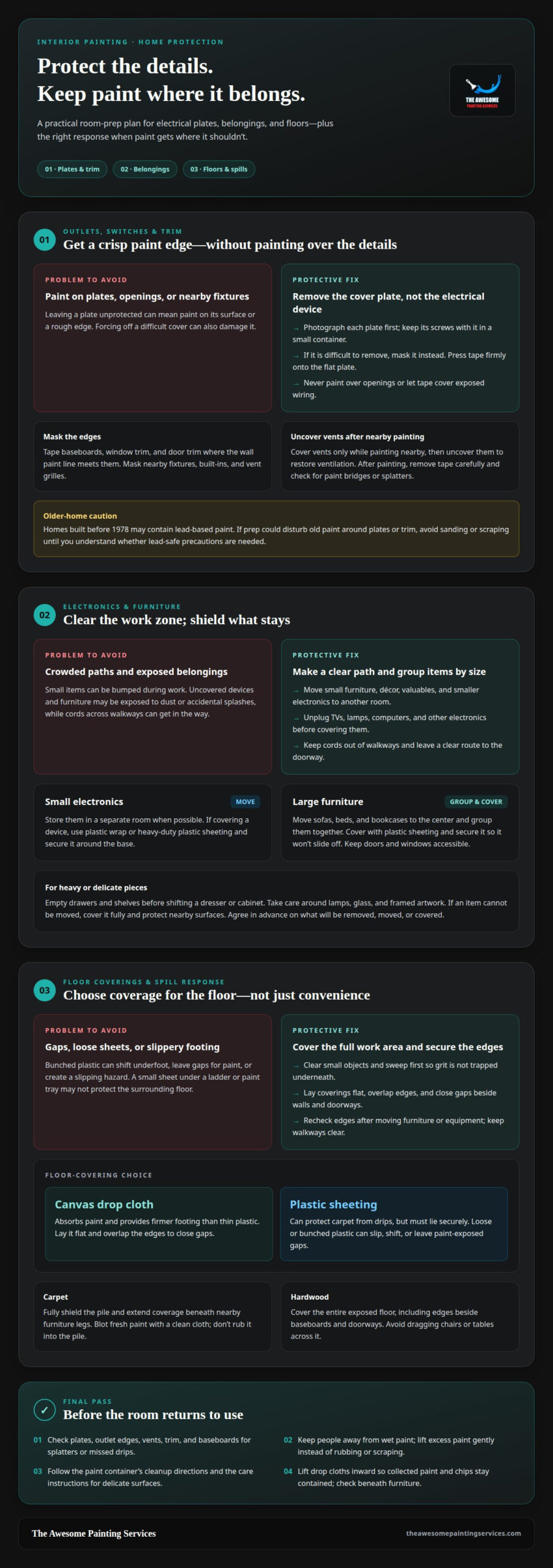
Usually, remove only the plastic outlet or switch cover, not the electrical device. This gives you a cleaner paint edge around the plate. If you leave the plate in place, cover it completely with painter’s tape and press down the edges. Never paint over openings or let tape cover exposed wiring. Careful masking is one practical part of protecting your home during interior painting.
For a neat finish, take a quick photo of each plate before removing it, then keep its screws with it. Place each plate and its screws in a small container so they’re easy to match during reinstallation. If a cover is difficult to remove, mask it rather than forcing it. Agree on plate removal, masking, and replacement as part of the preparation plan.
Use painter’s tape along baseboards, window trim, and door trim where the paint line meets the wall. For example, run tape along the top edge of a baseboard and press it firmly into the corners. Mask nearby light fixtures, built-ins, and vent grilles. Cover vents only while painting nearby, then uncover them to restore ventilation. These details help protect your home during interior painting and preserve crisp edges.
Before covering a switch or outlet, check that its face is intact and dry. Keep tape on the flat plate surface rather than pushing it into an outlet opening. A small strip can protect a plate’s edges, while a broader piece of masking material shields nearby trim. After painting, remove the tape carefully and check for paint bridges around the plate edges.
Homes built before 1978 may contain lead-based paint. If preparation could disturb old paint around outlet plates or trim, avoid sanding or scraping until you understand whether lead-safe precautions are needed.
During cleanup, collect used tape and coverings as you uncover each fixture. Before the paint dries, check switch plates, outlet edges, vents, and trim for splatters. This final pass helps preserve crisp lines and leaves the room’s details ready for use.
2. How can I Protect Electronics and Large Furniture from Paint?
Before painting, move small furniture, decorations, and valuables to another room. Clear shelves, side tables, and window ledges first, as these items are easy to bump while moving ladders or working along walls. Keep a clear path to the doorway so painters can reach the work area without repeatedly shifting your belongings.
Unplug televisions, lamps, computers, and other electronics before covering them. Wrap each device in plastic wrap or heavy-duty plastic sheeting, securing the covering around its base. Don’t leave cords stretched across a walkway. Store smaller electronics in a separate room, where they’re less exposed to dust and accidental splashes.
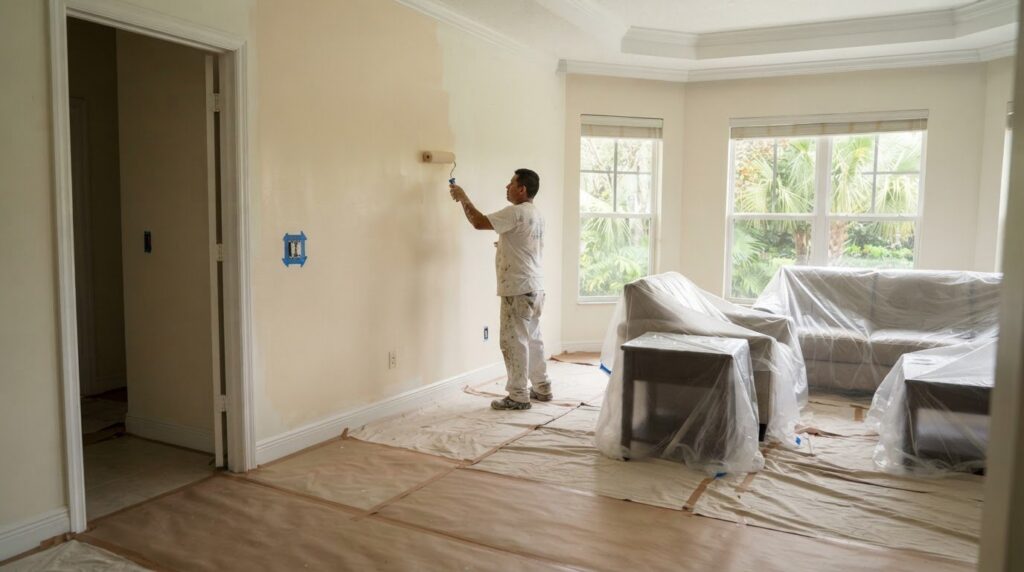
Move large furniture, such as sofas, beds, and bookcases, to the center of the room and group it together. This clears the wall edges and reduces the number of items that need to be moved. Cover the furniture with plastic sheeting and secure it so it won’t slide off during work. Keep pathways to doors and windows clear.
Some pieces are too heavy or delicate to move easily. Empty drawers and shelves before shifting a dresser or cabinet, and take care around lamps, glass, and framed artwork. If a piece can’t be moved, cover it fully and protect nearby surfaces. Agree in advance on which belongings you’ll remove and which larger pieces will be moved or covered, so access and preparation are clear.
If paint spills, act while it’s wet. Lift excess paint from furniture or carpet without rubbing it deeper, then blot gently with a clean cloth. Follow the paint label’s cleanup directions and the item’s care instructions for delicate upholstery or finishes. For dried paint, avoid aggressive scraping, which can damage fabric or wood.
For a room with bulky pieces or delicate belongings, professional interior painting can help coordinate furniture placement and protective covering as part of preparing the space.
3. How Are Floors Protected?
Canvas drop cloths and plastic sheets can protect floors from paint splashes and chips. Canvas absorbs paint and provides firmer footing than thin plastic, which can become slippery. Choose coverings to suit the floor and work area, rather than for convenience alone. Hardwood needs full coverage, including the edges beside baseboards and doorways.
Before painting, clear small objects and sweep the floor so grit won’t get trapped beneath the coverings. Lay canvas drop cloths flat, overlapping the edges to close gaps. At a doorway leading outside, cover the threshold where paint could be tracked between rooms. Keep walkways clear, and move coverings carefully if painters need access to another wall.
Plastic sheeting can protect carpet from drips, but it needs to lie securely. Loose or bunched plastic can cause slips, leave gaps for paint to get through, or shift underfoot. Don’t rely on a small sheet beneath a ladder or paint tray. Extend protection across the work area and check its edges after moving furniture or equipment.
For carpet, use a covering that fully shields the pile and extends beneath nearby furniture legs. On hardwood, cover the entire exposed floor and avoid dragging chairs or tables across it. Keep furniture grouped on a protected area rather than leaving its legs on uncovered boards. Secure coverings without leaving exposed strips along walls or around door trim.
If paint spills, keep people away from the wet spot and stop it from spreading. Blot fresh paint from carpet with a clean cloth instead of rubbing it into the pile. On hardwood, gently lift excess paint without scraping the finish. Follow the paint container’s cleanup directions and the care instructions for delicate surfaces.
Before work starts, inspect the floor covering from the doorway and from each wall. Look for gaps, curled corners, and paint trays near uncovered flooring. During cleanup, lift cloths inward so collected paint and chips stay contained. Check beneath furniture and along the baseboards for missed drips before returning the room to use.
4. Staying in the home during painting
You can often stay home during interior painting if you keep daily routines separate from active work areas. Ask everyone in the household to use clear routes around the room being painted, and keep children and pets out until the paint is dry and fumes have cleared.
Good air circulation matters indoors. Open doors and windows where practical, or use fans to move air through the home. Keep the painted room separate from busy areas, and avoid directing airflow that carries fumes into spaces where people spend time. Low-odor products, together with ventilation, can also help maintain comfort during the work.
Painting room by room can reduce disruption by keeping some parts of the home available. Before the painters arrive, decide which room will be cleared first and where you’ll eat, work, or relax during that phase. For example, move your laptop and daily essentials to a room outside the work zone, then keep the route clear.
Preparation helps a painting project run smoothly. Put away medications, food, and personal items from the room being worked on. Plan access to bathrooms and exits, and keep pets in a separate, secure area. Don’t enter a room to retrieve something once painting begins, so gather what you need beforehand.
Follow the paint label’s directions and keep people away while the room dries and fumes remain. Reopen the space only after the paint is dry and fumes have cleared. If the project includes several rooms, coordinate which areas will be active so household members know where to walk and where to stay away.
For a room-by-room plan that fits your household’s routine, schedule interior painting and discuss how to prepare your home for the work.
The Awesome Painting Services: Interior Painting
The Awesome Painting Services provides interior painting to refresh your home with a carefully prepared finish. Turn to the team when you’re ready to update a room and want professional help managing the work, from preparation through the finishing details.
Share which rooms you’d like painted, the look you’re aiming for, and any household considerations, such as furniture placement or staying home during the project. This gives the team helpful context for shaping the work around your space and priorities. For a broader update, related services include kitchen cabinet refinishing and custom wood geometric accent walls.
Ready to discuss an interior painting project? Contact The Awesome Painting Services or visit theawesomepaintingservices.com.
Make Your Next Room Feel Like Yours
A refreshed space can change how your home feels every day. Start by choosing the rooms and finishes that matter most, then consider how the work can fit around your household’s routines. A clear plan makes it easier to turn a new look into reality.
The Awesome Painting Services can help bring your vision to life with interior painting. If your plans extend beyond the walls, the team also offers exterior painting and kitchen cabinet refinishing. Share what you hope to update and how you want the finished space to feel. That conversation can help shape a project around your priorities and the details that make a house feel like home.
Protecting your home during interior painting is part of making room for a transformation you’ll enjoy. Contact The Awesome Painting Services to talk about your painting plans and take the next step toward a refreshed space.
Frequently Asked Questions
Can You Stay in the House During Painting?
Yes, you can often stay home if you keep daily activities away from active rooms. Plan meals, work, and rest in areas separate from the painters’ route. If the only bathroom or exit is near the work zone, agree on a clear access plan before painting starts. Keep children and pets away until the paint is dry and fumes have cleared.
How Are Floors Protected?
Floor coverings help limit drips, splashes, and paint chips. Canvas drop cloths absorb paint and provide firmer footing than thin plastic, while plastic can cover areas where a cloth might shift. Before work begins, look for exposed strips at doorways and along walls. During cleanup, lift coverings inward to contain collected debris.
How can I Protect Electronics and Large Furniture from Paint?
Move delicate or valuable items out of the work area before painting begins. For electronics that must remain, unplug them and protect them from dust and splashes. Tell the painting team which furniture pieces are especially delicate or difficult to move, such as a glass-front cabinet or heavy desk. This helps preserve access and avoid unnecessary bumps.
How Are Furniture and Fixtures Covered?
Movable furniture can be grouped away from the walls and covered, while fixed items such as built-ins can be masked. Remove portable decorations, lampshades, and small accessories before covering larger pieces. Protect exposed surfaces of ceiling lights or vents near the work area without blocking access needed for safe use. Remove coverings during cleanup.
How Do Professionals Prevent Dust and Debris?
To limit sanding dust, painters can use dust-extraction tools and clean the surface before painting. After sanding, vacuum and wipe the work area so residue doesn’t linger on trim, furniture, or floors. Check the ledge beneath a window and the floor beside the baseboard, where fine dust can collect unnoticed.
How do I Efficiently Clear a Room for Painting and Store Valuables?
Start by removing small belongings, wall decor, and valuables, then pack them by room or category. Label boxes clearly and place them outside the work area, away from the route painters need. Keep everyday essentials, such as keys and medications, somewhere accessible. In an Orlando home, this simple preparation helps prevent last-minute searching during the project.