How to Protect and Clean Epoxy Floors
A little routine care can make a real difference to how your epoxy floor looks and wears. Effective epoxy floor maintenance tips start with sweeping daily or every few days, wiping up spills promptly, and lightly mopping once a week. These simple habits help keep grit and everyday grime from building up.
It’s easy to focus on epoxy’s clean, polished look and assume it needs little attention. Regular care helps preserve the finish and makes dried spills or stubborn stains easier to tackle before they become a bigger nuisance.
Here, you’ll learn how to clean epoxy floors safely, protect them from scratches and heavy objects, and deal with dried residue and marks. You’ll also see why routine maintenance matters for the floor’s appearance and long-term condition, and when a fresh coating may be the better next step.
Key Takeaways
- Match garage cleaning to how often the floor is used: heavily used floors may need cleaning every 1-2 days, while a lightly used garage usually needs a quick sweep once a week.
- Reduce scratches and pressure marks by adding protective pads beneath furniture, shelving, and equipment that rests on the coating.
- Lift dried residue carefully with a plastic tool, then start stain removal with a mild cleaner before considering stronger options.
- Regular care supports lasting floor performance; the National Institute of Standards and Technology (NIST) states that a properly installed terrazzo floor, including epoxy terrazzo, has a useful life of 75 years with general maintenance.
STILL HAVE QUESTIONS ABOUT FLOOR CARE, CLEANING, & MAINTAINENCE?
Set a routine based on garage traffic, then use gentle cleaning methods. Sweep away grit, mop carefully, and remove spills before they settle.
-
Set a cleaning frequency
Clean a heavily used garage every 1-2 days, especially where vehicles, tools, or foot traffic bring in grit. For a lightly used garage, a quick sweep once a week usually prevents dirt from building up. Check oil- and grease-prone areas daily; residue left on epoxy for more than 24 hours may stain the coating.
-
Sweep and dust mop routinely
Use a soft-bristle broom or dust mop to collect dust and debris before they scratch the surface. A wet/dry vacuum can also pick up loose dirt. Mop weekly with warm water and a few drops of pH-neutral floor cleaner per gallon. Rinse away cleaner residue, then let the floor air-dry or use a squeegee to remove excess water.
-
Choose a cleaner for floor use
Match cleaning frequency to traffic: a busy workshop or garage with oil and grease needs more attention than a lightly used space. Choose a mild, pH-neutral cleaner for routine mopping, and follow the coating manufacturer’s recommendations where chemicals are common. Avoid acidic or highly alkaline products, bleach, vinegar, citrus cleaners, and abrasives, which can cloud or damage the finish over time.
-
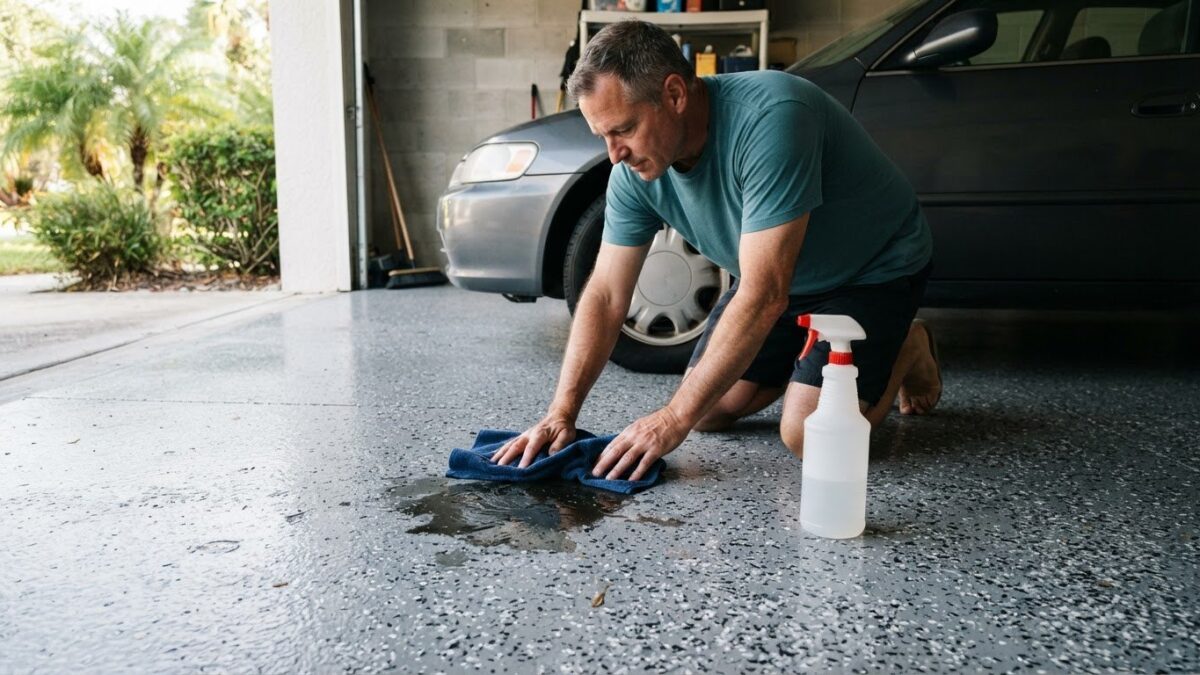
Clean spills and automotive fluids
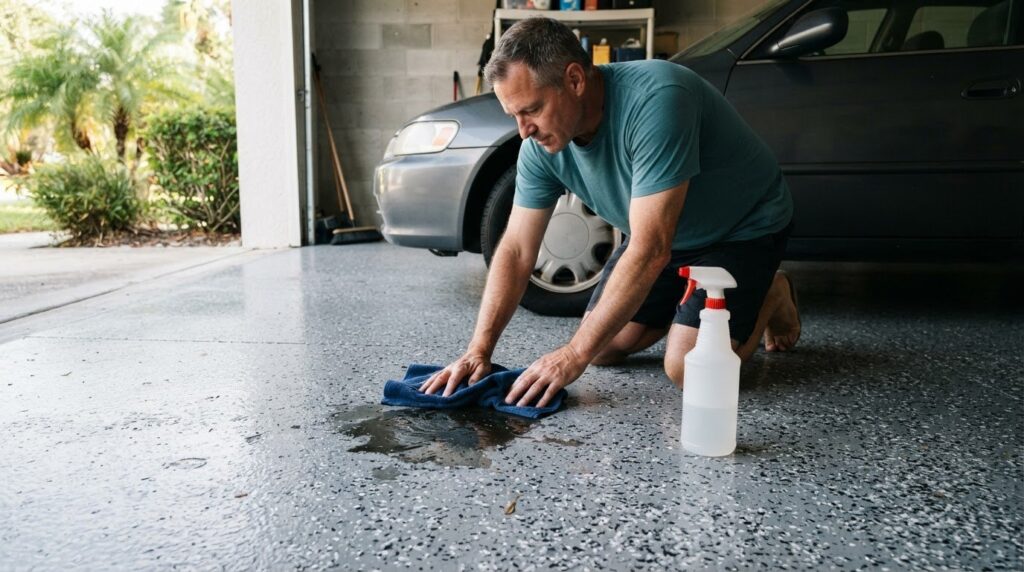
Blot fresh spills promptly with a soft cloth or paper towel, then clean the spot with a mild solution. For oil or grease, don’t let residue sit; these fluids may stain if left on the coating for more than 24 hours. Rinse cleaning products thoroughly with water and dry the area. Harsh chemicals, acids, caustics, and solvents can soften or discolor the coating if left in contact with it.
Proactive protection from scratches, heavy objects, and UV exposure
Use pads and protective mats to reduce scratches, pressure marks, and equipment damage. In sunlit areas, limit direct UV exposure to help protect the floor’s finish.
How can you prevent scratches and damage to epoxy flooring? Keep abrasive dirt off the surface, cushion heavy or movable items, and inspect the coating regularly. Address scratches, cracks, bubbling, and peeling early, before damage spreads.
-
Prevent scratches and equipment damage
Place felt glides or protective pads under furniture, shelving, tool chests, and workbenches. Add soft protection beneath bicycle or motorcycle kickstands, which can scratch the epoxy coating. Use parking pads to limit hot-tire marks, and place a welding mat beneath welding work.
Before lifting a load with a rolling jack, put plywood under the jack stands. Avoid steel wool and other metal scrubbers because they can scratch the finish. Check high-use areas regularly for staining, gouges, or pressure marks, especially where equipment rests or moves.
-
Protect the floor from UV exposure
Reduce direct sunlight on exposed sections with shade, curtains, or blinds where practical. This helps limit prolonged UV exposure on the coating. Keep movable items from scraping the floor when adjusting window coverings or shifting equipment.
Inspect corners and busy areas monthly for chips, cracks, bubbling, or peeling. Repair large scratches and gouges promptly, since damaged spots can let moisture beneath the coating and contribute to peeling. For scratches and gouges, repair guidance recommends hand-sanding with 100-grit sandpaper. Rinse the area, let it dry fully, then follow the original coating’s repair instructions.
If wear has spread beyond a small repair, restore the floor’s finish with professional attention to the coating.

Removing dried spills and stubborn stains
For oil, grease, tire marks, and other stains, start with a mild cleaner and use stronger removers only if needed. Clean oil and grease promptly because they may stain an epoxy floor if left for more than 24 hours.
- Blot fresh spills with a soft cloth or paper towel, absorbing the liquid rather than spreading it. For automotive fluids such as oil or grease, clean the affected spot promptly, then remove cleaner residue as directed on the product. Even a durable epoxy finish needs quick attention to help prevent staining.
- For dried residue, gently lift the deposit with a plastic tool. Avoid metal scrapers and abrasive pads, which can scratch the coating. Wipe the mark with a clean cloth dampened with household ammonia cleaner, then check whether residue remains before trying another cleaning step.
- Start with mild cleaning and use stronger stain removers only if the first approach doesn’t clear the mark. For a tire mark or grease spot in a traffic area, apply the mild solution first and wipe with a soft cloth. Don’t use steel wool or abrasive cleansers; they can dull the finish rather than remove the stain.
- Wear rubber gloves and proper eye protection when handling chemicals for stain removal. Don’t let caustics, acids, or solvents sit on the floor, since they can soften, discolor, or remove the epoxy coating or sealer. Follow the cleaner’s directions and remove residue rather than leaving chemicals on the surface.
- For rust stains, try light scrubbing with a kitchen scrubbing pad, taking care not to abrade the surface aggressively. Clean up the loosened mark and inspect the finish. If the stain remains, try a stronger remover rather than increasing scrubbing pressure, which can damage the coating.
Benefits of regular epoxy floor maintenance
Routine care clears debris before it abrades the coating and helps preserve its shine. A properly installed epoxy garage floor can last up to 20 years with proper care. These epoxy floor maintenance tips also help you spot wear while it’s still manageable.
Skip waxing and polishing: wax may not bond properly and can leave a slippery, cloudy layer. Recoating is a separate repair decision based on the coating’s condition.
- Sweep regularly to collect grit before tires and shoes grind it into the finish. Choose a soft-bristle broom or dust mop, or use a wet/dry vacuum for loose debris. This simple habit reduces abrasive particles that can dull a garage floor’s appearance.
- Mop with a mild, pH-neutral cleaner to lift grime without leaving a cloudy film. Rinse chemical cleaners thoroughly, then remove excess water with a squeegee. Adjust the routine to the floor’s use, and use these epoxy floor maintenance tips to clean consistently.
- Inspect the coating monthly for chips, cracks, and worn areas. Check corners and high-traffic spots closely, where repeated use can reveal damage. Addressing a small defect early can prevent it from becoming a larger repair.
- Arrange a thorough annual cleaning to help restore the floor’s shine. Heavy-duty cleaning every six months may help maintain its appearance. According to the National Institute of Standards and Technology (NIST), a properly installed terrazzo floor, including epoxy terrazzo, has a useful life of 75 years with general maintenance. This lifespan applies to terrazzo, not every epoxy garage coating.
- Consider a new topcoat every few years for more significant coating issues. If wear calls for renewed protection, explore epoxy floor coating options for professional attention.
The Awesome Painting Services: Epoxy Floor Coatings
The Awesome Painting Services provides epoxy floor coatings for residential and commercial spaces in Orlando and nearby Central Florida communities, including Winter Park, Windermere, and Oviedo. Consider a coating when routine cleaning no longer addresses visible wear or when you’re planning a refreshed floor for a garage or business area. The right coating can give the space a clean, finished look suited to its everyday use.
Maintenance helps protect a coating, but it can’t reverse every chip, crack, or peeling area. If damage is spreading or the floor needs a renewed finish, professional coating work may be the next step. The right approach depends on the floor’s condition and how the space is used.
Contact The Awesome Painting Services to discuss epoxy floor coatings for your space.
Plan the Next Step for Your Floor
Let the way you use the space guide what comes next. A home garage, workshop, and commercial floor face different demands, so keep a simple care routine that fits your daily traffic. If the coating is damaged or the surface needs renewal, professional work can help move it from upkeep toward a refreshed finish. Use these epoxy floor maintenance tips as a starting point, then consider your space’s condition and purpose.
The Awesome Painting Services provides epoxy floor coatings, along with interior painting, exterior painting, and kitchen cabinet refinishing. When you’re ready to discuss a floor coating project, contact The Awesome Painting Services. A thoughtful next step can help your space feel clean, polished, and ready for everyday use.
Frequently Asked Questions
How often should epoxy floors be swept and mopped?
Sweep daily or every few days, then mop lightly once a week. In a garage, adjust the routine to the amount of grit, tire traffic, and tracked-in debris; heavily used floors may need cleaning every 1-2 days. For an Orlando home garage used occasionally, a weekly sweep may be enough. Clean visible dirt sooner rather than letting it accumulate.
What cleaners are safe for epoxy flooring, and which should be avoided?
Use warm water with a pH-neutral floor cleaner for routine mopping, and rinse the surface after using a chemical cleaner. Avoid bleach, vinegar, citrus-based products, acidic or highly alkaline cleaners, abrasive cleansers, and soap-based products, which can damage or cloud the finish. For specialty coatings, follow the coating manufacturer’s cleaning recommendations, particularly where chemicals are regularly present.
What is the best way to remove scratches or scuffs from an epoxy floor?
First remove loose debris and wipe the mark with a soft cloth, so grit doesn’t create more scratches. A surface scuff may need only gentle cleaning, while a gouge that cuts into the coating needs repair. Repair guidance recommends hand-sanding scratches and gouges with 100-grit sandpaper, rinsing thoroughly, and allowing the area to dry fully before applying original coating as instructed.
How do you maintain epoxy floors in garages versus commercial spaces?
Set cleaning frequency according to traffic and the materials brought onto the floor. Garages need prompt attention to oil and grease, while busy commercial floors may need daily cleaning. In either setting, remove grit regularly and inspect worn corners and travel paths. In workshops with chemical exposure, consider the coating’s chemical resistance when choosing a cleaning routine.
What are common epoxy floor maintenance mistakes and risks?
Common mistakes include leaving oil or grease on the coating, using abrasive scrubbers, and applying wax or polish. Wax may not bond properly and can leave a slippery, cloudy layer. Avoid high-pressure washing above 1,200 PSI, which can harm the surface. Also keep acids, caustics, and solvents from lingering on the floor, since they can soften or discolor the coating.