Showroom Floor Coating in Celebration for Slip and Wear Needs
A glossy showroom floor doesn’t have to mean choosing appearance over grip. With showroom floor coating in Celebration, the finish is only part of the picture: surface texture and moisture also affect how secure the floor feels underfoot. A good plan considers the demands of a working retail space, not just its appearance.
It’s reasonable to consider slick spots, shopping-cart scuffs, and installation disruption before refreshing a showroom. This article explains how coating choices can address slip concerns and everyday wear, what affects durability, and how to plan installation around business operations. You’ll have a clearer sense of what to consider for a polished floor that suits the way your space is used.
Key Takeaways
- Assess surface texture and concrete condition when planning for slip concerns, especially where moisture may reach the floor.
- Consider how repeated foot traffic and shopping carts affect wear, then choose a coating approach suited to the showroom’s daily use.
- Plan installation around preparation, curing, and the return of staff and customers to reduce disruption.
- Explore how epoxy floor coatings can support a polished retail space while addressing practical performance needs.
Are High-Gloss Epoxy Floors Slippery?
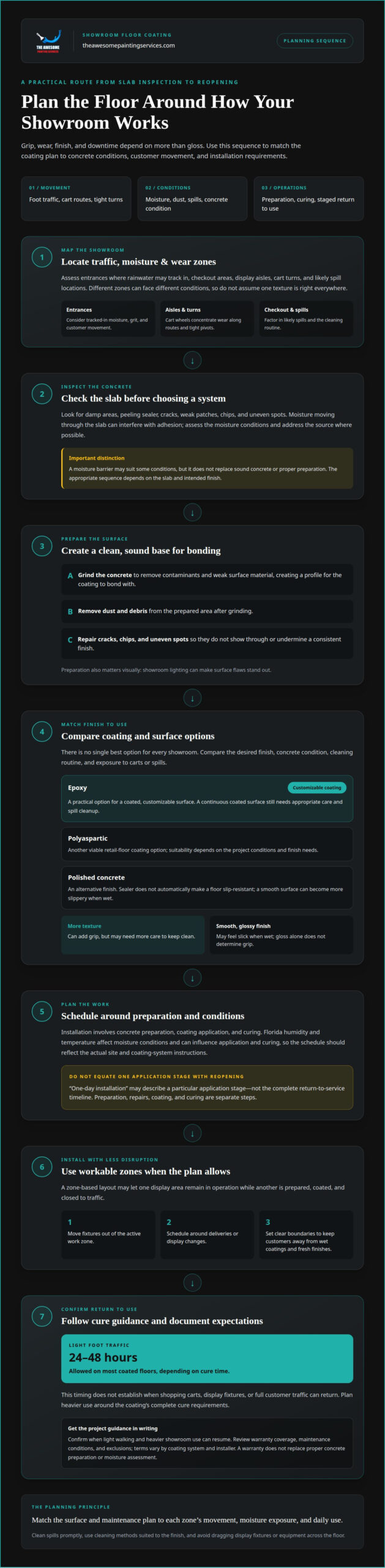
A high-gloss finish can feel slick when moisture, dust, or residue sits on its surface. Gloss alone doesn’t determine grip. For showroom floor coating in Celebration, consider how customers enter, where rainwater may track in, and whether the floor needs added texture. Entrances, checkout areas, and display aisles can face different conditions, so assess each zone rather than judging by appearance alone.
Start with the concrete. Before coating, inspect for damp areas, peeling sealer, cracks, and weak patches. Moisture moving through a concrete slab can interfere with adhesion, so assess moisture conditions and address the source where possible. A moisture barrier may suit some conditions, but it doesn’t replace sound concrete or proper preparation. The right sequence depends on the slab’s condition and the intended finish.
Concrete grinding removes contaminants and weak surface material while creating a profile for the coating to bond with. After grinding, remove dust and debris from the prepared area. Repair cracks, chips, and uneven spots so they don’t show through or undermine a consistent finish. These steps matter in a showroom, where overhead lighting can highlight surface flaws. They also apply to garage floors, though traffic and use differ.
Polished and sealed concrete offers another finish, but sealer doesn’t automatically make a floor slip-resistant. A smooth surface can become more slippery when wet, so consider texture and cleaning needs alongside shine. A coating can protect concrete from everyday surface wear, while the chosen finish affects appearance and traction. In a retail space, match the floor to customer movement, moisture exposure, and display needs. In Celebration, conditions at the entrance and inside the showroom should guide preparation and finish choices.
Abrasion resistance against foot traffic and shopping carts
For a high-traffic showroom, epoxy is a practical choice when you want a coated, customizable surface. Polyaspartic coatings and polished concrete can also suit retail floors, but the best option depends on the desired finish, concrete condition, cleaning routine, and exposure to carts or spills. Compare those factors before choosing a system.
Shopping-cart wheels concentrate wear along display aisles, checkout routes, and tight turns. Repeated foot traffic adds abrasion, especially where shoes carry grit indoors. A durable floor system helps protect the concrete, but performance also depends on surface preparation, coating selection, and consistent care. For example, a cart repeatedly pivoting near a display creates a different wear pattern from people walking straight through an entrance.
Spills bring another challenge. Oil, grease, or cleaning chemicals can affect a floor’s appearance and surface over time. A showroom’s routine should account for substances used or likely to reach the floor, along with prompt cleanup and cleaning methods suited to the finish. Epoxy floors create a continuous coated surface, but no coating removes the need to clean spills and tracked-in debris. Avoid dragging display fixtures or equipment, which can scratch or scuff the finish.
Traction deserves attention alongside abrasion resistance. A smooth, glossy finish may feel slick when wet, while a textured finish can add grip but may need more care to keep clean. For a slip-resistant walkway, consider where customers enter, where carts turn, and where spills are most likely. Those zones may call for a different texture than a dry display area. The goal is to support safe movement and the showroom’s appearance, not to assume one finish works equally well everywhere.
Map the busiest routes and likely spill areas before selecting a finish. That practical plan can guide the surface and maintenance choices for retail flooring needs.
There is no single best option for every showroom. Epoxy suits a preference for a customizable coating, while polyaspartic and polished concrete are also viable. Choose according to the finish, concrete condition, upkeep, and exposure to carts or spills.
Installation timelines and minimizing business disruption
Commercial floor-coating contractors serving Celebration install showroom coatings, with scheduling shaped by concrete preparation, coating application, and curing. For a local business, the key planning question is when staff, carts, and customers can safely return to each area.
Florida humidity and temperature affect moisture conditions and can influence coating application and curing. Before installation, assess the concrete and its moisture conditions, since surface dampness can interfere with adhesion. The crew also needs to account for conditions during application and follow the coating system’s instructions. This helps set a realistic schedule instead of treating every showroom as a one-day job.
“One-day installation” may describe a particular application stage, not the full return-to-service timeline. Preparation, repairs, coating, and curing are separate steps. Light foot traffic on most coated floors is allowed after 24-48 hours, depending on cure time. That timing doesn’t establish when shopping carts, display fixtures, or full customer traffic can return. Plan those activities around the coating’s complete cure requirements.
To limit downtime, divide the showroom into workable zones when the layout and installation plan allow. For example, keep one display area operating while another is prepared, coated, and closed to traffic. Remove movable fixtures from the active work zone, and schedule work around deliveries or display changes. Clear boundaries help keep customers away from wet coatings and fresh finishes.
Warranty terms vary by coating system and installer. Review the written coverage, such as whether it addresses coating adhesion or finish defects, and note any maintenance conditions or exclusions. A warranty doesn’t replace proper concrete preparation or moisture assessment. Get the project scope and return-to-use guidance in writing, including when light walking and heavier showroom use can resume. This gives you a practical basis for arranging staff, inventory, and customer access without assuming installation and reopening happen at the same time.
Retail and showroom coating benefits
Options for Celebration retail spaces include coated concrete and polished, sealed concrete. The right choice depends on the existing slab, desired appearance, traffic patterns, and maintenance routine. Compare those needs before choosing a finish: a display showroom and a stockroom may call for different priorities.
A well-planned floor can make merchandise and displays easier to notice. For example, a consistent finish beneath a vehicle display can create a clean visual backdrop, while a contrasting border can help define customer routes. A polished surface reflects light differently from a matte or textured one, so consider how overhead fixtures and natural light will look across the room. Viewing a sample under the showroom’s actual lighting can help guide the decision.
Retail spaces also benefit from a surface that supports regular cleaning. Dust, tracked-in dirt, and small spills are easier to address when the floor finish suits the cleaning routine. Plan around the actual layout: mark entrance paths, checkout areas, display zones, and places where carts turn. Those details help determine where a seamless appearance matters most and where added texture or visual contrast may be useful. A continuous-looking floor can connect separate display areas, while practical zoning keeps the space organized.
Coating projects can refresh older concrete without changing the entire layout. For instance, a showroom with worn-looking aisles may gain a more uniform appearance after the floor is prepared and finished. The result still depends on the slab’s condition and the preparation needed before application. A polished finish can emphasize surface marks, while a coating creates a distinct new surface appearance. Consider both customer-facing floors and adjacent work areas before choosing one look for every space.
For a practical decision, list the showroom’s priorities in order: appearance, ease of cleaning, traction, and resistance to daily traffic. Then match the finish to those needs and the concrete beneath it. To plan a floor project around your retail space, discuss your showroom flooring goals.
The Awesome Painting Services: Epoxy Floor Coatings
The Awesome Painting Services provides Epoxy Floor Coatings for commercial spaces that need a refreshed, practical floor. Turn to the team when planning a showroom coating and you want appearance and daily use considered together. The project can be shaped around your concrete’s condition, customer routes, display layout, and finish and traction priorities. Sharing how carts and foot traffic move through the space helps set a useful direction for the work. A thoughtfully planned coating can give the showroom a cleaner, more cohesive look while addressing its working demands. To discuss your showroom floor, contact The Awesome Painting Services.
Shape a Showroom Floor That Works for Your Business
Your showroom floor influences how customers experience the space, from the first step inside to the route between displays. A well-planned coating project starts by matching the finish to your priorities for appearance, customer movement, and everyday use. Share how the space operates and what you want the floor to contribute, so the project can reflect your business needs.
The Awesome Painting Services offers Epoxy Floor Coatings, along with Interior Painting, Exterior Painting, and Kitchen Cabinet Refinishing. These services can support a coordinated refresh when your project extends beyond the showroom floor. For showroom floor coating in Celebration, take the next step toward a finish that fits your retail space and its daily demands.
Contact The Awesome Painting Services to discuss your showroom floor project. A clear plan can help you move forward with confidence and create a space that feels polished, welcoming, and ready for business.
Frequently Asked Questions
How Long Will A Showroom Stay Closed?
A showroom’s closure depends on the floor area being worked on, preparation needs, and when the coating can handle planned use. A phased project may keep unaffected sections available if the layout allows safe separation. For example, a business might move displays away from one aisle while that area is prepared and coated. Build reopening plans around staff access, deliveries, and customer routes.
How long does showroom floor coating installation take, including curing time?
Installation and curing time depend on the preparation, coating system, site conditions, and floor size. Light foot traffic on most coated floors is allowed after 24-48 hours, depending on cure time. That timing doesn’t automatically mean a showroom is ready for carts, fixtures, or full customer traffic. For a showroom floor coating in Celebration, plan reopening around the intended use of each area.
What surface preparation is required before coating a showroom floor?
Preparation typically addresses contaminants, damaged concrete, and areas that could prevent an even finish. For example, old adhesive near a former display platform may need removal, while chipped edges around a doorway may need repair. The crew should also account for floor joints and transitions into adjoining rooms. A clean, sound surface helps the new coating bond and creates a more consistent appearance.
How durable are showroom floor coatings against vehicle traffic, spills, UV exposure, and abrasion?
Durability depends on the selected system, the concrete beneath it, and how the showroom is used. A vehicle display can expose the floor to stationary loads and tire contact, while carts create repeated abrasion along turning routes. Spills and sunlight also affect maintenance and finish choices. Clean spills promptly, take care when moving displays, and follow cleaning guidance suited to the coated surface.
What slip-resistance and building-code requirements apply to commercial showroom floors in Florida?
Slip resistance and building requirements depend on the project and how people use the space. Treat traction, entrances, wet areas, and accessible routes as distinct planning needs rather than assuming one floor finish addresses them all. For instance, a showroom entrance exposed to tracked-in rain may need different surface considerations from a dry display zone. The coating itself doesn’t establish building-wide compliance.
What warranties and maintenance do showroom floor coating systems typically include?
Warranty coverage and care instructions vary by coating system and project terms. Review the written warranty to understand what it covers, how long coverage lasts, and any maintenance conditions. For daily upkeep, remove grit and spills with cleaning methods appropriate for the finish, and avoid dragging metal display stands across the floor. Keep product-care information with your facilities records for consistent maintenance.