Professional Cabinet Refinishing vs. Painting: How Long Each Lasts
The finish that lasts longest depends more on preparation and finish quality than on whether cabinets are painted or refinished. Professionally painted kitchen cabinets typically last 5 to 10 years, with heat, moisture, kitchen use, and workmanship all affecting durability. The benefits of professional cabinet refinishing are especially relevant when existing wood cabinets are sound and worth preserving.
You want a refreshed kitchen that can handle daily use, without replacing cabinets that are still structurally sound. The benefits of professional cabinet refinishing depend on your cabinets’ condition and material, the look you want, and the amount of change the project needs to achieve.
Compare professional refinishing, painting, and replacement based on durability and the work involved. You’ll also learn when wood cabinets are good candidates for refinishing, and when damage or a desired layout change makes replacement more practical.
Key Takeaways
- Choose painting or refinishing when your cabinet boxes are structurally sound and you want to refresh their appearance.
- Consider replacement if the cabinets have serious water damage, warping, or failing boxes, or if you want to change the kitchen layout.
- Understand how refinishing, painting, and refacing differ before deciding which approach suits your cabinet material and desired look.
- Compare project timelines and disruption to see whether a finish update can refresh your kitchen without a full replacement.
When Should I Refinish My Kitchen Cabinets?
Refinishing is worth considering when cabinet boxes and doors are structurally sound, especially if they’re quality wood you want to preserve. Painting changes the color but leaves the door style intact. Refinishing refreshes existing cabinets with a new stain or paint finish. Either approach can update the kitchen without removing usable cabinetry. Oak, maple, and cherry are examples of hardwoods found in older cabinets.
Professional refinishing typically involves cleaning, sanding or stripping the existing finish, addressing surface flaws, and applying stain or paint. A protective finish completes the work. For a light refresh on stained wood, washing, fine sanding, blending worn stain, and applying fresh polyurethane may be appropriate.
Safety matters during sanding and coating. Dust and product fumes can affect the work area, so professionals control dust, provide ventilation, and follow product labels for protective equipment and application. Keep the workspace separate from normal kitchen activity while surfaces are being prepared and coated. Ventilation needs depend on the materials used and the room’s airflow.
Refinishing and painting generally cost less than refacing, which usually costs less than full replacement. Refinishing can cost about one-quarter to one-third as much as replacement. It may suit homeowners who want to preserve sound cabinets and avoid the expense and material waste of removing them. However, keeping the existing boxes won’t solve structural failure.
| Option | What changes | Best suited to |
|---|---|---|
| Painting | Cabinet color | Sound cabinets needing a new look |
| Refinishing | Existing surface or color | Sound wood worth restoring |
| Refacing | Doors and drawer fronts | Sound boxes with an unwanted door style |
| Replacement | Cabinet units | Failing boxes or a changed kitchen layout |
Water damage, warping, delaminating boxes, and other structural problems can make replacement more practical. A new finish won’t repair unstable material. Choose based on cabinet condition, the style you want, and whether the kitchen layout needs to change.
Painted cabinet lifespan and durability factors
Painting kitchen cabinets can create a dramatic change without replacing them. How long the finish lasts depends on preparation, finish quality, kitchen conditions, and everyday use.
Professional Versus DIY Cabinet Painting
Professional cabinet painting typically lasts longer than DIY work because professionals use thorough preparation and quality materials. DIY may reduce labor expense, but cleaning, sanding, priming, applying multiple coats, and sealing take time. Rushing a step can lead to peeling or uneven coverage, making the apparent savings less worthwhile over time.
When choosing a contractor, review relevant project examples and request a written estimate. It should describe surface preparation, repairs, primer and finish coats, materials, protection, and project timing so you can compare the proposed work clearly.
Refinishing Durability and Resale Value
Professionally painted kitchen cabinets last between 5 and 10 years on average. Heat and oil near a stove, moisture, frequent touching, cleaning products, and daily use can wear the finish faster; sanding, primer, and proper sealing help coatings bond and protect surfaces.
Refinishing can return up to 96% of its cost when a home is sold. A refreshed finish can improve the kitchen’s appearance, but it won’t repair damaged cabinet boxes or change their layout.
Painting also gives existing materials another useful life instead of sending sound cabinets to a landfill. It’s a practical option when the boxes work well and you want a color change, but paint won’t alter the door style or repair structural damage. For example, painting oak doors changes their color while leaving their profile intact. A darker or lighter finish can update the room, though the result depends on preparation and application quality.
For a kitchen refresh that preserves usable cabinets, professional kitchen cabinet refinishing offers an alternative to replacing them.
Project turnaround and household disruption
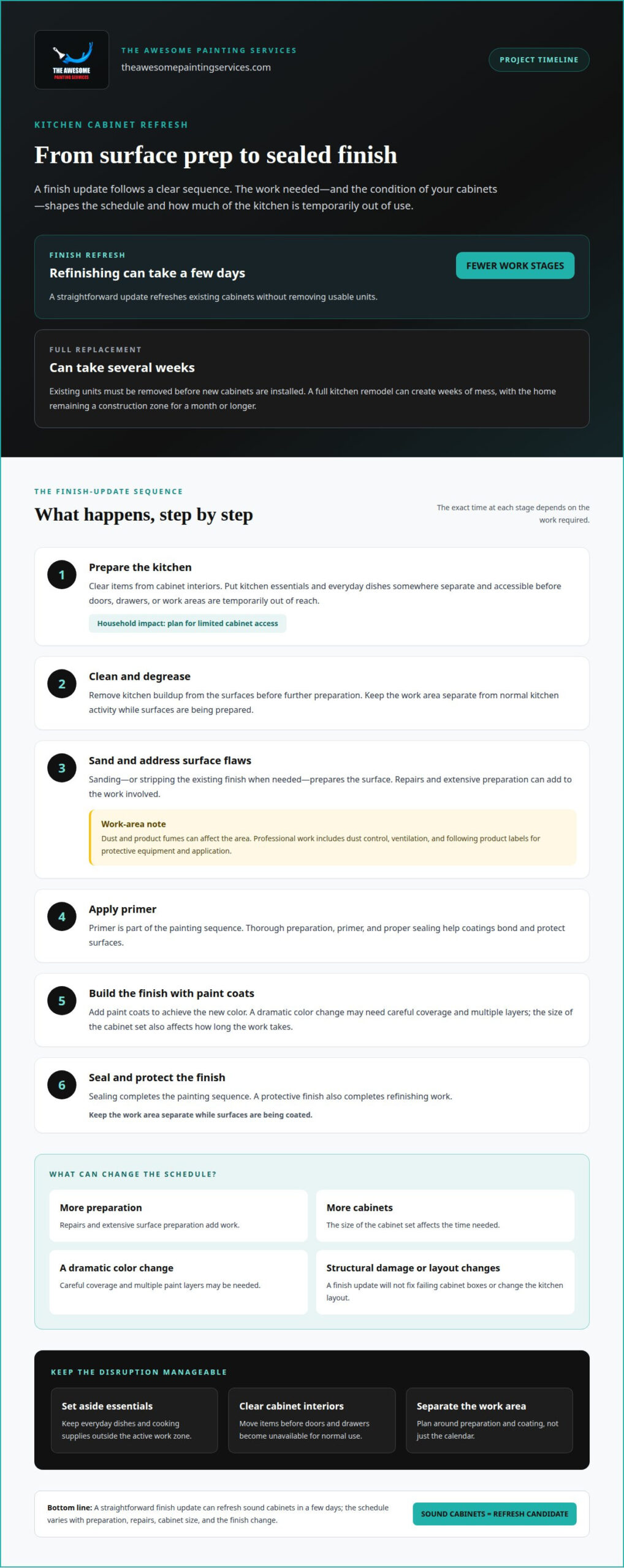
Refinishing can refresh existing cabinets in a few days, while complete replacement can take several weeks. That difference matters if you want to update an outdated kitchen without turning a finish project into a longer renovation. Painting can also cause less disruption at home than removing and installing cabinets.
The schedule depends on the work required. A straightforward finish update follows a sequence: clean and degrease surfaces, sand, apply primer, add paint coats, then seal the finish. Repairs, extensive preparation, and the size of the cabinet set affect the time each stage takes. A dramatic color change may also require careful coverage and multiple paint layers.
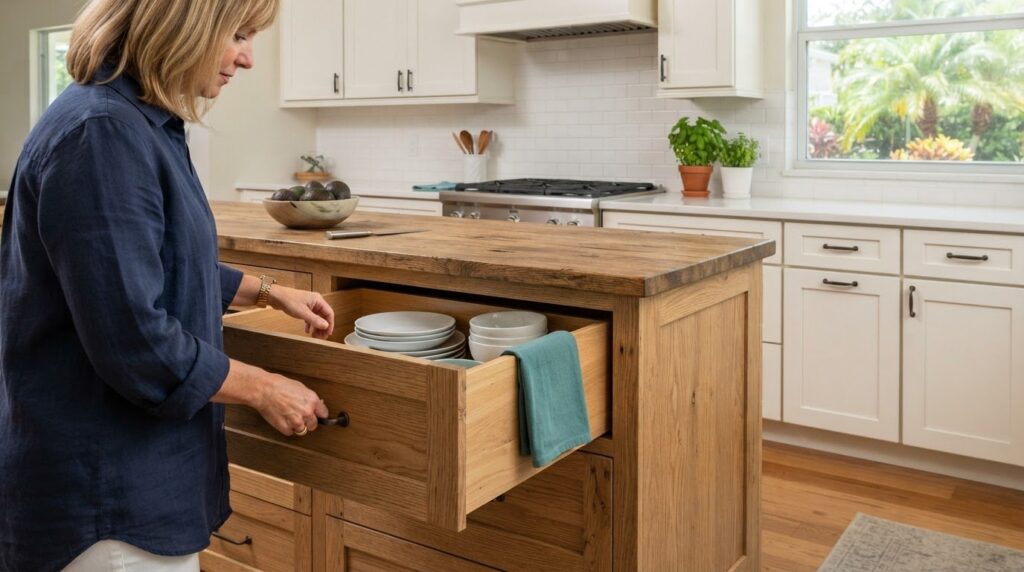
Plan around the work area, not just the calendar. During preparation and coating, cabinet doors and drawer fronts may be unavailable for normal use. Set aside everyday dishes and cooking supplies before work begins, and keep commonly used items outside the active work zone. This can make daily routines easier while your cabinets are being refreshed.
Replacement brings a different kind of disruption: existing units must be removed before new cabinets are installed. If the project also includes a full kitchen remodel, demolition can create weeks of mess, and the home may remain a construction zone for a month or longer. That work is more extensive than changing the color and finish of sound cabinetry.
To prepare, put kitchen essentials in a separate, accessible spot, clear items from cabinet interiors, and decide which surfaces need attention. These steps can reduce interruptions when doors, drawers, or work areas are temporarily out of reach. They also help distinguish a finish project from a renovation that changes the kitchen itself.
If you want a lasting visual update with less disruption, refinishing existing cabinets can be the more direct option. Replacement makes more sense when the cabinets need to go or the project requires a new layout. The timeline follows the scope: refresh the finish, replace the units, or expand the work into a remodel.
When wood cabinets are suitable for refinishing
Wood cabinets are good candidates for refinishing when their doors and boxes remain structurally sound. Solid wood with surface wear, faded stain, or scratches can often be refreshed without discarding the original cabinetry. The key distinction is between a tired finish and damaged material: refinishing renews the surface, but it won’t repair warped doors, failing joints, or water-damaged boxes.
Consider the cabinet material and the finish you want. Oak, maple, and cherry have visible grain that can remain part of the result when cabinets are refinished or recolored. A custom stain can refresh the wood’s existing character, while paint creates a more uniform, modern appearance. MDF and laminate don’t take stain well, so painting is generally the better option for those materials.
Changing from a dark stain to a much lighter stain can be difficult. Old stain may remain deep in the wood grain, affecting how evenly a new color appears. Paint offers a more dependable route to a lighter, solid color, while another stain works best if you want to preserve the wood’s natural detail. The existing finish and grain influence which option will look consistent.
Before refinishing, assess door edges, joints, cabinet boxes, and areas near sinks or appliances. Bubbling, delamination, swelling, or persistent moisture damage can indicate that the material is compromised. A new surface coating won’t make unstable wood sound. Sound cabinets with minor wear, by contrast, may need only light refinishing rather than extensive restoration.
Use this simple decision guide: refinish sound wood when preserving grain matters; paint sound wood or laminate when you want a solid color; consider replacement when structural damage affects the cabinet boxes. Refinishing also keeps existing material in use, making it a practical choice when the current kitchen layout still works. Explore cabinet refinishing options for a tailored way to refresh suitable wood cabinets.
The Awesome Painting Services: Kitchen Cabinet Refinishing
The Awesome Painting Services offers kitchen cabinet refinishing for homeowners who want to refresh sound cabinets without replacing them. If your cabinet boxes are sturdy and you like the kitchen’s layout, a new finish can update the room while preserving the existing cabinetry. The right approach depends on the surface material and condition, and whether you prefer visible grain or a solid painted color.
Share the look you want, whether that means restoring the character of stained wood or creating a cleaner, modern appearance. The Awesome Painting Services can help you choose a finish that suits your kitchen. If the cabinet boxes are seriously damaged or the layout needs to change, refinishing won’t address the underlying need.
Contact The Awesome Painting Services to discuss kitchen cabinet refinishing for your space.
Choose the Finish That Fits Your Home
Before settling on a finish, imagine how you want your kitchen to feel every day. A calm, natural wood look calls for a different approach than a crisp color that complements modern details. The benefits of professional cabinet refinishing are greatest when the result suits your home and preserves cabinetry that still serves you well. Let your preferred look, existing materials, and plans for the space guide your decision.
The Awesome Painting Services offers kitchen cabinet refinishing, along with interior and exterior painting. This makes it possible to consider your cabinets as part of your home’s wider visual style, whether you’re refreshing one room or planning a coordinated update. A clear vision for color and finish gives the project a strong starting point.
When you’re ready to discuss your project, contact The Awesome Painting Services. Take the next step toward a home that feels more like yours.
Frequently Asked Questions
How long does cabinet painting last?
Professionally painted kitchen cabinets typically last 5 to 10 years. The finish’s lifespan depends on preparation, coating quality, kitchen activity, and exposure to heat, moisture, grease, and cleaning products. For example, cabinets beside a stove may experience more wear than cabinets farther away. Gentle cleaning and prompt attention to chips can help keep the painted surface looking cared for.
Is Refinishing the Same as Painting?
No. Painting changes a cabinet’s color while leaving its door style in place. Refinishing is a broader term for restoring or recoloring existing cabinets, which can involve stripping and applying paint or stain. For example, a homeowner who wants to retain visible wood grain may choose a stain-focused finish, while a solid-color update calls for paint.
What are the main benefits of professional cabinet refinishing?
The benefits of professional cabinet refinishing include renewing sound cabinets, reducing material waste, and changing your kitchen’s look without replacing usable units. Professional preparation also helps the coating adhere evenly across doors, corners, and edges. For an Orlando kitchen with sturdy cabinet boxes and a workable layout, refinishing can refresh the room while keeping the existing cabinetry in service.
How does cabinet refinishing compare with cabinet painting, refacing, and replacement?
Painting changes color; refinishing restores or recolors existing cabinet surfaces. Refacing replaces doors and drawer fronts but keeps the cabinet boxes. Replacement removes existing units and installs new ones, making it suitable when boxes fail or the layout needs to change. For example, sound boxes with an outdated door style may suit refacing, while damaged boxes call for a more substantial solution.
How long does professional cabinet refinishing take?
Professional cabinet refinishing can give a kitchen a new look in a few days, though the work required affects the schedule. Cleaning, sanding, repairs, coating, and drying all influence the turnaround. By comparison, complete cabinet replacement can take several weeks. Before work begins, move daily-use dishes and cooking essentials out of the work area.
What types of cabinets and finishes can be professionally refinished?
Structurally sound wood cabinets, including oak, maple, and cherry, are good candidates for refinishing. Stained wood can be refreshed while retaining its grain, or painted for a solid-color appearance. MDF and laminate can often be painted, but they don’t take stain well. Material condition matters: swelling, delamination, or serious water damage can make a new finish unsuitable.