Durable Kitchen Cabinet Paint Finish: What Actually Lasts?
What if the paint choice isn’t the biggest reason kitchen cabinets chip or peel? A durable kitchen cabinet paint finish depends on the whole coating system, from surface preparation to the final sheen and the time allowed for the coating to harden. Cabinet doors and drawers face daily handling, splashes, and cleaning, so it’s understandable to want a finish that can keep up.
You don’t have to guess your way through the options. This guide explains what helps painted cabinets hold up, how to compare coatings and sheens for your household, and how to care for the finish once the kitchen is back in use.
You’ll also see why cleaning, sanding, and priming matter as much as the topcoat, and why dry to the touch doesn’t always mean fully hardened. If your cabinets need more than a fresh coat, professional refinishing can address several stages of the finish system. The Awesome Painting Services offers cabinet refinishing in Orlando and Central Florida. Whether you’re in Orlando, Windermere, Winter Springs, Winter Park, Celebration, Clermont, Zellwood, Alafaya, or Oviedo, you can discuss your cabinets’ condition and finish goals with the team.
Key Takeaways
- A durable kitchen cabinet paint finish depends on the cabinet surface, careful preparation, compatible coating layers, and skilled application, not paint choice alone.
- Use the coating’s product information to compare suitability, preparation needs, appearance, and care before choosing a finish and sheen.
- Painted cabinets can chip, especially at impact points; widespread peeling may signal a deeper adhesion or compatibility issue.
- Give the coating time to cure before returning cabinets to normal use, and follow the care guidance to help protect the finish.
- When preparation feels daunting or you want a more consistent result, ask a refinishing professional about the process and options for your cabinets.
What makes a durable kitchen cabinet paint finish last?
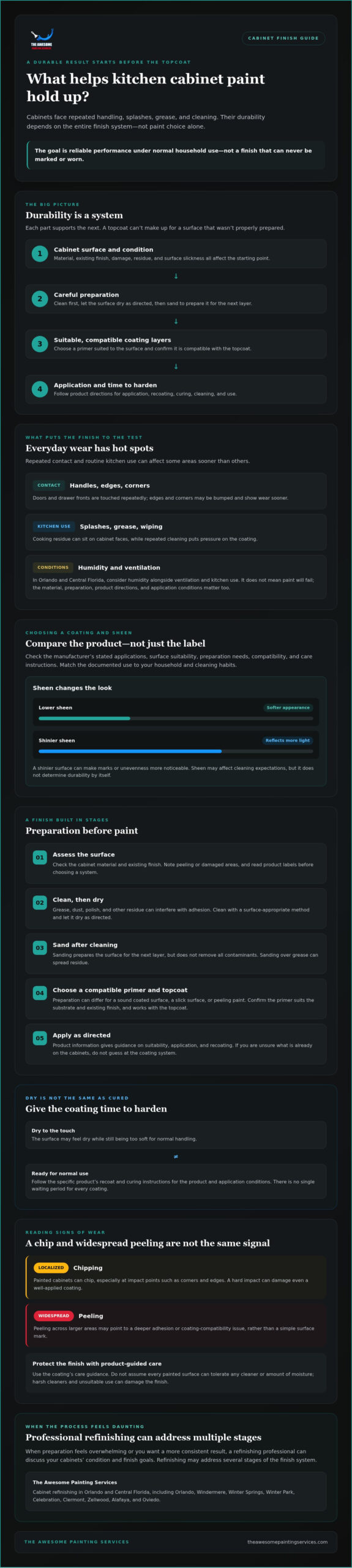
A durable kitchen cabinet paint finish resists the handling, cleaning, and ordinary wear your kitchen sees, but it isn’t chip-proof. Even a well-applied coating can be damaged by a hard impact, a harsh cleaner, or unsuitable use. The goal is a finish that performs reliably under normal household conditions, not one that can never be marked or worn.
Durability comes from the complete finish system. The cabinet’s condition and material set the starting point: existing damage, residue, or a slick surface can affect adhesion. Careful cleaning removes contaminants, sanding prepares the surface, and a suitable primer helps the coating bond. The primer and topcoat must also be compatible, and each layer needs to be applied as directed. These steps reflect the broader wood finishing process, where preparation and the finish work together to protect a surface.
Which everyday demands test painted kitchen cabinets?
Cabinet doors and drawer fronts are touched repeatedly, often around handles and edges. These contact points, along with corners that get bumped, can show wear sooner than less-used surfaces. Cooking adds another challenge: splashes and grease can sit on cabinet faces, while routine wiping puts repeated pressure on the coating.
In Orlando and Central Florida, humidity is one environmental condition to consider alongside ventilation and kitchen use. It doesn’t mean paint will fail. Cabinet material, surface preparation, coating instructions, and conditions during application all matter. Follow the product guidance for cleaning and use instead of assuming any painted surface can tolerate any cleaner or amount of moisture.
How can you recognize a finish that suits your kitchen?
Start with how your household uses the space. Check the coating manufacturer’s stated applications and care instructions, then consider how often you’ll clean the cabinets and how much visible wear you’re comfortable with. A busy kitchen may call for a coating whose documented use and cleaning guidance fit those demands. The right choice depends on the cabinet surface and the full coating system, not just the product label.
Sheen shapes the look and feel of finished cabinets. A lower-sheen surface offers a softer appearance, while a shinier one reflects more light and can make marks or surface unevenness more noticeable. Sheen can affect cleaning expectations, but it doesn’t determine durability by itself. Compare the coating’s intended use, preparation requirements, and care guidance rather than treating gloss level as a shortcut to a longer-lasting result.
How preparation and coating layers build a longer-lasting cabinet finish
A lasting cabinet finish is built in stages. Cleaning, sanding, priming, and applying compatible coating layers each have a role. Skipping or rushing one step can undermine the next, so paint alone can’t compensate for a poorly prepared surface.
Sound preparation gives a coating a clean, suitable surface to adhere to, and each layer can then do its job as intended. Before starting, check the cabinet material and existing finish, note any peeling or damaged areas, and read the product labels. They provide specific guidance on surface suitability, primer and topcoat compatibility, application, and recoating.
Why cleaning, sanding, and priming matter
Grease, dust, polish, and other residue can interfere with adhesion. Clean the cabinets first using a method appropriate for the surface, then let them dry as directed. Sanding comes after cleaning. It prepares the surface for the next layer, but it won’t remove all contaminants. Sanding over grease can spread residue instead of solving the problem.
Assess the existing finish and damaged spots before choosing a primer. A sound, previously coated surface may need different preparation from a slick surface or an area with peeling paint. Select a primer suited to the substrate and existing finish, and confirm that it’s compatible with the topcoat. If you’re unsure what’s on the cabinets, don’t guess at the coating system.
What should happen between coats and during curing?
Paint labels may distinguish between being dry to the touch, ready for another coat, and fully cured. These stages aren’t interchangeable. A surface can feel dry while still being too soft for normal handling. Follow the manufacturer’s stated recoat and curing instructions for the exact product and application conditions. There isn’t one waiting period that applies to every product.
Handling doors too soon, stacking them, or returning them to frequent use before the coating has cured can leave marks or affect the finish. Use the label’s guidance to plan when to reinstall hardware, close doors, clean surfaces, and resume everyday use. If the system includes different layers, check the instructions for each product to confirm the sequence is compatible.
Professional refinishing can help keep these stages coordinated. The Awesome Painting Services describes a cabinet process that includes cleaning, sanding, priming, and painting. If you’re weighing that route, you can discuss cabinet refinishing and your finish goals with the team.
Which cabinet coating and sheen should you compare?
Start with the product’s intended use, not a broad label like “waterborne” or “enamel.” Those terms alone don’t confirm that a particular coating is suitable for cabinets or show how it will perform on your doors. Formulations and instructions vary, so check the manufacturer’s documentation for cabinet application, compatible surfaces and primers, application method, recoat guidance, and cleaning recommendations.
Compare options using the product information. If the documentation doesn’t answer a question, ask the supplier or refinishing professional before choosing. A durable kitchen cabinet paint finish is a system matched to the surface and household use, not simply a coating category.
| What to compare | Application suitability | Preparation needs | Appearance and care |
|---|---|---|---|
| Waterborne coating | Confirm the specific product is intended for cabinetry and your cabinet material. | Follow its instructions for cleaning, sanding, primer, and compatible layers. | Check the selected sheen and the manufacturer’s cleaning guidance. Don’t assume properties from the category name. |
| Other coating chemistry | Verify that the product is suitable for cabinet use; chemistry alone doesn’t establish suitability. | Check requirements for the existing finish, primer, application, and recoating. | Review product-specific appearance and care information before comparing it with another option. |
| General-purpose coating | Don’t assume it’s appropriate for cabinets unless the manufacturer states that application is suitable. | Confirm the surface preparation and coating compatibility before proceeding. | Use the documented care instructions to judge whether it fits your kitchen routine. |
How do cabinet coating categories differ?
Waterborne and other coating chemistries may have different product instructions, but a category label isn’t enough to make a fair performance comparison. Look for manufacturer information on intended use, adhesion to the prepared surface, application conditions, and cleanup. Most importantly, confirm the product is designed for cabinetry. A coating’s chemistry and its suitability for cabinet doors are related, but they aren’t interchangeable questions.
Does sheen change how durable cabinets look?
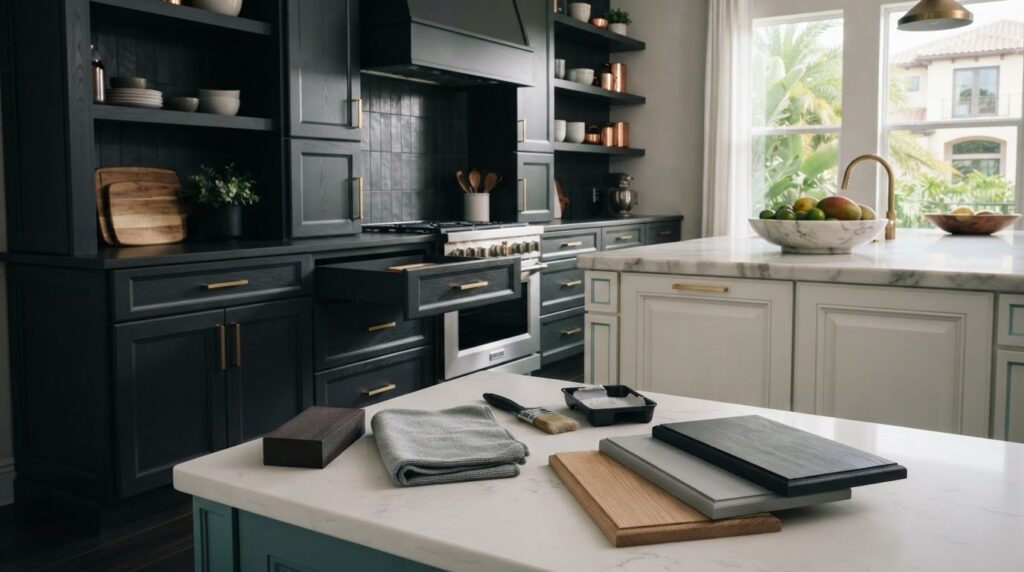
Sheen changes how light reflects, not durability by itself. Matte finishes have a softer, less reflective appearance; satin has a gentle sheen; and higher-sheen finishes reflect more light. That reflection can make surface irregularities or marks more noticeable, so consider how smooth the cabinets are and how much visible wear will bother you.
Compare samples in your kitchen’s actual lighting, and check care guidance for the specific coating and sheen. The right choice balances the look you want with cleaning expectations and everyday use. Don’t assume a shinier finish will always last longer.
Will painted cabinets chip, and how can you protect the finish?
Yes. Painted cabinets can chip, especially at edges that take knocks or where the coating hasn’t bonded well. A small chip in one spot may be isolated damage. Peeling across several doors or spreading around edges deserves closer attention, since preparation or incompatible coating layers could be factors. Appearance alone can’t confirm the cause, so don’t assume every chip means the entire finish has failed.
What commonly causes chips, peeling, or visible wear?
Impacts from cookware, frequent contact, and friction can damage cabinet surfaces. Adhesion problems may also arise from residue left behind, inadequate preparation, or incompatible products. If you see damage, note where it appears and whether it’s limited or spreading. Take photos and review the coating manufacturer’s care or repair guidance, or ask a refinishing professional familiar with the work. A closer assessment is needed to identify the cause.
How should you clean and maintain painted cabinets?
Use a soft cloth and a gentle cleaning method that aligns with the coating’s care instructions. Wipe spills promptly, especially around sinks and other moisture-exposed areas, then dry the surface as directed. Avoid abrasive pads and harsh cleaners unless the coating manufacturer specifically approves them. The right method depends on the product.
For a quick check, look at:
- Edges and corners: Check for chips where doors meet or may be bumped.
- High-touch areas: Inspect around handles and drawer fronts for worn spots or marks.
- Moisture-exposed locations: Look near sinks and cooking areas for peeling, lifting, or other changes.
- Patterns of damage: Note whether wear is isolated or appearing across multiple cabinets.
Touch-ups can improve small areas, but a new patch may not blend perfectly. Existing paint can change in color or sheen over time, so even a close match may look different under kitchen lighting. If peeling is widespread or recurring, get advice before applying more paint over the affected area.
A durable kitchen cabinet paint finish still needs sensible care, and no coating is immune to damage. If you’re seeing chips or peeling and want help assessing the cabinets, discuss cabinet refinishing with The Awesome Painting Services, serving Orlando and Central Florida.
When professional cabinet refinishing can deliver a more consistent finish
Professional refinishing may be worth exploring if your cabinet boxes are in sound condition, you want to refresh their appearance, and you’d rather not take on detailed surface preparation yourself. Consider the cabinets’ current condition, the finish you’re aiming for, the time you can devote to the project, and your comfort with following product instructions closely. A durable kitchen cabinet paint finish relies on several coordinated steps, so consistency across the process matters.
Refinishing and replacement serve different goals. If you’re deciding whether to keep your existing cabinets or replace them, start with this cabinet refinishing versus replacement guide. Extensive damage or a desired layout change calls for a broader assessment than a finish refresh alone.
What should you ask before hiring a cabinet refinisher?
Ask how the contractor will assess the cabinet material, existing finish, and any damaged or peeling areas. A clear scope should explain the planned preparation and how the coating system is selected. The Awesome Painting Services describes its cabinet refinishing process as cleaning, sanding, priming, and painting. Confirm the specific coating proposed for your project, since exact options should be discussed rather than assumed.
Before work begins, ask practical questions such as:
- Preparation: How will surfaces be cleaned and sanded, and how will the primer suit the existing finish?
- Coating: What coating system is proposed, and can you review its application and care instructions?
- Curing: What manufacturer guidance applies before cabinets can be handled, cleaned, and returned to regular use?
- Scope and access: Which cabinet surfaces are included, what access or preparation is expected from you, and how will completed work be reviewed?
These questions help you understand the plan without relying on a coating label or a promise that a finish will never chip. They also give you a chance to share your desired appearance and explain how your kitchen is used day to day.
Is professional refinishing the right next step for your kitchen?
If the cabinets are structurally sound and you mainly want a new color or refreshed appearance, refinishing may be a practical option to explore. If there’s severe damage, peeling across multiple areas, or you’re considering a different layout, ask for an assessment of what the project would involve before settling on a finish-only approach.
For homeowners in Orlando and nearby communities, including Windermere, Winter Springs, Winter Park, Celebration, Clermont, Zellwood, Alafaya, and Oviedo, The Awesome Painting Services offers kitchen cabinet refinishing. To discuss your cabinets’ condition and finish goals, explore kitchen cabinet refinishing.
Give Your Cabinets a Finish Built for Everyday Life
A durable kitchen cabinet paint finish isn’t defined by paint alone. Careful surface preparation, compatible coatings, and following product guidance all help the finish stand up to everyday handling. Choose a coating and sheen suited to your kitchen, and protect the result with gentle, product-approved cleaning.
If you’re in Orlando or Central Florida, The Awesome Painting Services offers kitchen cabinet refinishing with a process that includes cleaning, sanding, priming, and painting. Homeowners in Windermere, Winter Springs, Winter Park, Celebration, Clermont, Zellwood, Alafaya, and Oviedo can discuss their cabinet condition and finish goals with a professional to understand the next step.
Discuss your kitchen cabinet refinishing project and move closer to a refreshed space that feels right for your home.
Frequently Asked Questions
What is the most durable finish for kitchen cabinets?
There isn’t one finish that’s best for every kitchen. Look for a coating whose manufacturer specifically lists cabinetry as a suitable application, then follow its instructions for surface preparation, compatible primer, application, and care. The cabinet material and existing finish matter, too. A durable kitchen cabinet paint finish comes from a well-matched coating system and careful application, not simply choosing the glossiest option or relying on a broad paint category.
Will painted kitchen cabinets chip or peel?
Yes, painted cabinets can chip or peel. Impacts on corners and edges may cause isolated chips, while peeling across multiple areas can point to an adhesion or coating compatibility issue. Wear around handles may also build with frequent use. Don’t assume the cause based only on appearance. Photograph affected spots, note whether the damage is spreading, and check the coating’s care guidance or ask a refinishing professional to assess the surface.
Is satin or semi-gloss better for painted kitchen cabinets?
Neither sheen is automatically better for every kitchen. Satin offers a softer, less reflective appearance, while semi-gloss reflects more light and may make surface irregularities or marks easier to notice. Sheen alone doesn’t determine how durable a coating is. Compare the manufacturer’s use and care instructions for the specific product, and view samples in your kitchen’s lighting to see how each finish looks on the cabinets.
How long should painted cabinets cure before regular use?
Follow the coating manufacturer’s stated curing instructions, since there isn’t one waiting period that applies to every product and condition. Dry to the touch, ready to recoat, and fully cured describe different stages. A cabinet door may feel dry before the coating has reached the hardness intended for regular handling. Check product guidance before reinstalling hardware, closing doors, cleaning surfaces, or returning cabinets to everyday use.
Can you paint over existing kitchen cabinet paint?
Often, yes, if the existing finish is sound and the new coating is suitable for the surface. First assess for peeling, damage, grease, and other residue. Preparation may include cleaning, sanding, and selecting a compatible primer and topcoat. Don’t simply paint over loose or failing layers. If you can’t identify the existing finish or the paint is peeling in multiple areas, seek product-specific guidance or have the cabinets assessed.
How do I clean painted kitchen cabinets without damaging the finish?
Use a soft cloth and a gentle cleaning method that matches the coating manufacturer’s care instructions. Wipe spills promptly, then dry surfaces as directed, especially near sinks or cooking areas. Avoid abrasive pads and strong cleaners unless the manufacturer says they’re suitable, since they may dull or damage the finish. Test an approved cleaning method in an inconspicuous spot if you’re unsure, and don’t scrub stubborn marks aggressively.
Is professional cabinet refinishing worth considering in Orlando?
It may be worth exploring if your cabinet boxes are in sound condition, you want a refreshed appearance, and you’d rather not manage detailed preparation yourself. The Awesome Painting Services offers kitchen cabinet refinishing in Orlando and Central Florida, including for homeowners in nearby communities such as Windermere, Winter Springs, Winter Park, Celebration, Clermont, Zellwood, Alafaya, and Oviedo. Its stated process includes cleaning, sanding, priming, and painting. Discuss your cabinet condition and finish goals with the team, particularly if you’re unsure whether refinishing suits the surfaces or damage present.