Getting a Detailed Painting Quote: What to Look For
The lowest painting quote can be the one that leaves you with the most unanswered questions. When you’re getting a detailed painting quote, the total matters, but so do the surfaces, preparation, materials, coats, repairs, and cleanup behind it.
Two proposals can cover different amounts of work, even when they describe the same type of project. An interior repaint, exterior project, or cabinet refinishing may each call for different preparation and coverage. A low headline number isn’t useful if you can’t tell what it includes.
This guide explains how to prepare project details, read each line of a proposal, and compare quotes on equal terms. Use it to review labor, materials, coats, surface repairs, cleanup, and exclusions, then clarify assumptions before work begins. A shared understanding of the scope gives you a clearer starting point for your project.
Key Takeaways
- Getting a detailed painting quote starts with sharing clear project goals and identifying the areas and surfaces you want painted.
- Look for specific descriptions of preparation, materials, coats, surface protection, cleanup, and exclusions.
- Compare proposals side by side to see whether they cover the same work, not just which one has the lowest total.
- Gather your property location, project areas, desired outcome, and preferred timing before requesting a quote.
- Review the scope and next steps, and get unclear wording or changes reflected in writing before work begins.
What Should a Detailed Painting Quote Tell You?
A detailed painting quote connects the proposed work with the assumptions behind it and the expected result. It identifies the areas included, the condition the surfaces are expected to be in, and the tasks the painting team plans to complete. Treat it as a shared project outline, not just a total on a page.
That distinction matters because two quotes with different totals may describe different jobs. One might cover walls only, while another includes ceilings or trim. One may account for visible surface damage, while another assumes the surfaces are ready for painting. Without the scope behind each figure, you can’t tell whether the proposals are comparable.
Consider an Orlando homeowner who wants several bedrooms refreshed. The room count is a useful starting point, but it doesn’t describe the whole job. A bedroom with smooth, sound walls may need different preparation from one with peeling paint or noticeable dents. A useful quote describes the planned work and its assumptions clearly enough for the homeowner and painting team to share the same picture of the finished project.
How is a painting quote different from a headline estimate?
A headline estimate gives you a preliminary sense of the project’s expected cost. A written scope goes further by describing the work that figure is based on. Documents can vary, so don’t assume every estimate follows one universal format. When you’re getting a detailed painting quote, look for wording that makes the proposed tasks understandable and helps everyone agree on the intended result.
For example, “paint bedroom” leaves room for different interpretations. A clearer description identifies the bedroom and the surfaces included. Specific language helps you spot mismatched expectations before work begins, rather than relying on memory or assumptions. The broad practice of Painting involves applying color to a surface, but a service quote needs to explain which surfaces and tasks this particular project covers.
Which project details shape the scope?
Start with four details: the areas included, the surfaces within each area, access to those surfaces, and their visible condition. A bedroom repaint might focus on walls, while an exterior project involves different surfaces and access needs. Each calls for a distinct description rather than a generic scope. For a home in Orlando, listing the rooms included and noting visible damage helps define the work being discussed.
Other painting work needs its own task descriptions. A cabinet refinishing quote should identify the cabinets included and the intended work, rather than using room count as a substitute for scope. A commercial painting quote may need to identify specific spaces or surfaces within a business. The more accurately the quote describes the project, the easier it is to understand what the proposed transformation includes.
Which Line Items Belong in a Detailed Painting Quote?
A useful itemized painting quote connects the project’s scope with its assumptions and expected deliverables. It shows what work is planned, which surfaces are included, and what steps are expected to achieve the selected finish. Clear line items turn a total into a practical outline you can review.
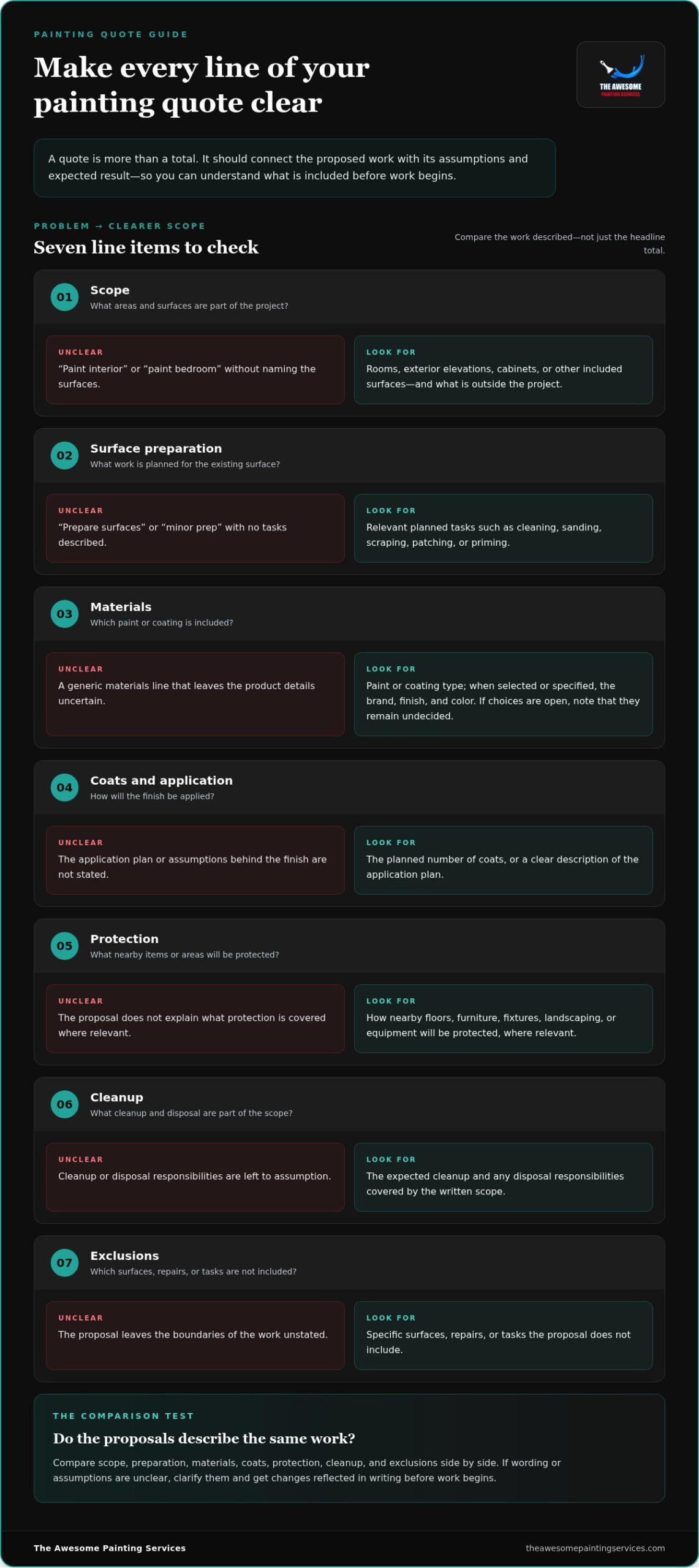
Use this checklist to see whether the proposal explains the work instead of relying on broad wording such as “paint interior” or “prepare surfaces.”
- Scope: Name the rooms, exterior elevations, cabinets, floors, or other surfaces included, and identify what is outside the project.
- Surface preparation: Describe planned cleaning, sanding, scraping, patching, or priming, as relevant to the surfaces’ visible condition.
- Materials: Record the paint or coating type and, when selected or specified, the brand, finish, and color.
- Coats: State the planned number of coats or clearly describe the application plan.
- Protection: Note how nearby floors, furniture, fixtures, landscaping, or equipment will be protected where relevant.
- Cleanup: Describe the expected cleanup and any disposal responsibilities covered by the written scope.
- Exclusions: Identify surfaces, repairs, or tasks the proposal doesn’t include to reduce room for assumptions.
How should the work and preparation be described?
Look for identifiable areas, not just a general room or building label. A scope might name the bedroom walls, specific exterior elevations, or the cabinets included. Check whether preparation is described separately from finish painting. Washing, sanding, scraping, patching, and priming aren’t automatic steps for every surface. What’s needed depends on the surface condition and the agreed work.
This separation makes the planned sequence easier to understand: preparation addresses the existing surface, then paint or coating is applied. When underlying walls require smooth skimming or plaster repairs, specialists like gladstuc.nl highlight the importance of detailing prep work alongside final paint coats. If a proposal uses a phrase such as “minor prep,” the written description should still make the intended tasks clear. A detailed painting quote lets you see what the painting team plans to do, not just the finish it aims to achieve.
What should the quote say about materials and finishing?
The quote should identify the paint or coating and, if already selected or specified, record the brand, finish, and color. It should also explain the planned coats or the assumptions behind the application. If color choices are still open, the document can state that selection remains undecided rather than implying a color has been finalized.
Materials and steps vary by project. Wall paint, exterior coatings, cabinet refinishing, and epoxy floor coatings call for different descriptions, so a generic materials line may leave important details unclear. The same goes for protection, cleanup, and disposal: note what the scope covers where those tasks apply. The American Institute of Architects provides Standard Construction Contracts, reflecting the value of clear written terms in construction. A painting quote isn’t a substitute for a contract, but precise wording helps align expectations. To outline your goals and project details, share your painting project details with The Awesome Painting Services.
How Can You Compare Painting Quotes Beyond the Total?
Put each proposal side by side and compare the work it describes, not just the final figure. A lower total may reflect a narrower scope, different assumptions about surface condition, or fewer finishing steps. It isn’t automatically a better match for the result you want. The goal is to understand what each proposal includes and where the differences come from.
Create a simple comparison sheet with one column for each quote and rows for:
- Areas and surfaces: Which rooms, elevations, cabinets, or other surfaces are included?
- Preparation: What cleaning, scraping, sanding, patching, or priming is described?
- Coats and finish: What application steps, finish, or color assumptions are stated?
- Materials: Are the paint or coating details clear enough to compare?
- Protection and cleanup: What does the proposal say about protecting nearby areas and cleaning up?
- Exclusions and allowances: What work is outside the scope, and what costs or tasks depend on an allowance?
Mark each item “included,” “excluded,” or “unclear.” This makes gaps visible at a glance. If you’re getting a detailed painting quote as part of your planning, this comparison helps you determine whether each document describes the same project before weighing the totals.
Which differences can explain different proposal totals?
Start with coverage. One proposal may include only selected rooms, while another covers additional surfaces. The documents may also assume different surface conditions. If one describes repairs or more extensive preparation and another assumes the surface is ready, they aren’t pricing identical work.
How should you handle exclusions and unclear wording?
Pause over phrases such as “selected areas,” “minor repairs,” “as needed,” or “cleanup included.” They can leave questions about which rooms are covered, what repair work is anticipated, or what cleanup involves. An allowance can also make a proposal hard to compare if it doesn’t explain what it covers or how it affects the stated scope.
Before approving a proposal, get written clarification for each unclear item. Ask for the included rooms to be named, the repair task to be described, or cleanup responsibilities to be stated. If the scope changes after discussion, request a revised document that reflects the agreed work. Clear revisions give you and the painting team a shared reference for what the project includes.
What Should You Prepare Before Requesting a Painting Quote?
A little preparation helps turn your ideas into a clear project brief. Before getting a detailed painting quote, gather the basics about the property, the work you have in mind, and any conditions that could affect access or scheduling. You don’t need to diagnose surface problems or know every technical detail. Clear observations and priorities are a strong start.
Use this checklist to organize what you already know:
- 1. Identify the property. Share its location and type, such as a home, business, or other commercial space. For an Orlando-area exterior, mention the surfaces you want painted and their exposure to weather or sun if you know it.
- 2. List the project areas. Name each room, wall, ceiling, exterior area, cabinet group, or other surface you want included. Add approximate dimensions if you have them, and identify anything that should remain untouched.
- 3. Describe your desired outcome. Explain whether you want to refresh existing walls, update the look of kitchen cabinets, change an exterior appearance, or achieve another specific result. Note which areas matter most.
- 4. Record visible conditions. Make a simple note of peeling paint, cracks, stains, dents, or worn areas without guessing at their cause. Mention previous coatings or paint if you know what was used.
- 5. Share access and timing needs. Note obstacles near work areas, rooms that are difficult to access, and your preferred timing. If you live in the home, run a business, or have activity that affects access, explain what the painting team should plan around.
Photos can add useful context. Take clear images of the full room or exterior area, then closer views of visible damage or unusual surfaces. Include access conditions where they may be hard to describe in words. Photos don’t replace a project review, but they help communicate what you’re seeing and make it easier to discuss the scope.
For interior work, think room by room. One bedroom may need a simple refresh, while another has surfaces or features you want left out. A professional interior painting in Orlando project is easier to discuss when you’ve identified the rooms, surfaces, and outcome you have in mind.
Keep preferences flexible if you’re still deciding. Color ideas, finish preferences, and reference images can help express the look you want, even if you haven’t made final selections. For an exterior, note the property type and which sides or surfaces receive the most exposure. For a business, include relevant operating or occupancy considerations so the proposed work can reflect the setting.
Once your notes are together, share your goals and project details with The Awesome Painting Services. A thoughtful brief gives the conversation a clear starting point and helps shape a quote around the transformation you want.
Moving from a Clear Painting Quote to a Confident Project
A clear quote connects the look you want with the work planned to achieve it. Before moving forward, review the written scope, settle open decisions, and understand what happens next. Questions about wording, changes, or timing are a normal part of aligning expectations. Clear answers help everyone begin with the same picture of the project.
What should you review before accepting a proposal?
Read the scope from top to bottom. Confirm the included areas, preparation steps, materials, planned coats, cleanup, and stated exclusions. Check that the colors and finishes recorded in the proposal match the direction you’ve chosen. If anything has changed since the quote was prepared, make sure the document reflects that update rather than relying on a verbal understanding.
- Scope: Do the listed rooms, surfaces, or exterior areas match your project?
- Preparation and finish: Can you tell what preparation and application steps are proposed?
- Decisions: Are selected colors, finishes, and materials described accurately?
- Next steps: Do you understand what happens after approval and how project changes will be communicated?
Keep the final written scope available as a shared reference. If a question comes up during planning, point to the relevant description and discuss a specific item. If an adjustment is agreed upon, have the written scope updated so the project direction stays clear.
How can a local painting team bring your vision to life?
The right project details connect your goals with the work itself. A brighter interior, refreshed exterior, updated cabinets, or more polished commercial space each calls for a distinct plan. The Awesome Painting Services provides residential and commercial painting in Orlando and Central Florida, with projects shaped around the property, surfaces, and desired outcome.
For a business owner, commercial painting in Orlando can help create a more welcoming, cohesive setting for customers and staff. For a homeowner, interior or exterior painting can refresh the feel of the property, while cabinet refinishing can update the kitchen’s appearance. Sharing what matters most helps turn a broad idea into a project plan everyone can understand.
Before work begins, make sure you understand the proposed next steps, which decisions remain open, and how changes will be handled. You don’t need to have every detail figured out at the start. Clear communication gives the project room to take shape while keeping expectations grounded in the written scope.
Ready to plan a residential or commercial painting project in Orlando or Central Florida? Share your goals and project details with The Awesome Painting Services and request a painting quote through the company website.
Give Your Painting Project a Clear Starting Point
Refreshing a room, updating cabinets, or transforming a commercial space can change how it feels to spend time there. Treat getting a detailed painting quote as the first step in shaping that change, not a box to check. A clear project direction gives the painting team a useful foundation for planning and helps you feel prepared as decisions move forward.
As you plan, think about how you want the space to look and function after the work is complete. Maybe you want a calmer bedroom, a brighter entry, or a more polished setting for customers. You don’t need every color or detail settled before taking the next step. Start with the outcome you want, the spaces that matter most, and the questions you’d like resolved.
The Awesome Painting Services works with residential and commercial customers across Orlando and Central Florida, including Kissimmee, Winter Park, and Lake Nona. Whether your project is in Orlando, Windermere, Winter Springs, Celebration, Clermont, Zellwood, Alafaya, Oviedo, or a nearby community, cabinet refinishing, custom geometric accent walls, and epoxy floor coatings can also help bring a fresh vision to life. Request a painting quote for your project and take the next step toward a renewed, polished space.
Frequently Asked Questions
What should be included in a detailed painting quote?
A detailed painting quote should identify the project address, document date, included tasks, material selections where known, and any payment or scheduling terms it states. It can also record open decisions, such as a color that hasn’t been selected yet. If you’re getting a detailed painting quote for an Orlando or Lake Nona property, make sure it names the specific spaces rather than relying on shorthand like “upstairs.”
How do I compare painting quotes fairly?
Compare proposals against the same project brief, then flag differences in what each one covers. Mark the areas and tasks you consider essential, then check whether each proposal addresses them. If one uses a different label for similar work, compare the description rather than the wording alone. This helps you focus on project fit instead of treating unlike scopes as interchangeable.
Can a painting quote change after work begins?
It can change if the agreed scope changes or if work reveals a condition that wasn’t visible during the initial review. A requested color change, an added room, or newly discovered surface damage may affect the plan. Before extra work proceeds, ask for the proposed change and any effect on the project terms in writing. That gives you a chance to understand and approve the revised scope.
How much information should I provide to get a painting quote?
Share enough information to identify the property, the areas you want addressed, and the result you’re hoping for. Room names, approximate dimensions, clear photos, visible concerns, and access notes all help. You don’t need to guess at technical causes or know every measurement. If you’re unsure whether a surface belongs in the project, point it out so its status can be discussed rather than assumed.
Is a painting quote the same as a contract?
Not necessarily. A quote typically describes proposed work and its terms, while a contract may set out the agreement after both parties accept it. Documents and their legal effect can vary, so don’t assume a quote alone answers every question about payment, scheduling, or changes. Read the paperwork you receive, note any terms you don’t understand, and make sure the final agreement reflects the project you intend to authorize.
What should I do if two painting quotes have different scopes?
Write a shared description of the outcome you want, including which spaces or surfaces matter, then compare each proposal against it. Mark missing, unclear, or additional work instead of trying to reconcile totals by averaging them. Request a revised written scope that reflects the same priorities. For a Winter Park project, for example, make sure both documents refer to the same rooms or exterior areas before comparing them.
Do Orlando homes need special details in an exterior painting quote?
An Orlando-area exterior quote benefits from property-specific notes, not a one-size-fits-all description. Include the surfaces and sides of the home, visible wear, previous coatings if known, and exposure conditions such as strong sun or rain. Homes in Windermere, Winter Park, and nearby communities can have different layouts and surface conditions. These details help describe the actual project without assuming every home needs the same preparation or coating plan.