Apartment Complex Painting in Orlando: A Property Manager’s Buying Guide
What if the hardest part of an apartment repaint isn’t choosing a color, but keeping every building, shared space, and resident experience aligned? A successful apartment complex painting Orlando project starts with a clear plan, so the finished property feels consistent without making day-to-day operations harder than necessary.
If you manage a multifamily property, you already know the moving pieces: defining what needs paint, setting finish expectations, keeping residents informed, and coordinating occupied and vacant areas. Orlando’s heat, humidity, and seasonal rain add another planning consideration, especially for exterior work.
This guide explains how to scope the project, compare proposals on a like-for-like basis, and plan a manageable sequence for units and common areas. You’ll also learn what to consider when setting finish expectations and timing exterior painting around Central Florida conditions. The Awesome Painting Services provides commercial painting for properties across Orlando and Central Florida, with a focus on craftsmanship and customer satisfaction.
Key Takeaways
- Plan apartment complex painting Orlando as coordinated work across units, shared spaces, and exterior areas to support a consistent property-wide finish.
- Document buildings, floors, unit types, common areas, and exterior surfaces separately so the project scope is clear.
- Compare proposals by matching the areas and work included, then review preparation, finish assumptions, access, scheduling, and exclusions.
- Sequence vacant-unit work separately from occupied common areas and exterior work to make resident coordination more manageable.
- Account for Orlando’s heat, humidity, and seasonal rain when planning exterior painting, and review completed zones as work progresses.
Why Apartment Complex Painting in Orlando Needs a Property-Wide Plan
A single-unit turnover repaint has a contained goal: refresh one apartment between residents. A property-wide project coordinates work across multiple units, shared spaces, and exterior areas. Choices about finish, access, priorities, and timing affect how the whole community looks and functions. Treating the work as isolated touch-ups can leave buildings looking uneven, even when each freshly painted area looks good on its own.
A successful multi-unit painting plan defines what gets painted, how each zone should look, and how the work fits the property’s daily life. Shared direction helps managers create a cohesive appearance, support routine upkeep, and give residents a more polished experience from their apartment entrance to the common areas. It also gives the painting team a clearer picture of the work.
Which property areas may need painting?
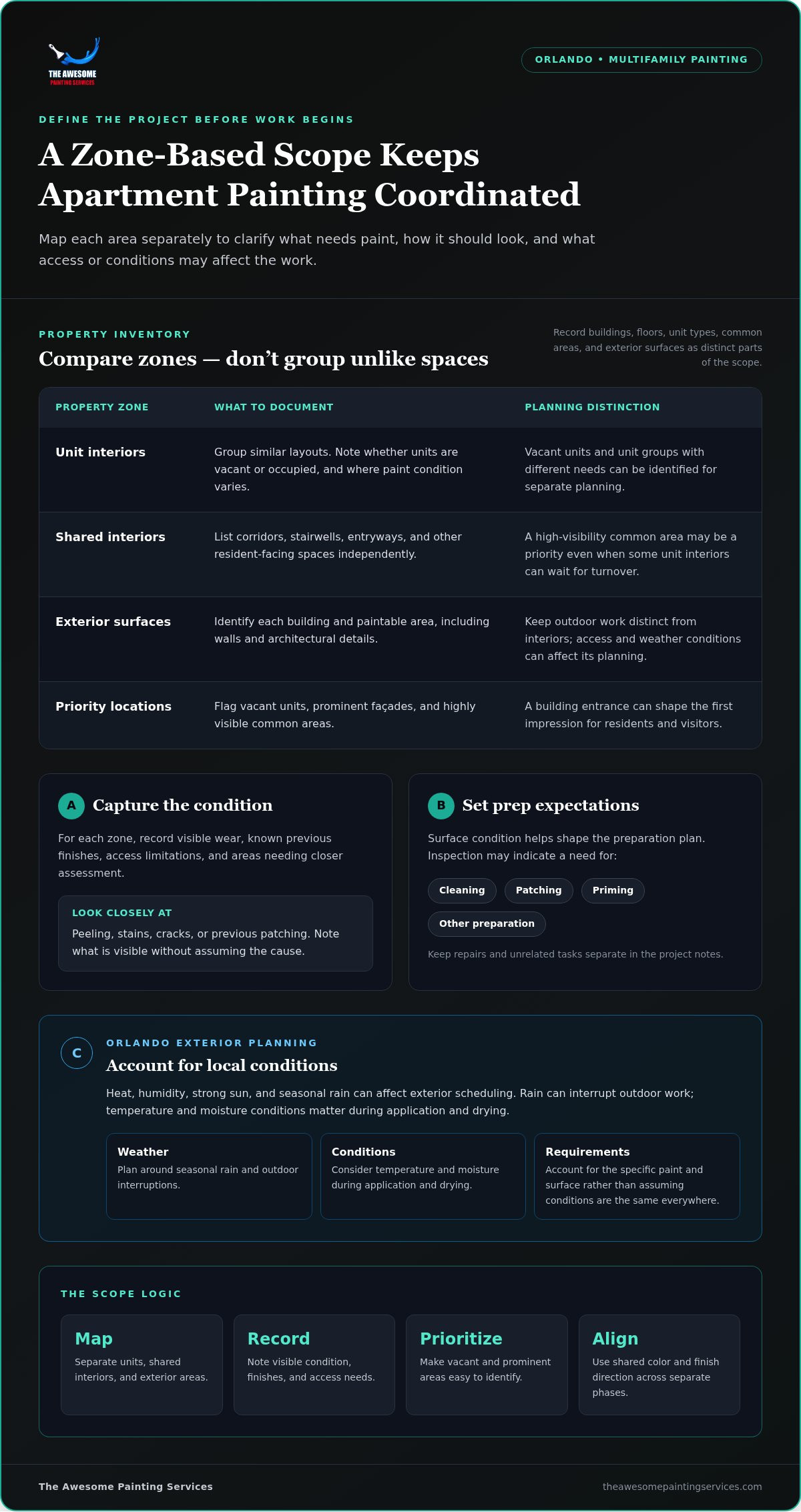
Start by mapping the property into zones rather than using one broad label such as “interior painting.” List unit interiors, corridors, stairwells, entryways, and other shared areas separately. Treat exterior walls and other paintable building surfaces as their own scope. For example, a corridor refresh may be a priority while certain unit interiors can wait for turnover. Separating the zones makes those decisions visible and helps prevent overlooked areas.
Why Orlando conditions matter to project planning
Orlando’s heat, humidity, strong sun, and seasonal rain can affect when exterior work is scheduled and which conditions need to be considered. Rain can interrupt outdoor work, while temperature and moisture conditions matter during application and drying. Plan with local weather in mind, and account for the specific paint and surface requirements rather than assuming every product or area has the same conditions. For broader context, the guide Best Exterior Paint for Florida Weather: The 2026 Homeowner’s Guide explores climate considerations. General background on types of paint can also help clarify how paint materials differ.
A zone map connects the property’s visual goals to practical priorities. A building entrance may deserve attention before a lower-visibility area because it shapes the first impression residents and visitors receive. A shared color and finish plan can keep separate phases visually aligned, even when different areas are painted at different times. The best sequence depends on the property’s condition, occupancy, and priorities.
- Unit interiors: Identify apartment layouts or groups of units with similar needs.
- Shared interiors: Record corridors, stairwells, entryways, and other common areas independently.
- Exterior areas: Note each building and paintable surface so outdoor work is clearly distinguished from interior work.
With a defined property-wide scope, apartment complex painting Orlando becomes easier to plan as a coordinated refresh rather than a series of disconnected jobs. The Awesome Painting Services provides commercial painting for properties across Orlando and Central Florida, including communities in Windermere, Winter Springs, Winter Park, Celebration, Clermont, Zellwood, Alafaya, and Oviedo.
How to Define an Apartment Complex Painting Scope in Orlando
A clear scope turns a large property refresh into areas that can be described, prioritized, and reviewed. For apartment complex painting Orlando projects, avoid grouping unlike spaces under one label. A unit interior, a stairwell, and an exterior wall may have different surface conditions, access needs, and finish expectations. Recording those differences creates a more useful project brief.
A zone-based scope makes a multi-building project easier to manage by showing what needs work, where it is, and how each area should look when finished. It also helps distinguish painting from repairs or other work. Keep those items separate in the project notes so the painting request stays specific and doesn’t imply that surface repairs or unrelated tasks are included.
Build a zone-by-zone property inventory
List each building, floor, unit type, corridor, stairwell, shared area, and exterior surface separately. Then record visible wear, known previous finishes, access limitations, and areas that need closer assessment. This creates a practical reference instead of relying on broad descriptions or memory.
- Unit interiors: Group similar layouts, noting which are vacant or occupied and where paint condition varies.
- Shared interiors: Record corridors, stairwells, entryways, and other resident-facing spaces as separate zones.
- Exterior surfaces: Identify each building and paintable area, such as walls or architectural details.
- Priority locations: Flag vacant units, highly visible common areas, and prominent façades for planning attention.
For each zone, note what is visible without assuming the cause. Peeling, stains, cracks, or previous patching can signal that the surface needs a closer look before the painting scope is finalized. Also record practical access details, such as whether a space is occupied or an exterior area is difficult to reach.
Set finish and preparation expectations
Surface condition helps shape the preparation plan. Depending on what an inspection reveals, the work may call for cleaning, patching, priming, or other preparation before paint is applied. Identify repairs that extend beyond painting as separate items for assessment. The Painting Contractors Association’s painting industry standards offer useful context for understanding professional practices as you define expectations.
For comparable areas, specify the intended color and sheen so one corridor or unit doesn’t look noticeably different from another. Note where finishes should match and where the property’s design calls for deliberate variation. The guide Commercial Painting Orlando: The Business Owner’s Guide to Professional Transformation (2026) provides related context on planning commercial painting projects.
Once your inventory and finish expectations are documented, the scope becomes a stronger foundation for the project. The Awesome Painting Services provides commercial painting across Orlando and Central Florida. Share your property details through The Awesome Painting Services to start shaping a property-specific painting plan.
How to Compare Apartment Painting Proposals in Orlando
A proposal is useful to compare only when it describes work on the same areas and under similar assumptions. For apartment complex painting Orlando, one document might include corridors and exterior walls while another covers only unit interiors. Comparing totals before clarifying those differences can hide gaps in the requested work. Start with your defined scope, then review each proposal side by side to identify what it includes, assumes, and excludes.
Use a comparison table. Record details from each proposal and flag unclear items for follow-up before making a decision.
| Comparison item | What to record |
|---|---|
| Scope | Buildings, unit areas, common spaces, and exterior surfaces included |
| Preparation | Stated cleaning, patching, priming, and treatment of worn or damaged surfaces |
| Finish | Color, sheen, and expectations for consistency across comparable areas |
| Access | Assumptions about occupied units, shared spaces, and access to exterior areas |
| Schedule | Proposed sequence, timing assumptions, and dependencies |
| Exclusions | Repairs, surfaces, or other work left outside the painting scope |
Compare scope, preparation, and finish details
Check whether each proposal names the buildings and areas to be painted, not just the general project type. Then compare preparation descriptions. “Prepare surfaces” may leave questions about what happens to worn or damaged areas, while a clearer description identifies the intended steps or lists repairs separately for assessment. Finally, match color and sheen assumptions across similar units and shared spaces. Consistent expectations make the finished property easier to review.
Look for gaps between the property inventory and the proposal. If a stairwell, building, or exterior surface appears in your scope but not in the written offer, note the difference. Also separate painting from repairs or replacement tasks. Otherwise, proposals may appear to cover the same project when their boundaries differ.
Assess schedule and resident-impact planning
Review how each plan accounts for occupancy, access, work sequence, and resident communication. A vacant unit and an occupied corridor create different access considerations, so look for a plan that reflects the property’s actual conditions. Note assumptions such as units being available, common areas remaining accessible, or exterior work depending on suitable weather. These details can affect operations and should be clear before you compare proposals.
The Awesome Painting Services provides commercial painting for properties according to the project scope. A well-defined comparison helps align the proposed work with your priorities. Focus on clarity: comparable areas, preparation, finishes, access, scheduling, and exclusions give you a grounded basis for choosing a project plan.
How to Plan Apartment Painting Around Residents and Orlando Weather
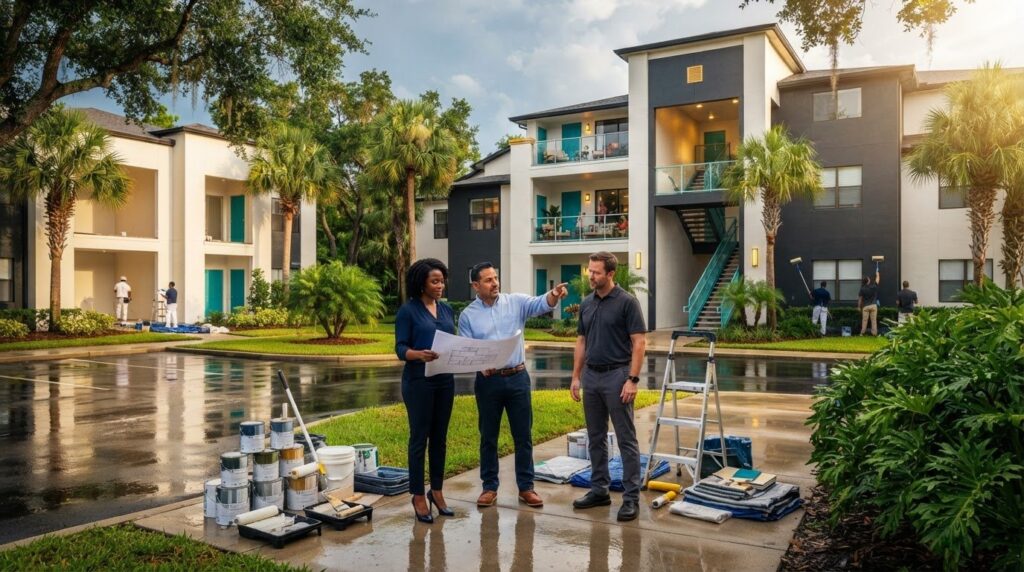
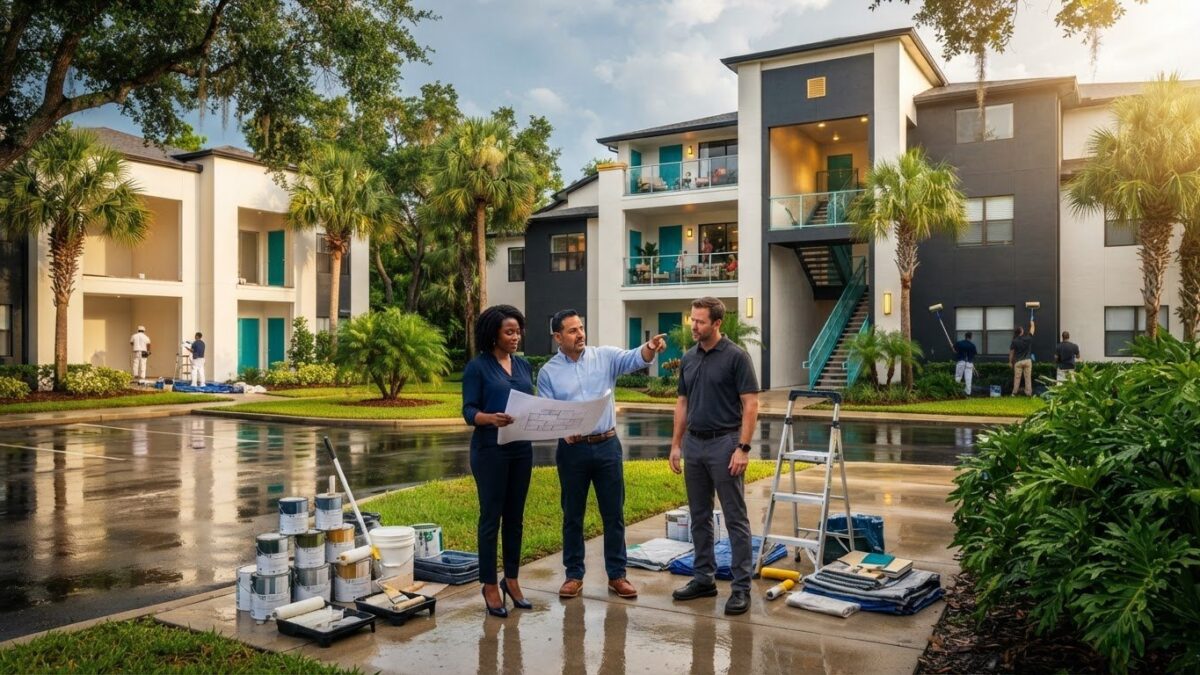
Painting in an occupied community takes more than choosing work dates. A clear sequence helps you manage access, keep residents informed, and account for Orlando’s heat, humidity, and seasonal rain. For apartment complex painting Orlando, plan vacant units separately from occupied common areas and exterior work. That distinction helps you manage resident movement indoors while allowing outdoor phases to adapt to weather and product guidance.
- Map the work areas. Group units, common spaces, and exterior zones by building and location. This gives residents and property staff a clear view of where work may occur.
- Set priorities. Consider unit availability, visible wear, resident use, and the sequence that makes sense for property operations. Vacant units may be scheduled separately from occupied corridors or entryways.
- Coordinate access. Identify which areas need to be accessible, when entry is expected, and any property arrangements that could affect the sequence.
- Communicate the plan. Prepare advance notices that identify affected areas, access expectations, and planned work periods. Grouping work by location can make updates easier for residents to follow. Notification procedures should fit the property’s operating arrangements.
- Review completed zones. Check each area against the agreed scope and finish expectations before moving on. A consistent review helps surface questions while the phase is still easy to identify.
Coordinate access and resident communication
Keep messages specific and practical. For example, a notice for a corridor phase can name the building or floor, describe which access points may be affected, and state the planned work period. Unit access needs a different approach from shared-space work, so account for occupancy and the property’s procedures. Clear updates help residents understand what to expect without assuming the same access plan fits every area.
Sequence work with local conditions in mind
Exterior phases need room to adapt to Orlando’s seasonal rain and humidity, as well as heat and direct sun. Plan around suitable conditions and follow the paint manufacturer’s instructions for application and drying. Don’t assume that indoor and outdoor areas can follow the same sequence. For indoor finish considerations, see Interior Painting Orlando: Elevating Your Home with Professional Visionary Craftsmanship.
Keep weather-sensitive exterior work distinct from interior phases where possible. If rain changes the outdoor plan, having interior zones identified can help property managers consider other work without losing track of priorities. The right sequence depends on the property, occupancy, and work scope. Avoid setting resident expectations around conditions the schedule cannot control.
Discuss your apartment painting project with The Awesome Painting Services to plan a property-specific refresh for your Orlando community.
Plan Your Orlando Apartment Painting Project with The Awesome Painting Services
A well-planned property refresh starts with useful information, not a long list of assumptions. Define the zones that need painting, compare proposals against the same scope, consider resident access and work sequencing, then align finishes across comparable areas. This process turns apartment complex painting Orlando into a property-specific plan with clear priorities for the finished appearance and residents’ experience.
The Awesome Painting Services provides commercial painting in Orlando and Central Florida. Bringing your property goals and observations into the project conversation helps connect the requested work to a clear painting plan. A concise project brief is a practical place to begin.
Prepare a concise project brief
Gather a few core details before discussing the project. They help describe the property clearly without requiring every decision to be finalized. Include what you know, and flag anything that needs a closer look.
- Property basics: Note the location and building count, then identify the buildings or sections you want considered.
- Priority areas: List target locations such as unit interiors, corridors, stairwells, entryways, or exterior surfaces.
- Occupancy context: Identify which areas are vacant, occupied, or shared by residents, since access and sequencing can differ.
- Surface observations: Gather photos and notes on visible wear, stains, peeling, previous finishes, or areas that may need closer assessment.
- Access considerations: Note practical constraints, such as areas with limited access or spaces that need to remain usable during the project.
- Appearance goals: Describe the look you want and any property-wide color, sheen, or finish preferences for comparable areas.
This preparation doesn’t need to resolve every question. Its purpose is to distinguish known priorities from observations that need further discussion, so the project conversation can focus on the property rather than vague generalities.
Move from property goals to a clear painting plan
A defined scope gives the painting plan a useful starting point. It connects each area to its condition, access context, and desired finish, while showing where priorities differ between buildings or phases. If a surface concern may involve more than painting, describe it separately instead of assuming it belongs within the painting work. Clear boundaries help everyone understand what the project is meant to address.
The Awesome Painting Services approaches commercial painting with attention to craftsmanship and customer satisfaction. For property managers, that starts with identifying the specific buildings, areas, and finish goals that matter to the community. A thoughtful brief brings those details into focus and supports a refreshed, consistent appearance suited to the property.
Ready to put your property goals into a clear painting plan? Start planning your Orlando apartment painting project with The Awesome Painting Services.
Give Your Property Refresh a Clear Starting Point
A painting project can do more than freshen surfaces. Thoughtful planning can help create a community that feels cared for, cohesive, and welcoming to residents. For apartment complex painting Orlando, your next step doesn’t need to be a finalized plan. Start with the property details you already have, the improvements that matter most, and the appearance you want residents and visitors to experience.
Bring those goals into a conversation with The Awesome Painting Services. The team provides commercial painting across Orlando and Central Florida, with a focus on craftsmanship and customer satisfaction. A clear starting point helps move a broad refresh goal toward a plan that fits your community.
Start planning your Orlando apartment painting project and take the first step toward a refreshed property. Your community’s next chapter can begin with a thoughtful plan.
Frequently Asked Questions
Can an apartment complex be painted in phases?
Yes. Painting in phases lets managers align work with turnover patterns, building priorities, or access needs. For example, vacant apartments can be scheduled separately from a later refresh of shared spaces. Before work begins, define how each phase will be considered complete and how color or sheen will stay consistent between phases. That makes progress easier to review and helps maintain a coordinated property appearance.
Is apartment painting different from painting a single home?
Yes. Apartment painting often involves more types of spaces and more people affected by access, sequencing, and finish decisions. A single-home project typically centers on one household’s rooms, while a multifamily property may include repeat unit layouts, shared corridors, and multiple buildings. Managers also need to consider how a chosen finish will look across comparable areas. A documented scope helps keep decisions consistent instead of treating every space as an unrelated job.
How much does apartment complex painting in Orlando cost?
There isn’t one fixed cost for apartment complex painting in Orlando because the project depends on the areas included and their condition. Factors can include the total paintable surface, textured or porous materials such as stucco, preparation needs, access, finish choices, and the number of coats required. For a useful project estimate, define which buildings and areas are included and note visible surface concerns so the scope reflects the property.
What happens if residents are living in the apartment complex during painting?
Painting can be planned around an occupied property, but access and resident communication need to fit the areas being worked on. A resident notice can identify the affected location, expected access arrangements, and planned work period. For example, a notice for a shared hallway should make clear which building or floor is involved. Property managers can also ask residents to move personal items away from the work area when needed.
Can apartment common areas be painted without repainting every unit?
Yes. A project can focus on shared spaces such as entryways, corridors, or stairwells without including every apartment interior. Define the common areas as a distinct scope and identify where the work begins and ends, especially if residents pass through nearby spaces. You can also specify how the selected colors and finishes should relate to surrounding areas. This keeps the refresh focused while giving shared spaces a renewed, cohesive appearance.
When is the best time to paint an apartment building exterior in Orlando?
Late fall, winter, and early spring are generally favorable periods for exterior painting in Orlando because they tend to bring cooler temperatures, lower humidity, and less rainfall. Summer work can still be possible, but frequent afternoon storms and high humidity need to be considered during scheduling. The paint manufacturer’s application and drying instructions should guide decisions about suitable conditions. In any season, build flexibility into the plan for weather-related changes.