Non-Slip Epoxy Flooring in Orlando: Choose the Right Floor Finish
A glossy epoxy floor may look polished, but appearance alone won’t tell you how it will feel underfoot when wet. If you’re considering non-slip epoxy flooring Orlando homeowners and businesses can use, remember that traction depends on more than adding texture. The coating system, concrete condition, and preparation all matter.
Florida moisture and heat, along with inadequate preparation, can affect a flooring project. The finish should suit how the space is used, whether it’s a home garage or a commercial area, while balancing traction, cleanability, and appearance. This guide covers common slip-resistant finish options, how texture and site conditions influence traction, and what to ask during a professional floor assessment. You’ll also learn why moisture checks and thorough surface preparation belong in the conversation, so you can compare epoxy coating options and discuss what may suit your Orlando-area property.
Key Takeaways
- Slip-resistant epoxy can improve traction, but it can’t eliminate fall risk. Spills, dust, and footwear still matter.
- Ask how the concrete’s condition and preparation will shape the coating recommendation before choosing a finish.
- Compare garage and business flooring options by moisture exposure, texture, cleaning needs, and appearance, not by texture alone.
- Use a consultation checklist to clarify the proposed materials, work scope, schedule, and care instructions.
- For non-slip epoxy flooring Orlando projects, share the floor’s intended use, property location, approximate area, photos, and known surface issues when requesting an assessment.
What Non-Slip Epoxy Flooring in Orlando Can, and Cannot, Do
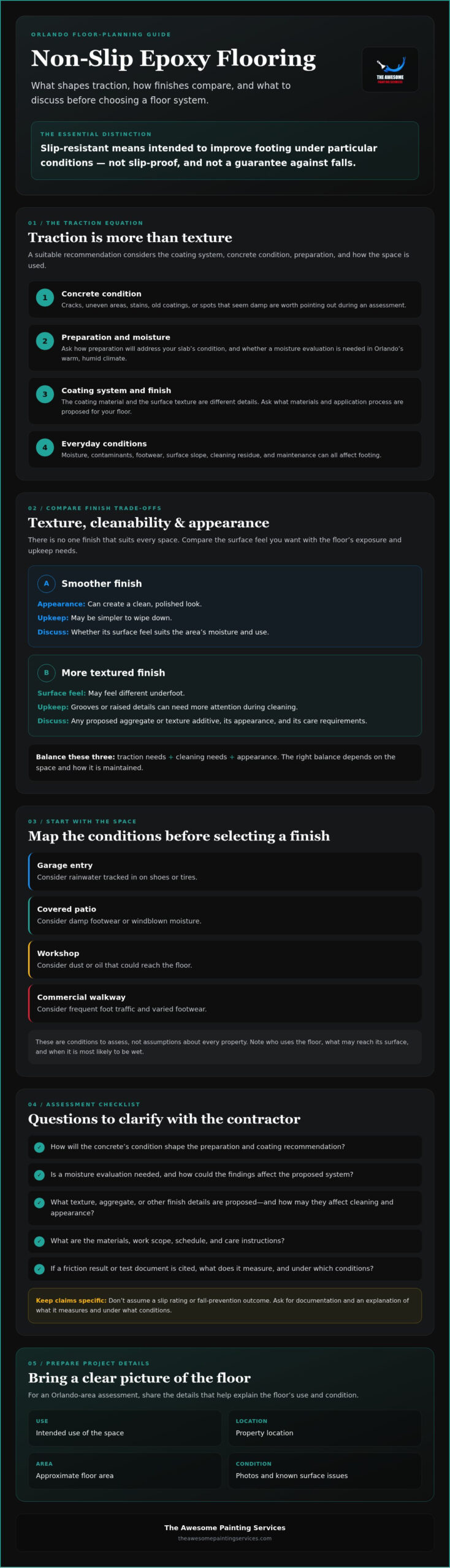
A slip-resistant floor is designed to improve traction under particular conditions. It isn’t a promise that nobody will slip. “Slip-resistant” means a surface is intended to provide better footing, not that it is slip-proof or can prevent every fall. Keep that distinction in mind when discussing non-slip epoxy flooring with an Orlando-area contractor.
Epoxy describes the coating material. Texture or aggregate refers to features that may be incorporated into a floor system to change its surface feel. Those details aren’t interchangeable: a coating can have a smooth appearance, while a textured finish may feel different underfoot. For a basic overview of what epoxy is, see Wikipedia’s explanation of the material and its uses.
Where Orlando property owners may want more traction
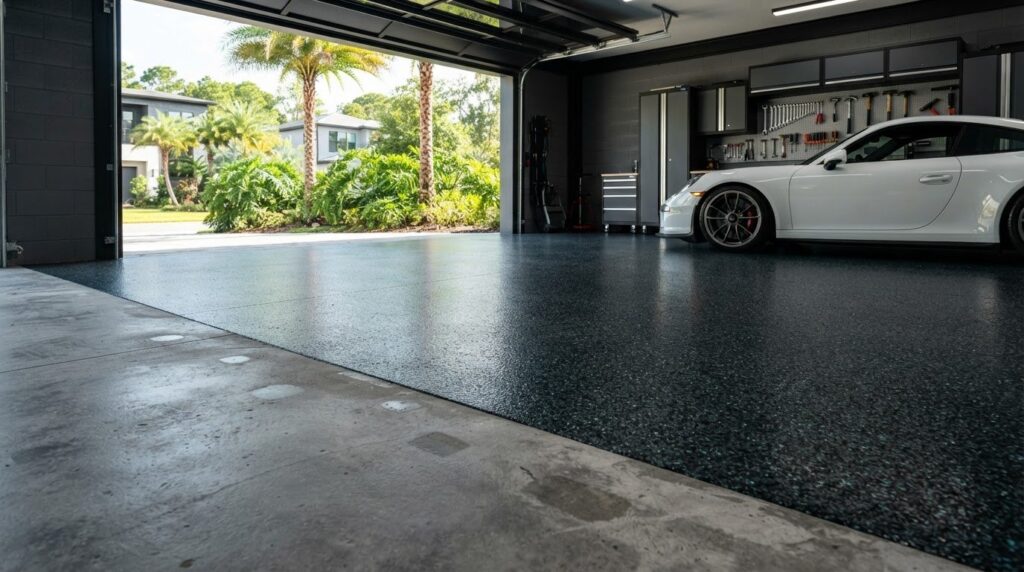
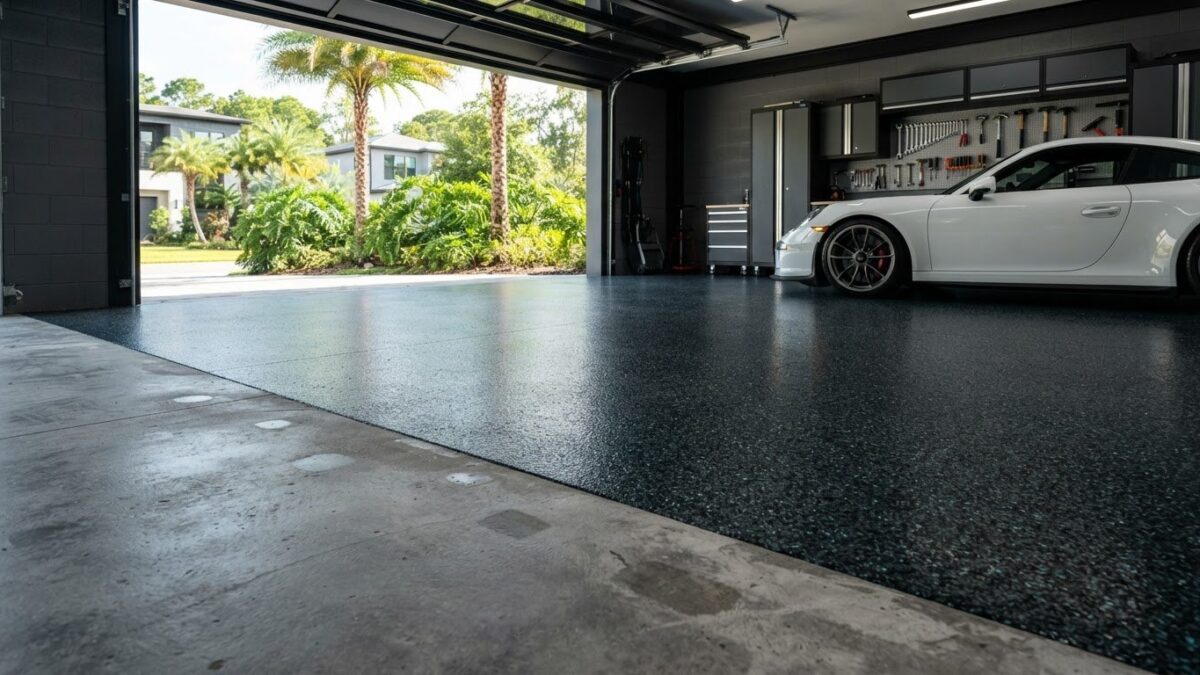
Start with how each area is used rather than choosing a finish by appearance alone. A garage entry may get rainwater tracked in on shoes or tires. A covered patio may be exposed to damp footwear or windblown moisture. A workshop could encounter dust or oil, while a commercial walkway may see frequent foot traffic and varied footwear.
These are conditions to assess, not assumptions about every property. Note who uses the floor, what could reach its surface, and when it’s most likely to be wet. A family area where people carry groceries has different daily demands from a work area where equipment and contaminants may be present.
Why “non-slip” is not an absolute guarantee
Traction changes with the conditions on the floor. Water, oil, dust, cleaning residue, footwear, and the slope of a surface can all affect footing. Maintenance matters, too. A dirty finish or one with residue may not feel the same as a clean, dry floor.
A finish label alone can’t tell you whether a floor suits your space. Ask the contractor to consider the concrete, coating system, intended texture, and everyday exposure together. Don’t assume a specific slip rating or fall-prevention outcome unless the contractor can provide documentation and explain what it measures and under which conditions.
A useful assessment connects the floor’s appearance with its practical demands. Explain where moisture or contaminants may come from, how the surface is cleaned, and who walks on it. With those details, an Orlando-area flooring professional can discuss whether epoxy floor coatings and available finish options are appropriate for your project.
How Epoxy Surface Preparation and Texture Affect Traction
A floor’s traction starts before the finish goes down. Concrete condition helps determine what preparation and coating approach may be suitable. The chosen texture affects how the finished surface feels and how it may be cleaned. Prepare the concrete for its condition, then match the finish to how the space will be used.
That’s a key consideration for non-slip epoxy flooring Orlando projects. Choosing a texture can’t make up for a substrate that hasn’t been properly assessed. Epoxy systems and application details vary, so ask the contractor to explain the proposed materials and process for your specific floor instead of assuming every coating is installed the same way.
Assess the concrete before choosing a coating
Look over the slab with the contractor. Point out visible cracks, uneven areas, old coatings, stains, or places that seem damp. These observations can help guide planning, but they don’t replace appropriate testing. In Orlando’s warm, humid climate, ask whether the project requires a moisture evaluation and how the findings could affect the coating recommendation.
Describe how the area is used, too. A workshop floor may face different demands from a residential garage. Photos and notes about recurring surface issues can help focus the assessment. Ask how repairs or existing coatings will be addressed, and request a clear explanation of the preparation steps proposed for your concrete.
Choose texture with cleaning and appearance in mind
A smoother finish can create a clean, polished look and may be simpler to wipe down. A more textured surface may feel different underfoot, but grooves or raised details can require more attention during cleaning. The right balance depends on expected moisture or contaminants, how you maintain the floor, and the appearance you want.
Some systems may incorporate aggregate or texture additives. Treat these as options to discuss, not automatic features. Ask what is proposed, how it may affect the final look and upkeep, and whether the contractor can provide product information or relevant test documentation. The Tile Council of North America explains the Dynamic Coefficient of Friction (DCOF) and its role in measuring floor friction. Ask what any cited result means for the specific surface and test conditions.
Before work begins, confirm the scope in writing, including planned surface preparation, repairs, coating layers, finish texture, and care guidance. If you’re considering an epoxy floor coating for an Orlando-area property, you can discuss your floor coating project and ask what assessment is appropriate for your space.
Comparing Slip-Resistant Epoxy Finishes for Garages and Businesses
The right finish depends on what happens on the floor each day. A dry home garage used mainly for parking has different priorities from an entry exposed to tracked-in rain or a commercial walkway cleaned throughout the day. Use this comparison to prepare for a contractor discussion, not as a substitute for assessing the concrete and site conditions.
| Area | Use and moisture exposure | Texture to discuss | Cleaning needs | Appearance considerations |
|---|---|---|---|---|
| Dry garage | Vehicle parking, foot traffic, stored items; consider whether water is brought in. | Ask what texture suits how you walk, park, and use the space. | Consider dust, tire marks, spills, and your usual cleaning routine. | Choose a look that works with the rest of the garage while meeting practical needs. |
| Wet-prone entry | Foot traffic may bring in rainwater or moisture from outside. | Discuss a finish suited to the entry’s exposure and expected footwear. | Plan for frequent cleaning and how residue or tracked-in dirt will be handled. | Think about how texture and finish will look in a high-visibility area. |
| Work area | Activities may introduce dust, oils, or other spills. | Explain the tasks performed there and ask which textures are suitable to consider. | Match the finish to the cleaning methods and frequency the space requires. | Balance a neat appearance with the realities of tools, equipment, and materials. |
| Commercial walkway | Foot traffic, routine cleaning, and possible spills vary by business and zone. | Ask whether separate areas call for different coating approaches. | Discuss how the finish can be maintained under normal operations. | Consider the customer-facing look alongside the walkway’s daily demands. |
What to weigh at home
For a garage or entry, consider vehicle and foot traffic, water brought indoors, stored materials, and cleaning habits. A decorative preference is a valid part of the decision, but it shouldn’t replace a conversation about traction needs. A finish that looks right in a sample may feel different in a space with regular moisture or frequent cleanup.
What to weigh at a business
Map the activities in each zone, including foot traffic, routine cleaning, and possible spills. Ask whether one approach suits the whole floor or whether different areas need separate consideration. For a wider property refresh, flooring decisions can also be coordinated with commercial painting plans. Review OSHA’s general requirements for walking-working surfaces, and independently verify any accessibility, operational, or industry-specific requirements that apply to your facility.
For non-slip epoxy flooring Orlando projects, compare options based on your actual use, moisture exposure, upkeep, and preferred appearance. A finish suitable for one property may not suit another, so share those details before settling on an option.
Questions to Ask Before Hiring an Orlando Epoxy Flooring Contractor
A clear conversation can help you compare proposals and understand what the finished floor is intended to do. For non-slip epoxy flooring Orlando projects, ask how the recommendation accounts for your concrete, the space’s daily use, and your maintenance routine. Get important details in writing so you can review the scope before work begins.
- What condition is the concrete in? Ask how the contractor will assess cracks, uneven areas, existing coatings, and possible moisture concerns. Find out whether additional testing is appropriate and how the findings could change the project plan.
- How does the proposed finish suit my space? Explain when and how the floor is used, including where moisture or spills may occur. Ask how the suggested texture relates to those conditions, the appearance you want, and your cleaning routine.
- What preparation and repairs are included? Request a description of the planned surface preparation and any repairs. Confirm what is included in the quoted scope and how the contractor will handle discoveries that differ from the initial assessment.
- Which materials and coating layers are proposed? Ask for product information and an explanation of how the parts of the system work together. If the contractor cites a slip rating, warranty, or performance claim, request supporting documentation and clarification of its conditions and limits.
- How should I clean and maintain the floor? Ask which cleaning methods and products are suitable for the selected system. Get care instructions in writing, including any practices the manufacturer or contractor advises against.
- What is the project sequence and schedule? Confirm the written work scope, expected sequence, access limitations, and guidance on when the floor is ready for use. Ask how changes will be communicated and documented if site conditions affect the plan.
Specific answers matter more than broad assurances. A contractor should be able to explain the recommendation in terms you understand and connect it to your floor’s condition and intended use. Review the materials, preparation, finish, schedule, and care guidance together before deciding.
If you’re ready to discuss whether epoxy floor coatings fit your property, discuss your Orlando epoxy flooring project with The Awesome Painting Services.
Planning Your Non-Slip Epoxy Flooring Project in Orlando
A well-planned floor project starts with the space, not a finish sample. Define how you use the floor, assess the concrete, compare coating and texture options, then confirm how the selected system should be cleaned and maintained. That sequence keeps appearance, traction goals, and everyday use in the same conversation.
The Awesome Painting Services provides residential and commercial epoxy floor coating projects in Orlando and Central Florida. A site assessment is a practical next step to discuss whether the service and available options fit your property. Confirm specific systems, textures, and project details directly rather than assuming they are included.
Prepare for an initial floor assessment
Share the property’s Orlando-area location and describe the room or zone. Explain who uses it, what activities take place there, and where moisture, dust, or spills may occur. Include the approximate floor area, clear photos, and notes about visible cracks, uneven spots, old coatings, or other known surface concerns.
Photos can start the conversation, but they can’t show every condition beneath or across the concrete. Ask what further inspection or testing may be appropriate before the contractor recommends a coating system. The more clearly you describe the floor’s use and history, the more focused the assessment can be.
Set expectations before work begins
Discuss the look you want alongside practical details. Describe your preferred texture, cleaning routine, and any access needs for people, vehicles, or business operations. Ask the contractor to put the proposed materials, preparation, repairs, work scope, and project sequence in writing. If site conditions change the plan, clarify how revisions will be explained and documented.
Confirm the project-specific schedule and any restrictions on accessing or using the floor directly with the contractor. Don’t rely on a general estimate for readiness or cure time. Request documentation for any stated safety rating, warranty, or product-performance claim, and ask what the documentation measures and under which conditions. Verify that the proposed system and service coverage fit your exact location and project.
These details turn an initial inquiry into a useful plan without assuming one finish will suit every floor. If you’re considering non-slip epoxy flooring Orlando property owners can discuss with a local provider, bring your photos, approximate area, and questions to the conversation.
Talk with The Awesome Painting Services about your floor to discuss your epoxy floor coating project.
Choose a Floor Finish That Fits Your Space
The right floor starts with how you use it. Slip-resistant finishes are designed to improve traction, not guarantee a slip-proof surface. Water, contaminants, cleaning, and footwear can all affect real-world footing. A careful assessment of the concrete helps inform preparation, while the finish should balance texture, appearance, and maintenance needs.
Before choosing non-slip epoxy flooring Orlando property owners should compare options, describe the floor’s daily conditions, and ask for clear details about the proposed materials, work scope, schedule, and care instructions. Those steps make it easier to weigh a coating recommendation against the needs of a home garage, entry, or business space.
The Awesome Painting Services offers epoxy floor coating projects for residential and commercial properties in Orlando and Central Florida. Discuss your Orlando epoxy flooring project and ask what options may suit your floor and intended use. With the right questions and a thoughtful plan, you can move forward with greater confidence.
Frequently Asked Questions
Is epoxy flooring slippery when wet?
Epoxy flooring can be slippery when wet, depending on its finish and the conditions on the floor. A smooth surface may not suit every wet-prone area, and water, oils, dust, footwear, and maintenance can all affect traction. For non-slip epoxy flooring Orlando projects, ask the contractor to assess how the space is used and explain the proposed finish. “Non-slip” doesn’t mean falls can’t happen.
Can epoxy flooring be made slip-resistant?
Some epoxy coating systems can include texture or aggregate intended to improve traction, but suitable options depend on the concrete, space, and product specifications. Ask what finish is available for your floor and request documentation for any performance claims. Consider upkeep, too: a more textured surface may require a different cleaning routine than a smoother one. Confirm that the proposed system fits your specific use and conditions.
What is the best flooring for a wet garage in Orlando?
There’s no single best finish for every wet garage. Consider how water gets inside, how you use the space, the concrete’s condition, your preferred appearance, and your cleaning routine. An epoxy coating with a suitable texture may be worth discussing, but a site assessment should guide the recommendation. Ask what preparation the contractor proposes and request clear care instructions before choosing a system.
How do you make epoxy floors less slippery?
First identify what may be reducing traction, such as water, oil, dust, cleaning residue, or a smooth finish. Cleaning may address some causes. A coating project may involve considering a different texture or system. Ask a contractor to assess the surface before applying another product. Avoid unverified DIY additives, which could affect adhesion, appearance, or upkeep. Get advice specific to your existing floor and its condition.
How long does epoxy floor installation take?
Installation timing varies with floor size, concrete condition, preparation, repairs, selected products, and site conditions. Ask the contractor for a project-specific schedule that covers preparation, application, and when the area can be used again. Don’t rely on a generic cure-time estimate; confirm the product instructions and agreed work scope. Keep people, vehicles, and belongings off the floor until the contractor confirms it’s ready for use.
How do you clean slip-resistant epoxy flooring?
Follow the care instructions for the specific coating system installed. Ask which cleaning tools and products are appropriate, how to remove tracked-in dirt, and how to handle spills promptly. A textured surface may need a different cleaning routine from a smoother finish. Confirm recommendations with the installer before using a new cleaner, since an unsuitable product or method could affect the surface or leave residue.
How do I choose an epoxy flooring contractor in Orlando?
Choose a contractor who clearly explains how they’ll assess the concrete, plan preparation, and match a finish to your intended use. Request a written scope, product details, care guidance, and documentation for safety or warranty claims. Compare how each provider explains practical trade-offs, not just appearance. The Awesome Painting Services offers epoxy floor coatings in Orlando and Central Florida. Ask about service availability for your community, including Windermere, Winter Springs, Winter Park, Celebration, Clermont, Zellwood, Alafaya, or Oviedo, and clarify timing before scheduling.