When to Repaint Your House Exterior in Florida: The 2026 Guide
In the Sunshine State, your home’s exterior paint is far more than a cosmetic choice; it’s a vital structural shield against a climate that never stops testing it. With over 230 sunny days a year and a UV index that frequently hits extreme levels, knowing exactly when to repaint your house exterior in Florida is the difference between a simple refresh and a costly repair bill. You’ve probably noticed your neighbors’ homes chalking or fading, and it’s natural to feel uncertain about whether your own stucco is still protected or if the next tropical storm might find a way in.
You deserve a home that looks as good as it performs. This 2026 guide provides the clarity you need by identifying the precise warning signs of paint failure and the specific seasonal windows that ensure your new coating cures perfectly. You’ll discover how to navigate local HOA standards and why the latest high-durability technologies are changing the way we protect Central Florida homes. Let’s look at the factors that will keep your property safe, stylish, and resilient for years to come.
Key Takeaways
- Learn why Central Florida’s intense climate shortens the typical painting lifecycle to a 5-7 year window to prevent costly structural damage.
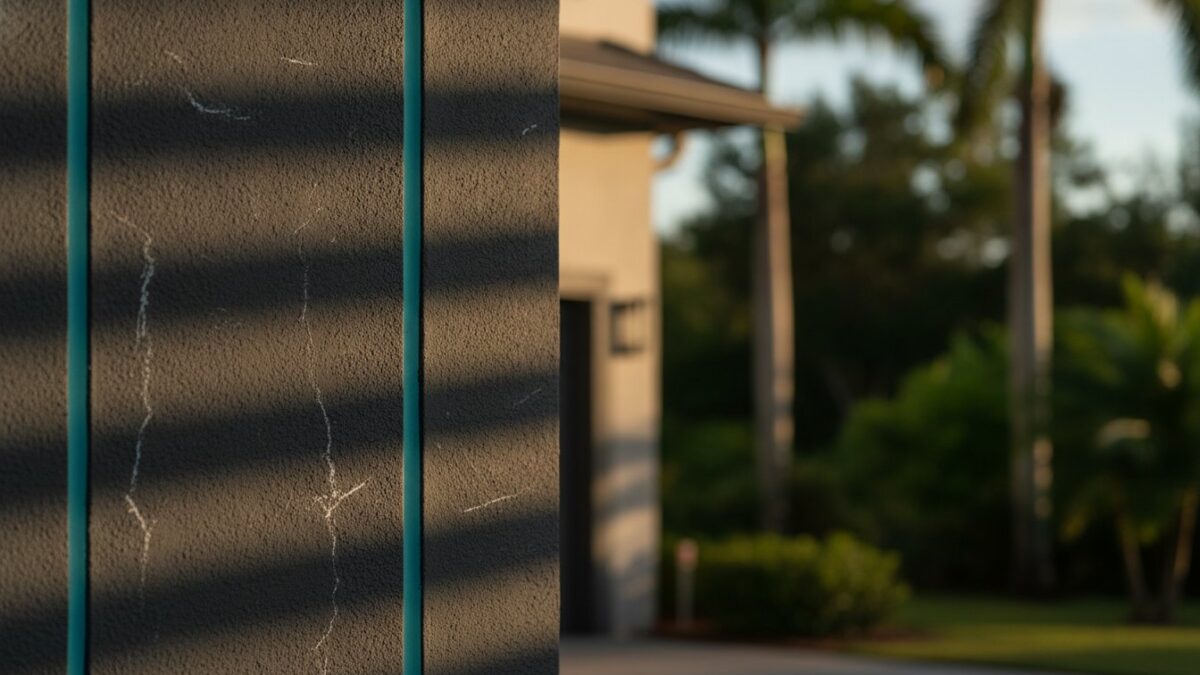
- Identify critical visual warning signs, such as pigment chalking and hairline stucco cracks, that signal your home’s protective barrier is failing.
- Discover why the October through April “Dry Season” is the gold standard for when to repaint your house exterior in Florida to ensure a perfect cure.
- Understand how specialized UV-resistant coatings protect your investment from the daily stress of extreme thermal expansion and high-energy light.
- Gain confidence in your home transformation by aligning your project with local Orlando HOA standards and humidity-controlled application techniques.
Understanding the Florida Painting Timeline: The 5-7 Year Rule
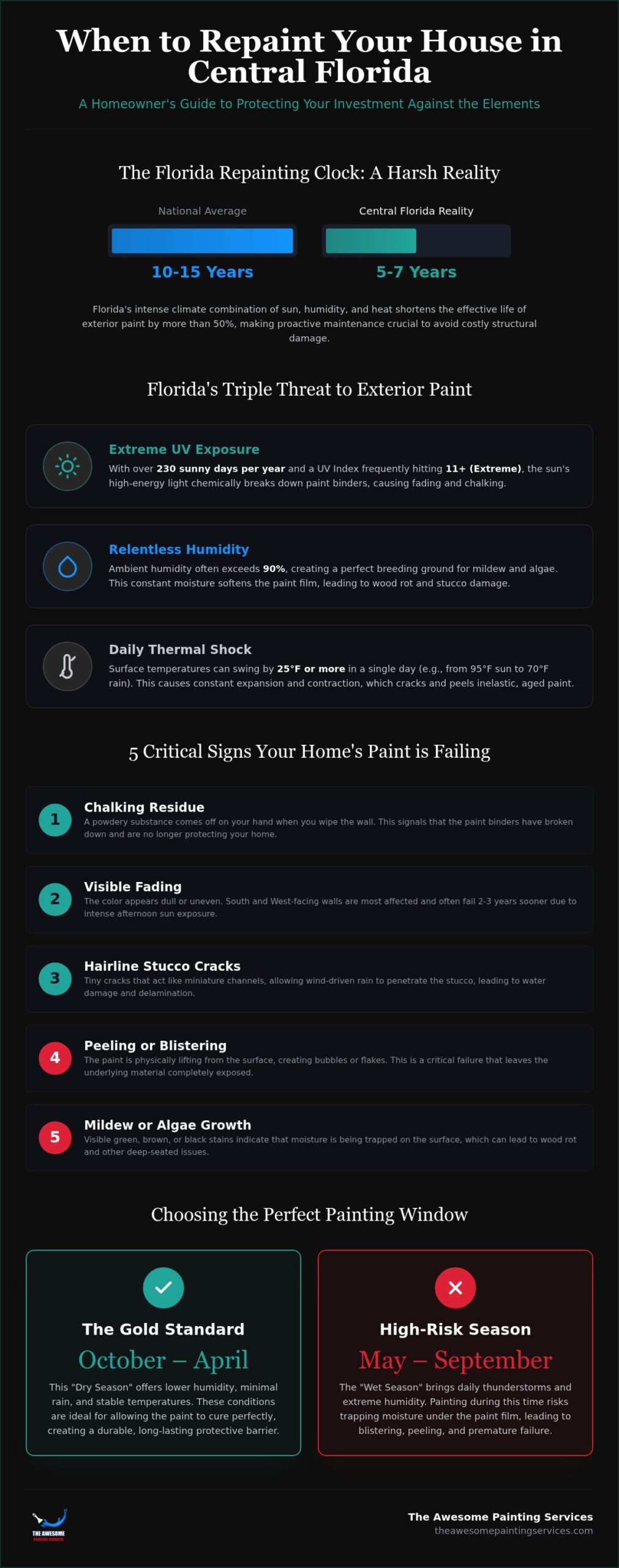
The national average for exterior paint longevity often sits comfortably between 10 and 15 years. In Central Florida, those numbers are a dangerous myth. Our local environment is one of the most aggressive in the country, forcing a much tighter maintenance schedule. For most homeowners, the window for when to repaint your house exterior in Florida falls strictly between five and seven years. Waiting longer doesn’t just hurt your curb appeal; it compromises the physical integrity of your home.
To understand this accelerated timeline, we have to look at What is Paint? at its core. It is a complex blend of pigments and binders designed to form a protective film. In Orlando, we face over 230 days of intense, high-energy sunshine every year. This constant UV bombardment literally cooks the paint, breaking down the chemical bonds in the binders. Once these binders fail, the paint begins to “chalk,” losing its ability to repel water and resist the elements. If you run your hand across your siding and see a powdery residue, your protective shield is already gone.
Proximity to water adds another layer of complexity. If you live near the Butler Chain of Lakes in Windermere or the scenic lakes of Winter Park, your home faces higher ambient humidity and frequent morning dew. This moisture sits on the surface, encouraging mildew growth and softening the paint film. When you defer maintenance, you aren’t just saving money; you’re risking wood rot and deep stucco damage. Repairing blown-out stucco or replacing rotted trim is significantly more expensive than a proactive coat of high-quality paint.
Property Aspect and Sun Exposure
Not every wall on your house ages at the same rate. South and west-facing walls in Orlando typically fail two to three years faster than north-facing ones because they bear the brunt of the afternoon heat. In established neighborhoods like Winter Park, a mature oak canopy can provide a “shade shield” that extends your paint’s life. Conversely, in newer developments like Lake Nona, the lack of mature trees means your home is fully exposed to the sun’s rays from sunrise to sunset. This constant exposure accelerates fading and makes the five-year mark a critical deadline for an inspection.
Material Matters: Stucco vs. Wood Longevity
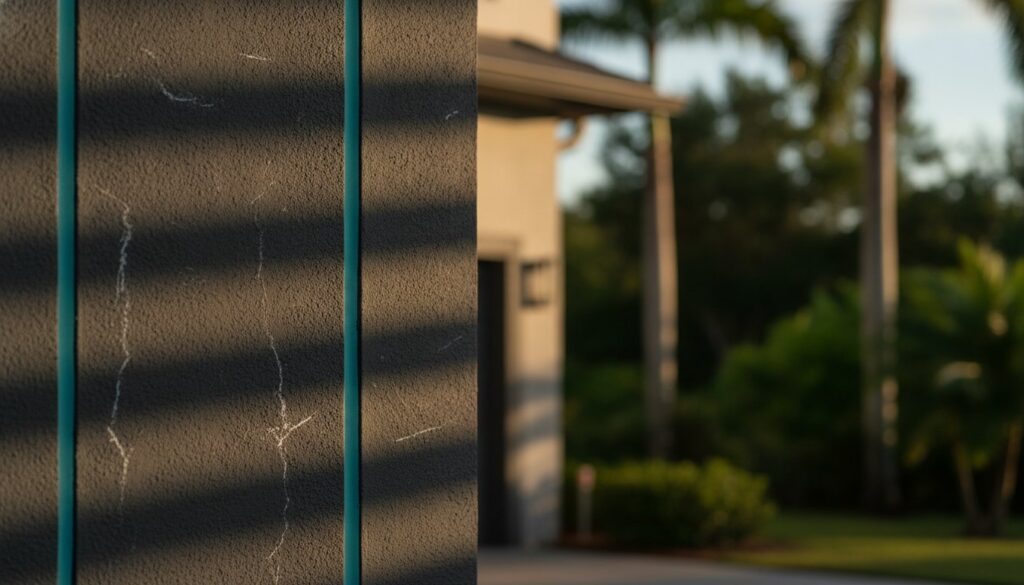
The type of substrate you’re protecting dictates your specific timeline. Stucco is the most common material in our area, and its primary enemy is water intrusion. Hairline cracks are your first warning sign. These tiny fissures allow Florida’s heavy rains to seep behind the paint, leading to delamination and mold. Using specialized stucco painting techniques is essential to seal these gaps before they grow. Wood siding and trim require even more vigilance. In our 90% humidity, exposed wood can begin to rot in a single season, making frequent inspections a non-negotiable part of Florida homeownership.
The Science of Paint Failure in Central Florida
Understanding the chemical breakdown of your home’s finish is the first step in knowing when to repaint your house exterior in Florida. It isn’t just about aesthetics; it’s about the molecular survival of the coating. In Central Florida, we face a UV index that frequently reaches 11 or higher, categorized as extreme by the National Weather Service. This high-energy light triggers photo-oxidation, a process that aggressively attacks the chemical bonds in paint binders. Think of binders as the glue holding the pigment to your walls. When this glue shatters, your home’s first line of defense disappears.
Physical stress plays an equally destructive role. Your home undergoes a relentless cycle of thermal expansion and contraction. During a typical Orlando summer day, exterior surface temperatures can soar while ambient air hits 95°F, only to drop to a relatively cool 70°F after a sunset downpour. This 25-degree swing causes your stucco and wood to physically grow and shrink every single day. If the paint film has lost its elasticity due to age, it cannot keep up with this movement. The result is microscopic cracking that eventually leads to visible peeling.
Florida’s humidity introduces a third threat known as hydrolysis. Constant moisture in the air causes the paint film to swell and soften, making it more susceptible to wind-driven debris and pollutants. Even in inland areas like Winter Park or Lake Nona, atmospheric salinity remains a factor. Salt particles carried by coastal winds settle on surfaces, accelerating the corrosion of metal fasteners and degrading the paint’s finish. If you suspect your home’s shield is thinning, a professional exterior refresh can stop this chemical decay before it reaches your substrate.
The Chalking Phenomenon
Mildew and Fungal Growth
Our subtropical climate makes Florida homes a perfect breeding ground for fungal spores. High humidity and organic matter create an environment where mildew doesn’t just sit on the surface; it can actually infiltrate the paint film. While older paints often struggled with this, modern 2026 coatings are formulated with superior biocides that resist growth for much longer. Distinguishing between simple surface dirt and structural mildew is critical. If dark spots reappear shortly after cleaning, your paint’s protective additives have likely expired, signaling that it’s time for a new, resilient coating.
Visual Signs It’s Time for a Refresh
While the chemical breakdown discussed earlier happens at a molecular level, the physical symptoms are easy to spot if you know where to look. Identifying these visual cues early is vital for deciding when to repaint your house exterior in Florida before minor cosmetic issues turn into structural nightmares. Your home’s exterior is its first line of defense. When that defense falters, it leaves a trail of evidence that tells you exactly when to repaint your house exterior in Florida to avoid deeper damage.
Fading and discoloration are usually your first warning signs. If your once-vibrant “Celebration” blue has shifted into a dull, chalky gray, the pigments have surrendered to the sun. This isn’t just an aesthetic problem. Fading indicates that the UV-reflective properties of the coating have vanished, leaving the underlying material vulnerable to heat damage. When the color goes, the protection follows shortly after.
Next, look for hairline cracks in your stucco. In neighborhoods across Windermere and Winter Park, these tiny fissures act as entry points for tropical moisture. Once water gets behind the paint film, it can lead to stucco delamination or even interior wall damage. Similarly, peeling and flaking represent the final stage of adhesion failure. If you see paint lifting away in sheets, the bond between the coating and your home has been permanently severed. Don’t overlook the gaps in your caulking either. Failing seals around windows and doors are often the first place moisture infiltrates the home’s envelope.
The Hand Test for Chalking
You can check your paint’s integrity in about 30 seconds with a simple hand test. Walk to the sunniest side of your home, typically the south or west-facing wall, and firmly rub your palm against the surface. The results are easy to interpret:
- No residue: Your binders are still holding strong.
- Light powder: The paint is starting to age; plan for a refresh within 12 to 18 months.
- Heavy, thick powder: The protective film has failed completely, and you should schedule a professional repaint immediately.
Identifying Water Intrusion
Water intrusion often hides in plain sight. Bubbling or “blistering” paint is a major red flag. It suggests moisture is trapped behind the paint film and trying to escape. You should also look for dark streaks or staining on your walls, which often indicate where water is pooling or running incorrectly. Pay close attention to your soffits and fascia. These areas are prone to soft spots and rot if the paint isn’t providing a watertight seal. Catching these moisture issues early prevents the high cost of deferred maintenance.
Keeping surfaces clean is a vital part of this maintenance strategy, as it prevents organic growth from taking root in your paint film. If you are located in the Jacksonville area, you can discover Ehrman’s Power Wash for expert cleaning services that help extend the life of your home’s exterior protection.
Choosing the Perfect Window: Seasonal Planning
Timing is everything in a state where a clear blue morning often gives way to a torrential downpour by 4 PM. Deciding when to repaint your house exterior in Florida requires more than just checking your calendar; it requires an understanding of our unique atmospheric cycles. For professional painters in Orlando and Winter Park, the “Dry Season” from October through April is the undisputed gold standard. During these months, the lower humidity levels and predictable weather patterns allow the paint to cure slowly and evenly, creating the durable bond your home needs to survive the next hurricane season.
Summer painting is technically possible, but it is fraught with risk. If a sudden tropical storm hits fresh, wet paint, it can wash the coating right off the walls or trap moisture behind the film, leading to premature failure. We also have to monitor the dew point every morning. If the substrate is damp with Florida’s heavy morning dew, the paint won’t adhere. Similarly, we watch the temperature of the walls themselves. If the stucco is too hot from the midday sun, the paint will dry instantly on contact, preventing it from leveling properly and leaving a streaky, unprofessional finish. Knowing exactly when to repaint your house exterior in Florida involves balancing these daily weather variables to find the perfect application window.
The Ideal Painting Calendar
Our team typically plans transformations around three distinct seasonal windows to ensure maximum longevity:
- October to December: This is the premier window for Central Florida. The air is dry, temperatures are stable, and the risk of rain is at its lowest. It is the perfect time for a flawless, long-lasting finish.
- January to March: Conditions remain excellent for application. However, we must watch for occasional cold snaps. Most modern paints require temperatures to stay above 50°F to cure correctly.
- April to May: This is the transition period. We move quickly during these months to complete projects before the humidity spikes and the daily summer rains begin in earnest.
Why Prep Work Matters More in Florida
A beautiful finish is only as good as the preparation beneath it. In our humid climate, we follow a strict 24-hour rule; we never apply paint immediately after pressure washing. The substrate must be completely dry to avoid trapping moisture that leads to bubbling later. Our “Reliable Visionary” approach involves meticulous scraping and sanding to ensure every square inch is ready for a new coating. If you are looking to revitalize your entire property, you can also learn how to prepare for interior painters to ensure your indoor spaces match your new exterior. Protecting your investment starts with a plan that respects the Florida weather, so reach out today to schedule your seasonal consultation with our expert team.
Protecting Your Investment with The Awesome Painting Services
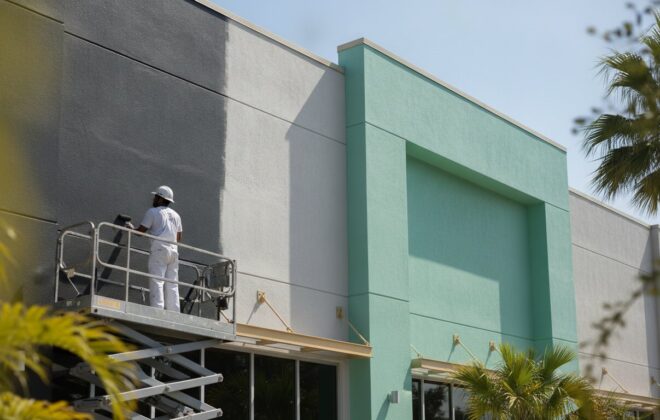
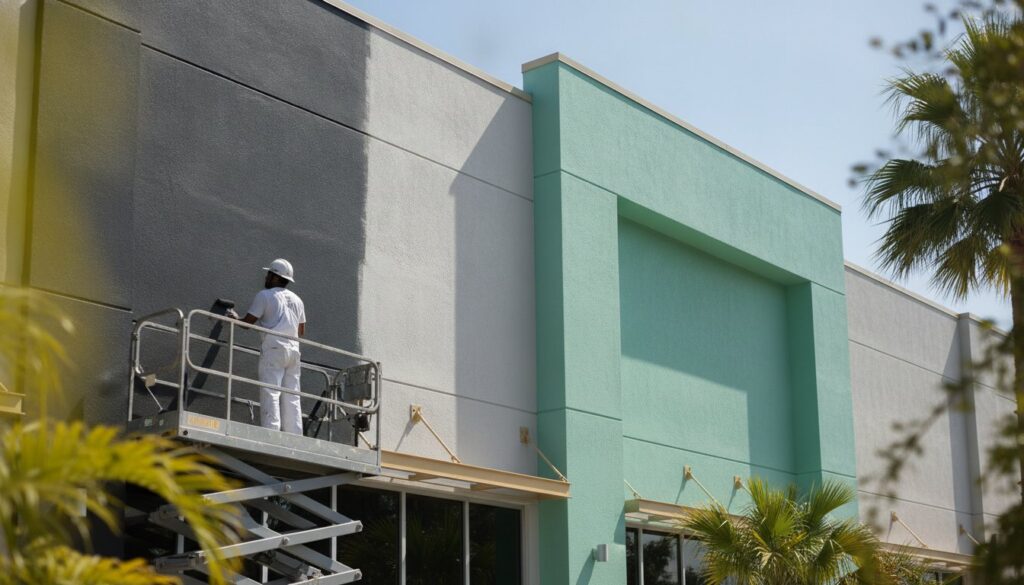
Choosing a contractor who understands the specific environmental pressures of Central Florida is just as important as knowing when to repaint your house exterior in Florida. At The Awesome Painting Services, we utilize a “Florida-First” approach that prioritizes high-durability coatings and meticulous application. While the standard Florida maintenance cycle is five to seven years, our professional craftsmanship and premium material selection aim to push that window toward a seven to ten year lifespan. We don’t just apply paint; we engineer a protective barrier designed to withstand the relentless Orlando sun and tropical humidity.
For estates in Windermere and Winter Park, where intricate stucco textures and wood trim require specialized care, we provide a level of precision that preserves your home’s architectural integrity. A fresh, expertly applied exterior does more than protect; it significantly boosts curb appeal and property value in the competitive Orlando real estate market. In a region where first impressions are everything, your home’s exterior serves as a silent ambassador of its overall condition and maintenance standards.
Custom Color Consultations for Central Florida
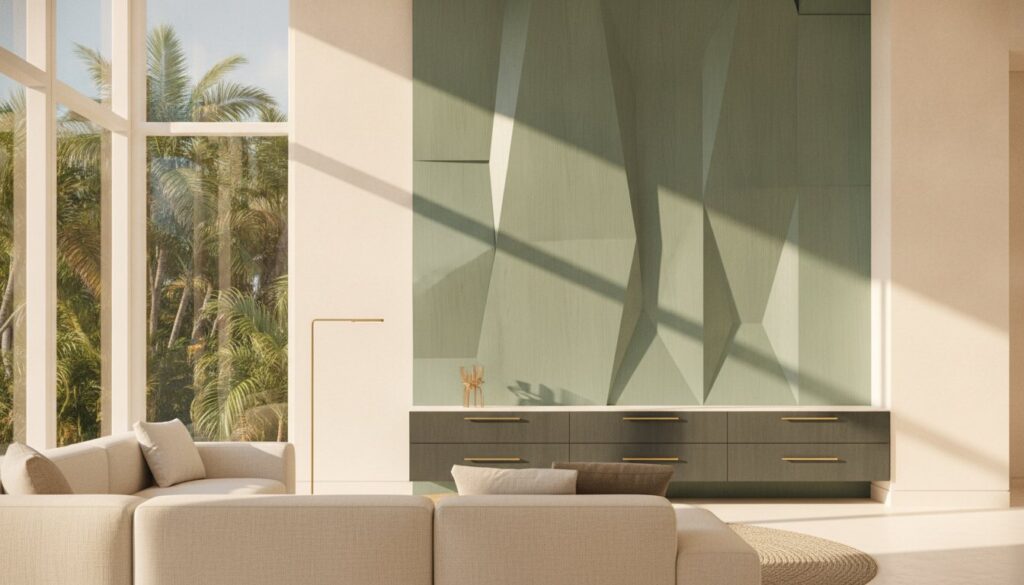
Selecting the right hue involves more than just personal preference. We help you choose heat-reflective pigments that can actually lower your cooling costs by reducing the amount of solar energy your walls absorb. Navigating the strict architectural guidelines of HOAs in communities like Celebration and Lake Nona can be daunting, but we handle that complexity for you. Our experts ensure your choices meet community standards while still reflecting your unique vision. You can explore our 2026 color trends guide for inspiration on the latest warm neutrals, sage greens, and earthy tones that are defining Florida style this year.
The Awesome Guarantee: Reliability and Precision
We believe in the psychological benefit of a refreshed environment and the peace of mind that comes with reliability. Our commitment to using the highest-quality materials available in 2026 means your home remains vibrant and protected long after the project is finished. During your exterior transformation, you can expect a clean workspace, clear communication, and a team that respects your time and property. We act as your partners in the creative process, dedicated to excellence in every brushstroke. Don’t wait for the next storm to reveal a hidden weakness in your home’s defense. Schedule your free Orlando exterior inspection today! and let us help you decide exactly when to repaint your house exterior in Florida.
Secure Your Home’s Future with a Florida-First Shield
Your home is your most significant investment, and its exterior is the vital barrier against our relentless subtropical climate. By respecting the 5-7 year maintenance cycle and targeting the October through April dry season, you ensure your property remains both beautiful and resilient. Proactive care stops hairline cracks and UV degradation before they evolve into expensive structural repairs. Determining when to repaint your house exterior in Florida is ultimately about choosing proactive protection over reactive fixes.
Since 2018, The Awesome Painting Services has served as the 5-star rated exterior experts for homeowners in Orlando, Windermere, and Winter Park. As specialists in high-durability stucco coatings, we understand the specific prep work required for the 2026 climate. Our team is ready to help you revitalize your living space with precision and professional vision. Get Your Free Exterior Painting Quote in Orlando
Let’s work together to bring your vision to life and protect your home for the next decade.
Frequently Asked Questions
How often do you really need to paint a house in Florida?
Most homeowners find that every 5 to 7 years is the ideal frequency for when to repaint your house exterior in Florida. Intense UV exposure and high humidity break down paint binders much faster than in other climates. If your home’s south-facing walls show significant chalking or fading, you shouldn’t wait for the seven-year mark to schedule a professional refresh.
What is the best month to paint the exterior of a house in Orlando?
October through April is the premier window for painting in Orlando and the surrounding Central Florida area. This period marks the region’s dry season, offering stable temperatures and significantly lower humidity. Curing happens more evenly during these months, which helps maximize the lifespan of your new coating and avoids the daily stress of sudden afternoon thunderstorms.
Can you paint a house in Florida during the summer rainy season?
You can paint during the summer, but it requires extreme vigilance and professional expertise. Crews must work around the predictable 4 PM tropical downpours and monitor substrate moisture levels closely every morning. While modern fast-dry coatings help, the high humidity often extends curing times, making the dry season a much more reliable choice for a flawless finish.
How much does it cost to repaint a 2,000 sq ft home in Florida?
Market data for 2026 suggests that painting a 2,000 square foot home in Central Florida typically ranges from $4,000 to $9,500. Factors like the amount of stucco repair needed, the quality of the coating selected, and the height of the structure influence the final investment. Every home is unique, so a detailed inspection is the only way to determine your specific project requirements.
Is it better to spray or roll exterior paint on a stucco home?
A combination of spraying and back-rolling is the superior method for stucco surfaces. Spraying provides a fast, even base layer that reaches into the deep pits of the texture. Back-rolling immediately after spraying forces the paint into the substrate pores, ensuring maximum adhesion and a thicker protective film that resists our harsh environment better than spraying alone.
Does a fresh coat of paint actually help with my Florida electric bill?
A fresh coat of paint can definitely lower your cooling costs when you choose the right materials. By selecting light-colored pigments or specialized heat-reflective coatings, you reduce the amount of solar heat absorbed by your walls. This keeps your home’s interior cooler and reduces the workload on your HVAC system during our long, intense summers.
How do I know if my stucco needs repair before painting?
You should look for cracks wider than a credit card or areas that sound hollow when you tap on them. These signs indicate that the stucco has pulled away from the lath and requires professional repair before any paint is applied. While we seal hairline cracks during our standard prep work, structural stucco issues must be addressed to maintain your home’s watertight seal.
What are the most popular exterior house colors in Orlando for 2026?
The 2026 palette is shifting toward warm, natural tones like sandy beige, sage green, and creamy whites. Modern coastal styles remain a major trend in neighborhoods like Lake Nona and Winter Park. Many homeowners are also opting for soft terracotta and deep olive accents to create a sophisticated, earthy aesthetic that blends beautifully with Florida’s lush landscaping. To ensure your garden perfectly complements your home’s new colors, learn more about Alma Gardening Company and their sustainable landscape design services.